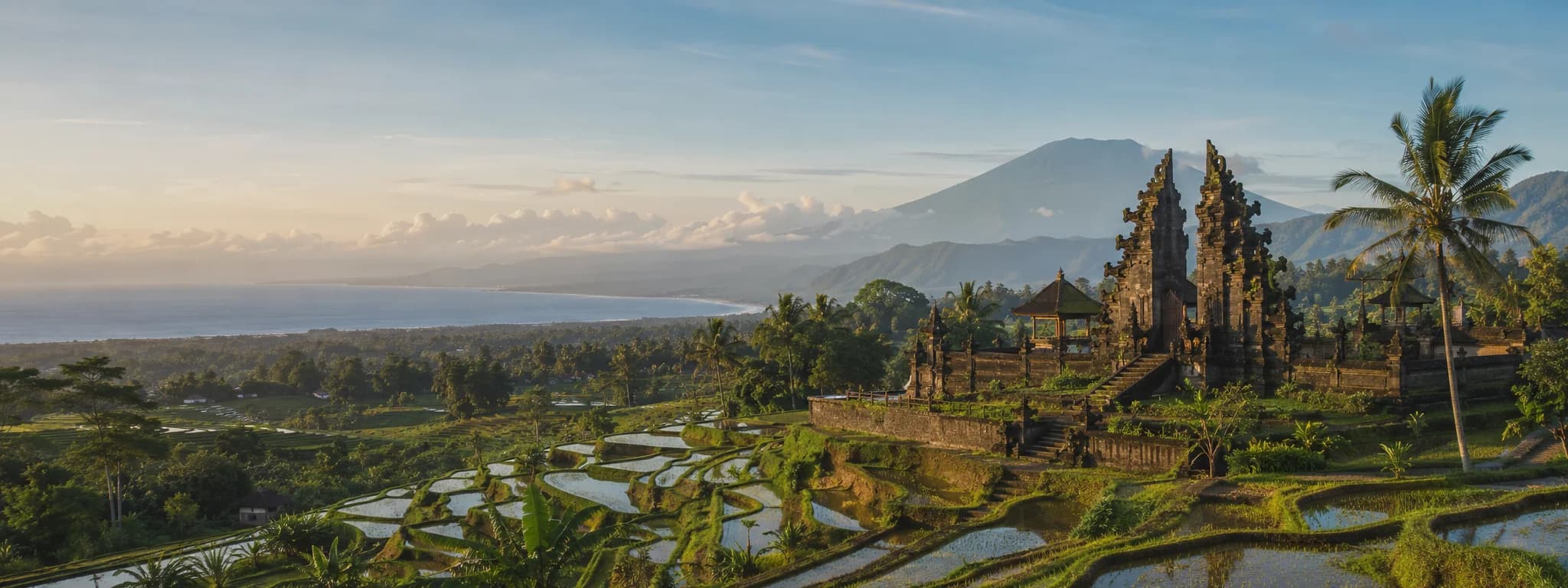
Indonesia · Bali
Bali trips
We will find a tour departing from Kazakhstan, check the hotel and travel terms, and help with the booking.
TripTech travel guide · Indonesia
Bali for visitors: the complete TripTech guide
Bali for travellers from Kazakhstan: areas, beaches, seasons, itineraries, sights, transport and practical holiday advice.
- Author
- TripTech Editorial Team
- Published
- 15 July 2026
- Updated
- 15 July 2026
Contents
In brief: what a Bali trip is like
Bali is an island and province of Indonesia where ocean time, nature, temples, food, wellness and active travel can fit into one trip. Allow 10–14 days for a first visit and use no more than two or three bases.
The dry season is usually more predictable for beaches and road trips, but dry weather is never guaranteed. The rainy season does not mean nonstop rain every day: rainfall, humidity and ocean conditions vary by date and area.
There is no universal base. Nusa Dua and Sanur often suit a quieter stay, Ubud is for culture and nature, Canggu and Seminyak offer a lively café scene, and Uluwatu focuses on cliffs, views and surfing.
Bali at a glance
- Country
- Indonesia
- Status
- Island and province
- Provincial capital
- Denpasar
- Ideal stay
- 10–14 days
- Seasons
- Dry and rainy, with relative boundaries
- Currency
- Indonesian rupiah (IDR)
- Languages
- Indonesian and Balinese; English is common in tourism
- Airport
- I Gusti Ngurah Rai International (DPS)
- Holiday style
- Beaches, culture, nature and active travel
- Popular bases
- Nusa Dua, Sanur, Ubud, Seminyak, Canggu, Uluwatu
- Best for
- Couples, families, surfers and nature lovers
Who Bali suits
Bali is more than a beach destination. The right combination of areas can match very different travel styles.
Couples
Sunsets, restaurants, villas and a coast-and-Ubud combination.
Families
Works with a calmer beach, short transfers and suitable child facilities.
Honeymoons
Combine a private villa, wellness, nature and a quieter coastal resort.
Beach holidays
Beaches differ greatly in waves, tides, facilities and swimming conditions.
Surfing
Breaks suit different levels, but beginners need a school, instructor and suitable daily conditions.
Yoga and wellness
Ubud, Canggu and other areas offer studios, spas and retreats.
Nature
Rice terraces, volcanic landscapes, waterfalls and tropical vegetation.
Culture
Temples, ceremonies, dance, architecture and living Balinese Hindu traditions.
Food
Balinese and Indonesian cuisine sits alongside a broad international dining scene.
Longer trips
Two weeks allows two or three bases with real rest days.
Combined itinerary
Pair the coast with Ubud and, optionally, a separate neighbouring-island trip.
Independent travel
Best for visitors ready to account for traffic, distances and changing site rules.
When to visit Bali
Dry season · roughly April to October
- Weather
- Usually less rain and lower humidity, though short showers remain possible.
- Crowds
- Demand is high in summer and holiday periods.
- Best for
- Beaches, nature, sightseeing and a first trip.
- Keep in mind
- Ocean waves and currents do not automatically become safe, and popular areas are busier.
Rainy season · roughly November to March
- Weather
- Warm and humid; downpours can be strong without necessarily lasting all day.
- Crowds
- Often quieter outside the New Year period.
- Best for
- Flexible travellers, wellness, culture and a slower pace.
- Keep in mind
- Roads, trails, waterfalls and boat plans may change with weather.
Transition months
- Weather
- Less stable, with both sunny windows and heavy rain possible.
- Crowds
- Varies around school breaks and events.
- Best for
- Travellers willing to adjust plans to the actual forecast.
- Keep in mind
- Season boundaries are relative and less predictable; keep a backup plan.
How long to stay
7 days
Use two bases, such as a calmer coast and Ubud, and keep one free day rather than moving daily.
10 days
A strong first format: five or six nights by the ocean, three or four in Ubud and a few unhurried outings.
14 days
Combine two coastal areas with Ubud, add Nusa Penida or the north, and retain rest days.
Which area to choose
Bali areas differ in atmosphere and ocean conditions. Check the exact beach, tides, seasonal waves and real driving time before booking: a short distance can still take a long time.
Nusa Dua
- Best for
- Quiet resort stays and families
- Advantage
- Organised grounds, hotels and beach facilities
- Possible drawback
- Less local city life and generally higher costs
- Transport
- Transfer, driver or taxi
- Atmosphere
- Calm and resort-focused
- Beach
- Light sand; tide matters
- Cost level
- Medium–high
- Swimming
- Often easier, but check the exact section
- Surfing
- Not the main focus
- For families
- Often suitable
- Evening activity
- Low
Sanur
- Best for
- Families, slower travel and long walks
- Advantage
- A promenade, sunrises and a relaxed setting
- Possible drawback
- Strong tidal changes and quiet nightlife
- Transport
- Taxi, driver or transfer
- Atmosphere
- Relaxed
- Beach
- Lagoon-like in many sections
- Cost level
- Medium
- Swimming
- Often calmer when the tide suits
- Surfing
- Limited and condition-dependent
- For families
- Often convenient
- Evening activity
- Low
Jimbaran
- Best for
- Couples, families and airport proximity
- Advantage
- A broad bay, sunsets and seafood restaurants
- Possible drawback
- Facilities are uneven and transport may be needed
- Transport
- Taxi or driver
- Atmosphere
- Calm and coastal
- Beach
- Sandy bay
- Cost level
- Medium–high
- Swimming
- Depends on waves and section
- Surfing
- Not the main format
- For families
- Good after checking the beach
- Evening activity
- Low–medium
Uluwatu
- Best for
- Surfing, views and couples
- Advantage
- Cliffs, ocean panoramas and distinctive beaches
- Possible drawback
- Steps, strong waves, distance and limited walkability
- Transport
- Driver, taxi or transfer
- Atmosphere
- Spread-out and dramatic
- Beach
- Coves below cliffs
- Cost level
- Medium–high
- Swimming
- Not everywhere or every day
- Surfing
- Strong; many expert breaks
- For families
- Not for every family
- Evening activity
- Concentrated venues
Seminyak
- Best for
- Dining, shopping and an active coast
- Advantage
- Mature facilities and broad accommodation choice
- Possible drawback
- Traffic, noise and difficult swimming conditions
- Transport
- Taxi, apps or driver
- Atmosphere
- Modern and active
- Beach
- Long ocean beach
- Cost level
- Medium–high
- Swimming
- Only according to flags and conditions
- Surfing
- Some learning sections
- For families
- Depends on hotel and beach
- Evening activity
- High
Canggu
- Best for
- Cafés, surfing, wellness and longer stays
- Advantage
- An active community and modern facilities
- Possible drawback
- Heavy traffic, waves, noise and uneven pavements
- Transport
- Driver, taxi or apps
- Atmosphere
- Young and dynamic
- Beach
- Dark sand and waves
- Cost level
- Medium–high
- Swimming
- Often challenging
- Surfing
- Popular
- For families
- Not for everyone
- Evening activity
- High
Kuta
- Best for
- Active holidays and first surf lessons
- Advantage
- Shops, schools, entertainment and airport proximity
- Possible drawback
- Busy and noisy; swimming depends on flags
- Transport
- Taxi, apps and local walking
- Atmosphere
- Very active
- Beach
- Long sandy beach
- Cost level
- Variable
- Swimming
- Only in permitted zones
- Surfing
- Popular for beginners with an instructor
- For families
- Scenario-dependent
- Evening activity
- High
Legian
- Best for
- A compromise between Kuta and Seminyak
- Advantage
- Beach, shops and developed facilities
- Possible drawback
- Noise, traffic and ocean risks remain
- Transport
- Taxi, apps and local walking
- Atmosphere
- Active
- Beach
- Long ocean beach
- Cost level
- Medium
- Swimming
- According to flags and weather
- Surfing
- Available
- For families
- Possible with a suitable hotel
- Evening activity
- Medium–high
Ubud
- Best for
- Culture, nature, yoga and food
- Advantage
- Rice fields, temples, wellness and creative life
- Possible drawback
- No ocean beach; traffic and high humidity
- Transport
- Driver, taxi or transfer
- Atmosphere
- Cultural and green
- Beach
- No beach
- Cost level
- Moderate to high
- Swimming
- Pool only
- Surfing
- None
- For families
- Works with a calm itinerary
- Evening activity
- Low–medium
How to choose a hotel or villa
In Bali, the area matters more than a beautiful property photo. Assess the road, noise, beach access and daily logistics as carefully as the room or villa.
Area and purpose
Start with your priority: calmer swimming, surfing, Ubud, food or a combined route.
Beach access
‘Near the ocean’ does not guarantee suitable swimming or an easy walk; check the route and terrain.
Road and construction
Review recent access information and reports of building work, dust and noise.
Air conditioning and pool
Confirm facilities for the exact room category and child pool safety.
Food and surroundings
Compare breakfast, kitchen access and distance to cafés, shops and medical help.
Transfer
Confirm airport meeting, vehicle capacity, child seat and waiting rules.
Villa safety
Check security, valuables storage, insects and pool barriers.
Internet
If connectivity matters, request a recent speed test and a backup option.
Reviews and cancellation
Read recent reviews for your category and check deposits, fees and cancellation terms.
Children
Confirm cot, high chair, steps, balconies, pool, food and internal distances.
Essential places to see
Do not combine distant sites merely because they look close on a map. Check opening hours, clothing, weather, physical effort and current visitor rules.
Ubud
A cultural base for temples, markets, galleries and nature; allow at least half a day and a traffic buffer.
Rice terraces
Scenic walking with potentially slippery paths; bring water, sun protection and suitable shoes.
Uluwatu Temple
A clifftop temple complex; check dress, hours and the Kecak performance schedule.
Tanah Lot
A coastal temple and popular sunset location; experience changes with tide and crowds.
Water temples
Cultural sites with their own rituals and rules; visitors must not disrupt ceremonies.
Mount Batur
An active early-start programme; use a reliable guide and assess health, weather and footwear.
Waterfalls
Steps, wet rocks and strong flow require caution; access can change after rain.
Traditional villages
Architecture and crafts with a need to respect private life and local rules.
Monkey Forest
Keep your distance, never feed or provoke animals, and secure loose belongings.
Nusa Penida
A separate island, not a district of mainland Bali, requiring a boat, road transfer and sea buffer.
Southern beaches
Cliffs, coves and ocean views; access may involve steps and swimming is condition-dependent.
Balinese dance
Different venues and schedules; verify the programme and tickets before travel.
Bali itineraries
These itineraries use two or three bases and retain free days. Actual driving time depends on traffic, weather and road conditions.
Bali in 7 days
Two bases and a practical introduction.
- Day 1Arrival, pre-booked transfer and rest in Sanur, Nusa Dua or Jimbaran.
- Day 2Beach and local area with no long drive.
- Day 3Southern coast and Uluwatu, respecting tide and temple rules.
- Day 4Transfer to Ubud and an easy walk.
- Day 5Rice terraces plus one temple or waterfall, not everything at once.
- Day 6Free day for wellness, food or a short cultural programme.
- Day 7Airport transfer with a substantial traffic buffer.
Bali in 10 days
Coast, Ubud and room for ocean or nature.
- Days 1–3A calmer southern coast: adjustment, beach and one free day.
- Day 4Uluwatu or Jimbaran without additional remote stops.
- Day 5Transfer to Ubud and rest.
- Days 6–7Rice terraces, a temple and one natural site on separate days.
- Day 8Free Ubud or wellness day.
- Day 9Move closer to the airport and enjoy a quiet evening.
- Day 10Departure with a traffic buffer.
Bali in 14 days
Three bases, or two plus a separate island outing.
- Days 1–4Nusa Dua, Sanur or Jimbaran for beach time, adaptation and the south.
- Days 5–8Ubud for culture, terraces, nature and a free day.
- Days 9–11Seminyak, Canggu or Uluwatu according to interests; do not attempt all three.
- Day 12Nusa Penida only with suitable sea conditions; otherwise use a Bali reserve day.
- Day 13Rest, shopping and packing.
- Day 14Airport transfer with plenty of time.
Bali beaches
Bali's ocean changes with season, tide and location. No beach can be promised as absolutely safe: follow flags, lifeguards and the actual conditions of the day.
Nusa Dua
Often chosen for a calmer resort stay; check the tide and the hotel's exact section.
Sanur
Water is calmer in many places, while low tide can change depth dramatically.
Jimbaran
A sandy sunset bay where waves and current still vary.
Kuta
Strong facilities and surf schools; swim only in the permitted flagged zone.
Seminyak
A long active beach with waves and currents; calm swimming is not guaranteed.
Canggu
Popular with surfers but often difficult for family swimming.
Uluwatu
Dramatic cliff beaches, often with steps, reef and more advanced surf conditions.
Airport, transfers and getting around
The island's main airport is I Gusti Ngurah Rai International (DPS) in southern Bali. A pre-booked transfer simplifies arrival: confirm the driver, meeting point, flight number, vehicle, baggage and child seat.
Driving time cannot be judged by kilometres alone. Narrow roads, peaks, ceremonies, weather and construction affect routes, so leave a large buffer for your return to the airport.
A car with driver, official transfer, licensed taxi or a locally available ride app works for most visitors. Walking is not equally easy in every area because pavements and traffic vary.
A scooter is not a simple beginner option. It requires real experience, the correct valid licence, confirmation that international documents are recognised, a helmet and suitable insurance.
Airport transfer
Agree the meeting point, contacts, waiting time and full price before travel.
Car with driver
Useful for several stops when hours, parking and overtime are agreed.
Taxi and apps
Use official services; availability and pickup points vary by area.
Between areas
Plan no more than one remote zone per day and keep a traffic buffer.
Scooter
Only for an experienced, legally permitted rider with helmet and suitable insurance.
Walking
Check pavements, lighting and the real access route rather than map distance.
What to try
Balinese food uses spice, rice, vegetables, meat and seafood. Always ask about ingredients, heat and dietary suitability; babi guling is a pork dish.
- Nasi goreng
- Mie goreng
- Nasi campur
- Satay
- Gado-gado
- Ayam betutu
- Babi guling · pork
- Seafood
- Tropical fruit
- Balinese coffee
- Fresh juice
- Local desserts
How to plan your budget
Build the budget by category rather than using one universal figure. Season, area, accommodation, transfers and programme all change the total; verify mandatory charges through official portals.
Flights
Compare baggage, connections, fare rules and the international entry airport.
Accommodation
Area, season, hotel or villa format and cancellation terms affect cost.
Airport transfer
Confirm vehicle, meeting, waiting, luggage and full price.
Island transport
Allow for a driver, taxis and separate base-to-base transfers.
Food
Separate breakfast, daily cafés, restaurants and drinking water.
Excursions
Compare programme, transport, entry, guide and cancellation terms.
Neighbouring islands
Include the boat, road transfer, insurance and weather cancellation risk.
Insurance
Cover must match surfing, scooter use and other planned activities.
Tourist levy
Love Bali states a 150,000 IDR foreign visitor levy and exemption rules; pay only through the official channel.
Reserve
Keep funds for medical help, extra transport or plan changes.
What to know before travel
Entry rules, declarations and levies can change. Check Indonesia's official portals directly before departure and save all confirmations offline.
Currency and exchange
Use banks and official money changers, count the cash and keep the receipt.
Cards and cash
Cards are common in tourist areas, while cash remains useful in small and remote venues.
Mobile internet
Compare roaming, eSIM and local SIM options, coverage and device registration rules.
Drinking water
Do not drink tap water; use safe bottled or properly filtered water.
Sun and humidity
Use sun protection, headwear and water, and adapt gradually.
Temples
Follow site-specific dress and visitor rules; a sarong may be required.
Ceremonies and offerings
Do not obstruct processions, step on offerings or photograph people without permission.
Arrival declaration
Check your visa through Immigration and complete the current official All Indonesia arrival process.
Tourist levy
Pay only through Love Bali or an authorised point and retain the QR code.
Nyepi
The Day of Silence brings major movement and service restrictions; the airport closes for Nyepi under its operating standard. Verify the date and rules.
Bali with children
Nusa Dua, Sanur and suitable parts of Jimbaran are often considered for a calmer family stay. Even there, verify the exact beach, tide, waves, lifeguards and room-to-water distance.
Avoid an overloaded itinerary: heat, humidity, traffic and long transfers tire children. One main outing, pool or beach time and free hours are a better rhythm.
Before booking, confirm a child seat, cot, pool barrier, food, stairs, medical help and insurance cover.
Health and safety
This section reduces risk but cannot replace a doctor, insurer, lifeguard or official warning. Seek professional help if you feel unwell.
Insurance
Check medical cover, assistance, excess and declared activities; surfing and scooters may require extensions.
Water and food
Drink safe water, choose busy reputable venues and maintain hand hygiene.
Sun
Use protection, clothing and shade, and increase activity gradually.
Insects
Repellent and clothing reduce bites without providing a medical guarantee.
Ocean
Currents, waves and tides change; swim only where permitted and obey lifeguards.
Waterfalls and cliffs
Stay back from edges, use suitable footwear and cancel in poor weather.
Belongings
Use a safe and official transport, and never leave documents unattended.
Wild animals
Never touch, feed or provoke monkeys; seek urgent medical care after a bite.
Frequently asked questions
When is the best time to visit Bali?
The roughly April–October dry season is usually convenient, but boundaries are relative and rain is possible year-round.
How long is a first trip?
Ten to fourteen days with two or three bases is ideal. Seven works for a coast-and-Ubud trip.
Which area should I choose first?
Nusa Dua or Sanur for calm, Ubud for culture, Seminyak or Canggu for a lively scene, and Uluwatu for views and surfing.
Where is swimming easier?
Parts of Nusa Dua, Sanur and Jimbaran are often considered, but tide, waves, currents and daily flags decide.
Is Bali suitable for children?
Yes, with a calmer beach, short transfers, a safe pool, suitable food and a light itinerary.
How is Ubud different?
Ubud is inland and has no ocean beach. It focuses on culture, nature, yoga, food and central-island outings.
Should I change hotels several times?
Usually two bases are enough for 7–10 days and three for 14 days. Daily moves waste time.
How do I get around?
Transfers, a car with driver, licensed taxis and apps suit most visitors. Scooters are only for experienced legal riders.
Is rainy season worth it?
It can be, with flexibility and backup plans. Rain need not last all day but can affect roads and sea trips.
How can TripTech help?
Share your dates, budget, group, beach preference and pace. A manager will suggest flights, accommodation and a suitable route.
TripTech · Bali
Let us help organise your Bali trip
A TripTech manager will help choose an area, hotel or villa, suitable beach and route around the season, trip length and your preferences.