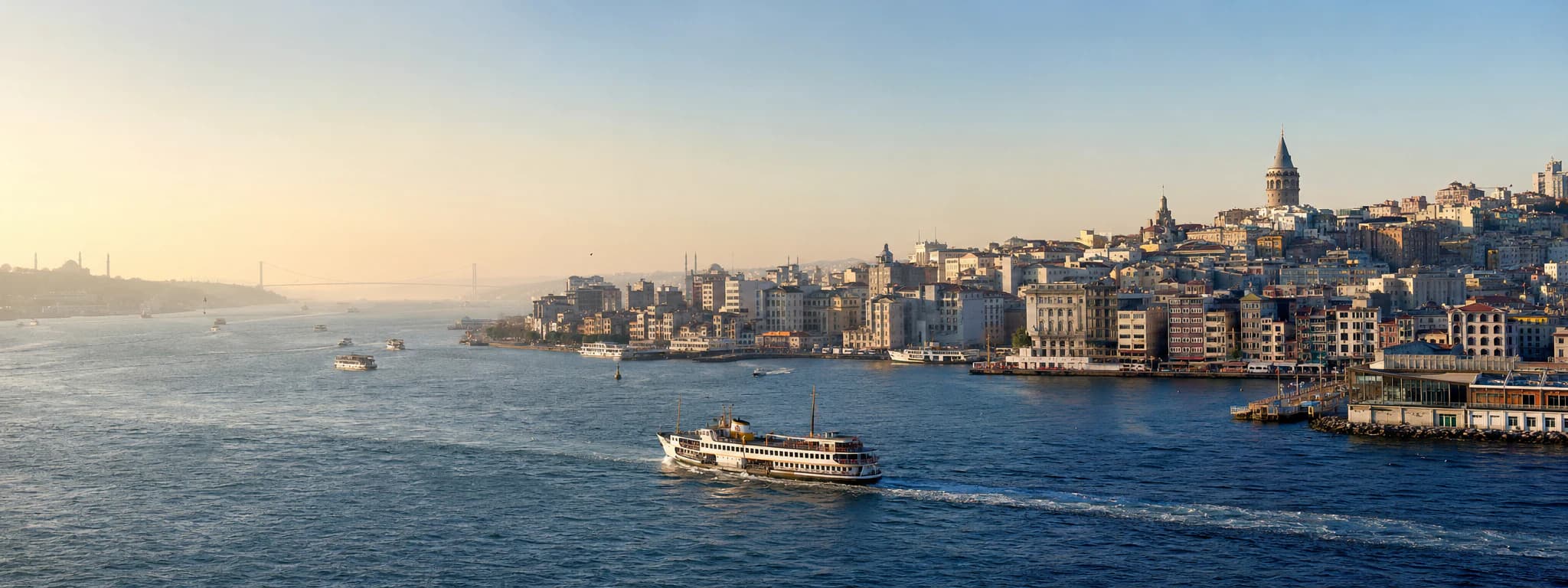
Türkiye · Istanbul
Türkiye tours
We will find a tour departing from Kazakhstan, check the hotel and travel terms, and help with the booking.
TripTech travel guide · Türkiye
Istanbul for travelers: the complete TripTech guide
Districts, landmarks, itineraries, transport, expense planning and practical advice for travelers from Kazakhstan.
- Author
- TripTech Editorial Team
- Published
- 15 July 2026
- Updated
- 15 July 2026
Contents
In brief: is Istanbul right for you?
Istanbul suits travelers who want history, architecture, food, waterfront walks and a lively city atmosphere in one trip. Four or five full days is a sensible first visit.
Spring and autumn are often the most comfortable seasons for long walks. Summer can be hot and busy; winter is cooler, windier and wetter but can feel calmer.
Istanbul is not a conventional beach destination. The trip revolves around neighborhoods, museums, mosques, markets, ferries and local food, so comfortable shoes and realistic logistics matter.
Istanbul at a glance
- Country
- Türkiye
- Recommended stay
- 4–5 full days
- Comfortable season
- Spring and autumn
- Travel style
- City, culture and food
- Main areas
- Old City, Beyoğlu, Bosphorus, Asian side
- Airports
- Istanbul Airport (IST), Sabiha Gökçen (SAW)
- Currency
- Turkish lira
- Language
- Turkish
- Best for
- Couples, families, history and food lovers
Who will enjoy Istanbul
Istanbul can work for many travel styles. Choose the right base and avoid trying to cover the entire city in one day.
A first trip to Türkiye
An accessible introduction to the country through history, food and contemporary city life.
Couples
Bosphorus views, atmospheric neighborhoods, restaurants and memorable evening walks.
Families
A good option with a slower pace, a convenient hotel and fewer stops each day.
Food-focused travel
Markets, breakfasts, local restaurants and street food in one city.
History and architecture
Byzantine and Ottoman heritage can be explored within compact areas.
Shopping
Historic bazaars, independent designers and modern malls.
A short city break
Three days can cover the main icons if you stay near efficient transport.
A combined trip
Istanbul pairs well with a beach stay or another region of Türkiye.
When to visit Istanbul
Spring
- Weather
- Changeable but often comfortable for long walks.
- Crowds
- Visitor numbers rise around holidays and later in the season.
- Best for
- First visits, museums and walking routes.
- Keep in mind
- Pack light layers and a water-resistant jacket.
Summer
- Weather
- Warm to hot, with stronger heat in open spaces.
- Crowds
- Busy around the major landmarks.
- Best for
- Evening walks, the Bosphorus and an active program.
- Keep in mind
- Plan indoor stops and breaks around midday.
Autumn
- Weather
- Often mild early on, then cooler and wetter.
- Crowds
- Usually calmer than the summer peak.
- Best for
- Food, walking and a balanced itinerary.
- Keep in mind
- Closed shoes and a small umbrella are useful.
Winter
- Weather
- Cool and windy, with rain and occasional snow.
- Crowds
- Quieter outside holiday periods.
- Best for
- Museums, cafés and a slower trip.
- Keep in mind
- Short daylight hours call for a compact plan.
How many days to spend
3 days
Old City, Galata and Karaköy, plus one Bosphorus ferry experience. Expect a fairly full pace.
5 days
Add Dolmabahçe, Beşiktaş, the Asian side and unhurried time for markets.
7 days
Explore neighborhoods in depth, include Balat and Fener, and keep a weather buffer.
Where to stay in Istanbul
Where you stay shapes the whole trip: Istanbul is large, hilly and time-consuming to cross. Choose your daily logistics as carefully as your hotel.
Sultanahmet
- Best for
- First visits and history
- Advantage
- Major landmarks within walking distance
- Possible drawback
- Quieter at night and more tourist-oriented
- Transport
- Tram and walking
- Atmosphere
- Historic, visitor-focused
Taksim
- Best for
- An active city stay
- Advantage
- Restaurants, shopping and nightlife
- Possible drawback
- Noise and heavy footfall
- Transport
- Metro, funicular and buses
- Atmosphere
- Dynamic
Galata
- Best for
- Couples and atmospheric walks
- Advantage
- Characterful streets close to Beyoğlu
- Possible drawback
- Steep hills and crowds
- Transport
- Metro, nearby tram, walking
- Atmosphere
- Creative and historic
Karaköy
- Best for
- Food and efficient connections
- Advantage
- Ferries, tram and Galata Bridge
- Possible drawback
- Busy streets can be noisy
- Transport
- Ferry, tram and funicular
- Atmosphere
- Contemporary and maritime
Beşiktaş
- Best for
- Bosphorus and local life
- Advantage
- A lively market and useful ferries
- Possible drawback
- No metro station in the central core
- Transport
- Ferries and buses
- Atmosphere
- Young and local
Şişli
- Best for
- Comfort and city infrastructure
- Advantage
- Modern hotels and metro access
- Possible drawback
- Less historic character
- Transport
- Metro and buses
- Atmosphere
- Businesslike and modern
Kadıköy
- Best for
- Repeat visits and food
- Advantage
- Markets and Asian-side nightlife
- Possible drawback
- Crossing required for Old City sights
- Transport
- Ferry, metro and Marmaray
- Atmosphere
- Local and relaxed
Essential places to see
Do not turn the trip into a checklist. Group sights by neighboring districts and leave time for streets, views and ferry crossings.
Hagia Sophia
A defining city landmark with layered Byzantine and Ottoman history.
Blue Mosque
An active mosque by the Hippodrome; respect visiting rules and prayer times.
Topkapı Palace
A large palace complex that deserves several hours.
Galata Tower
A Beyoğlu icon and a natural anchor for a Galata walk.
Dolmabahçe Palace
A ceremonial waterfront residence with elaborate interiors.
Grand Bazaar
A historic commercial maze worth visiting for atmosphere as well as shopping.
Spice Bazaar
Spices and sweets near Eminönü and Galata Bridge.
Bosphorus ferry
A practical crossing and one of the best ways to understand the city's scale.
Balat and Fener
A slower route through historic façades and intimate streets.
Kadıköy
Markets, cafés and everyday life on the Asian side.
Istanbul itineraries
These routes group nearby districts. Queues and visit times vary, so keep a buffer rather than planning every minute.
Istanbul in 3 days
The essential sights and a first look at both shores.
- Day 1Sultanahmet: Hagia Sophia, Blue Mosque, Hippodrome and Topkapı Palace.
- Day 2Eminönü, Spice Bazaar, Galata Bridge, Karaköy and Galata.
- Day 3Ferry to Kadıköy, market and waterfront; return across the Bosphorus near sunset.
Istanbul in 5 days
A balanced plan without rushing every day.
- Day 1Sultanahmet and the Old City's core landmarks.
- Day 2Topkapı, Gülhane Park, Eminönü and the bazaars.
- Day 3Karaköy, Galata, İstiklal and an evening in Beyoğlu.
- Day 4Dolmabahçe, Beşiktaş and the Bosphorus waterfront.
- Day 5Kadıköy, Moda and a ferry ride between continents.
Istanbul in 7 days
A deeper neighborhood experience with a weather buffer.
- Day 1Hagia Sophia, Blue Mosque and the Hippodrome.
- Day 2Topkapı, a museum or cistern, and Gülhane Park.
- Day 3Eminönü, bazaars, Karaköy and Galata.
- Day 4İstiklal, Çukurcuma, Taksim and Beyoğlu.
- Day 5Dolmabahçe, Beşiktaş and Ortaköy.
- Day 6Kadıköy market, Moda and the Asian waterfront.
- Day 7Balat and Fener, or a flexible museum and Bosphorus day.
Airports and transport
Istanbul has two major airports: Istanbul Airport (IST) on the European side and Sabiha Gökçen (SAW) on the Asian side. Choose your transfer according to the airport, hotel district, arrival time, luggage and group size.
Metro, trams, buses, Marmaray and ferries make independent travel practical. Istanbulkart is used across the city transport system and can be purchased and topped up through official machines and sales points.
Istanbul is large and congested. Leave extra time for airports, transfers and station access. Check current routes, operating information and prices in official services because they can change.
When a private transfer helps
Late arrivals, substantial luggage, young children or a hotel requiring awkward changes.
When public transport works well
Daytime, light luggage and accommodation near metro, tram or ferry links.
The key rule
Do not rely on an old screenshot: verify official maps and service information on the day.
What to eat in Istanbul
Istanbul's food culture extends beyond restaurants to markets, bakeries, lokantas and simple street food. Prefer places with clear menus and a steady local flow.
- Turkish breakfast
- Simit
- Balık ekmek
- Kebab
- Pide
- Kumpir
- Baklava
- Lokum
- Turkish coffee
- Tea
How to plan your budget
Build your Istanbul budget by category rather than one headline figure. Prices change quickly with season, exchange rates, events and service class, so this guide does not publish fixed price ranges.
Flights
Compare direct and connecting options, baggage and arrival airport.
Accommodation
Include district, breakfast, taxes and cancellation conditions.
Airport transfers
Budget the inbound and outbound journey separately.
Local transport
Allow for metro, tram, ferries and occasional taxis.
Food
Separate daily meals, cafés and special dinners.
Admission
List only museums and palaces you genuinely plan to visit.
Tours
Add selected group, private or boat experiences.
Shopping
Set a separate cap outside essential travel costs.
Contingency
Keep a buffer for weather, route changes and unexpected costs.
What to know before you travel
A few days before departure, recheck documents, airline conditions, weather and official entry requirements. Keep the hotel address and insurer contacts available offline.
Currency and cards
Carry a small amount of lira and ask your bank about card use and overseas fees.
Mobile data
Compare roaming and tourist SIM/eSIM terms before purchase.
Mosques
Wear modest clothing, remove shoes and respect restrictions around prayer times.
Insurance
Check territory, dates, exclusions and how to reach the assistance provider.
Travel time
Do not judge by distance alone: traffic, hills and transfers matter.
Personal belongings
Keep phones, wallets and bags secure in busy places.
Common mistake
Avoid scheduling too many districts in a single day.
Documents
Store copies separately and recheck passport validity and entry rules.
Istanbul with children
Choose a district with straightforward transport and an easy return to the hotel. Sultanahmet shortens travel to historic sights, Şişli offers modern infrastructure, while Kadıköy works for families who prefer local rhythm over daily Old City commutes.
Plan one major attraction and one relaxed area each day. Ferries, parks and waterfronts are often easier for children than a chain of museums. A private transfer can save energy after a late arrival or with a stroller and heavy luggage.
Frequently asked questions
How many days do first-time visitors need?
Four or five full days is ideal. Three days covers the main icons at a noticeably faster pace.
Where should a first-time visitor stay?
Sultanahmet suits historic sightseeing, Karaköy balances transport and atmosphere, and Taksim suits an active evening scene.
When is Istanbul less crowded?
Late autumn and winter outside holiday dates are usually calmer, although weather is cooler and more variable.
Is Istanbul suitable for children?
Yes, with a slower pace, a convenient base and a mix of museums, ferries, parks and waterfront walks.
Do I need cash in Turkish lira?
Cards are widely used, but a small amount of cash is useful for markets, minor purchases and terminal outages.
How do I cross between Europe and Asia?
Ferries and Marmaray are usually the most practical options; the best choice depends on your start and destination.
Is Istanbul worth visiting in winter?
Yes for museums, food and a calmer pace. Bring warm water-resistant clothing and keep the plan flexible.
How can TripTech help plan the trip?
Open the tour search or message a manager via WhatsApp or Telegram with dates, departure city, travelers and hotel preferences.
TripTech · Istanbul
Let us help plan your Istanbul trip
A TripTech manager will help select flights, a hotel, the right district and a travel format that fits your dates and preferences.