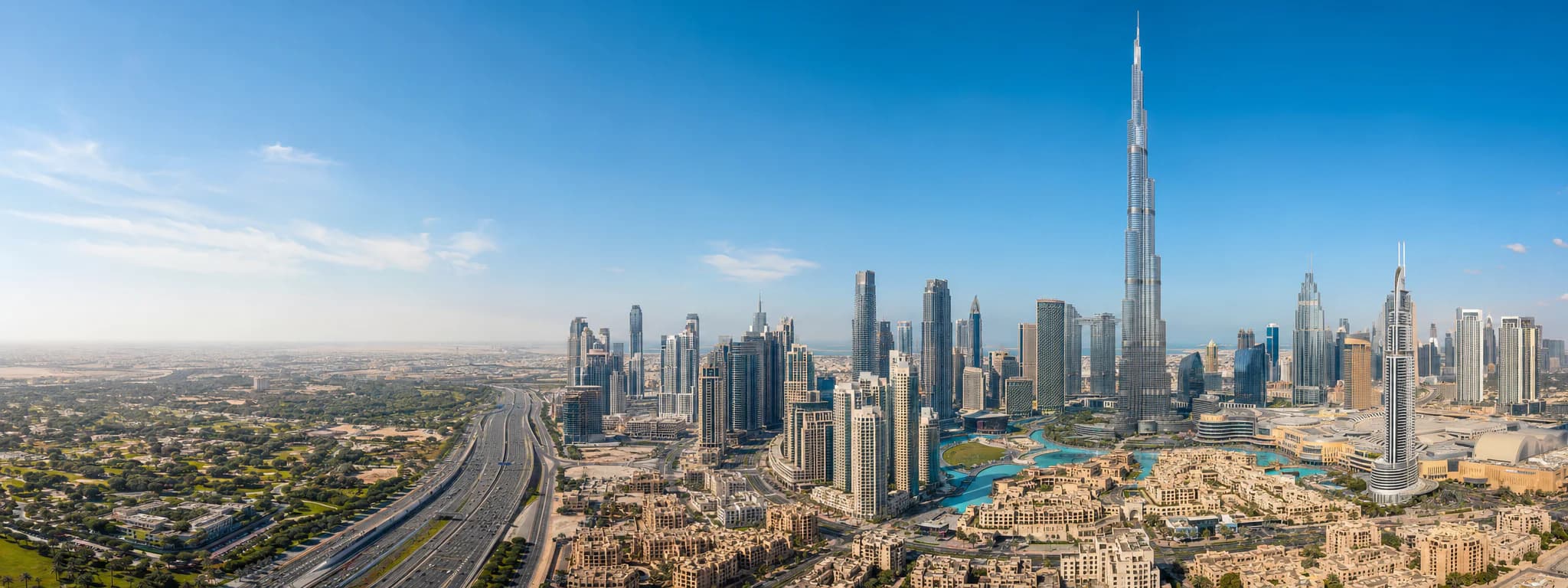
UAE · Dubai
Dubai tours
We will find a tour departing from Kazakhstan, check the hotel and travel terms, and help with the booking.
TripTech travel guide · UAE
Dubai for visitors: the complete TripTech guide
Dubai for travellers from Kazakhstan: areas, attractions, beaches, itineraries, transport, budgeting and practical advice.
- Author
- TripTech editorial team
- Published
- 15 July 2026
- Updated
- 15 July 2026
Contents
At a glance: who Dubai is for
Dubai suits families, couples and travellers who want to combine the beach, a modern city, shopping, food and the desert. Five full days is a sensible first visit; three days covers the main landmarks, while seven allows time to slow down by the sea.
November to March is generally the most comfortable period for long walks. April, May and October can work for travellers comfortable with warmer weather, while summer plans are better centred on indoor venues, pools, early mornings and evenings.
Dubai stands out for the distance between its districts and the number of holiday styles it can combine. Choosing a hotel near the right beach or transport connection matters as much as choosing attractions.
Dubai at a glance
- Country
- United Arab Emirates
- Emirate
- Dubai
- Recommended stay
- 5–7 full days
- Comfortable season
- November to March
- Currency
- UAE dirham (AED)
- Language
- Arabic; English is widely used
- Airports
- Dubai International (DXB), Al Maktoum International (DWC)
- Holiday styles
- City, beach, family, shopping, desert
- Popular areas
- Downtown, Marina, JBR, Palm, Jumeirah
- Best for
- Families, couples and comfort-focused city travellers
Who will enjoy Dubai
Dubai can work for very different trips. Decide on your main holiday style first, then choose the area, hotel and pace around it.
Family holidays
Resort facilities, spacious districts and plenty of indoor activities make daily planning easier.
Travelling with children
Beaches, water parks and family venues can be alternated with short city outings.
Couples
Waterfront walks, restaurants, viewpoints and the desert create several distinct experiences in one trip.
Beach holidays
JBR, Jumeirah and Palm Jumeirah offer sea access but differ in atmosphere and transport.
Premium stays
Resort hotels, private beaches, dining and private transfers create a high-comfort format.
Shopping
Major malls can be paired with attractions and restaurants instead of taking over every day.
Food trips
Emirati, Arab, South Asian and international cuisines all form part of Dubai's dining scene.
City breaks
Architecture, museums, historic quarters and contemporary districts fit a short, active visit.
Short trips
With good logistics, three days can cover Downtown, Marina and Old Dubai.
City, beach and desert
A signature Dubai mix: city days, time by the sea and a separate desert outing.
When to visit Dubai
November to March
- Weather
- Usually the mildest period for walking and outdoor venues.
- Crowds
- Demand is high, especially around holidays and major events.
- Best for
- First visits, beaches, sightseeing and family trips.
- Keep in mind
- The advantage is outdoor comfort; the trade-off is booking popular hotels and attractions earlier.
April to May
- Weather
- Temperatures rise noticeably, particularly in the middle of the day.
- Crowds
- Visitor numbers gradually ease after peak season.
- Best for
- Beach and pool time with morning and evening city plans.
- Keep in mind
- Sun protection and indoor breaks during the hottest hours are important.
June to September
- Weather
- Very hot; long daytime walks can be demanding.
- Crowds
- Outdoor venues are quieter and activity shifts indoors.
- Best for
- Heat-tolerant travellers focusing on resorts, water parks and malls.
- Keep in mind
- Keep transfers short, carry water and minimise time in direct sun.
October
- Weather
- A transition month: still hot, with more comfortable evenings.
- Crowds
- Demand rises as the winter season approaches.
- Best for
- Beach trips before the winter peak.
- Keep in mind
- Daytime heat can remain intense early in the month.
How many days to stay
3 days
Downtown and Burj Khalifa, Marina and JBR, then Al Fahidi and Deira's souks. The pace is active.
5 days
Add Palm Jumeirah, a relaxed beach day and a desert safari without rushing every day.
7 days
Alternate city and beach days, with room for museums, seasonal parks or a dedicated shopping day.
Where to stay in Dubai
Dubai stretches along the coast, so your base determines travel time. Compare the hotel with its access to the beach, metro and the places in your own itinerary.
Downtown Dubai
- Best for
- First visits and major landmarks
- Advantage
- Burj Khalifa and Dubai Mall are nearby
- Possible drawback
- Transport is needed for beach areas
- Transport
- Metro, taxi and walking locally
- Atmosphere
- Modern and busy
- Beach
- Not on the coast
- Cost level
- High
Dubai Marina
- Best for
- Couples, walks and urban-resort atmosphere
- Advantage
- Waterfront, dining and easy access to JBR
- Possible drawback
- Traffic at peak times
- Transport
- Metro, tram and taxi
- Atmosphere
- Lively and resort-like
- Beach
- Close to JBR
- Cost level
- Mid to high
JBR
- Best for
- Beach and family holidays
- Advantage
- Sea, promenade and cafés close together
- Possible drawback
- Busy at popular times
- Transport
- Tram, metro connection and taxi
- Atmosphere
- Active and beach-focused
- Beach
- Direct beach access
- Cost level
- Mid to high
Palm Jumeirah
- Best for
- Resort and premium stays
- Advantage
- Hotels with extensive facilities
- Possible drawback
- Longer journeys to other districts
- Transport
- Monorail, taxi and transfer
- Atmosphere
- Resort-like and secluded
- Beach
- Hotel or beach-club access
- Cost level
- High
Jumeirah
- Best for
- Quieter beach stays
- Advantage
- Coastline and lower-rise surroundings
- Possible drawback
- The metro does not serve every location directly
- Transport
- Taxi and bus
- Atmosphere
- Calm and coastal
- Beach
- Beaches nearby
- Cost level
- Mid to high
Business Bay
- Best for
- Contemporary hotels and business travel
- Advantage
- Close to Downtown
- Possible drawback
- Not every part is convenient on foot
- Transport
- Metro and taxi
- Atmosphere
- Modern and business-like
- Beach
- Not on the coast
- Cost level
- Mid to high
Deira
- Best for
- Souks, local character and a practical budget
- Advantage
- Close to Old Dubai and DXB
- Possible drawback
- Far from Marina and Palm
- Transport
- Metro, bus and abra
- Atmosphere
- Commercial and historic
- Beach
- Not the area's main focus
- Cost level
- Moderate
Bur Dubai and Al Fahidi
- Best for
- History and cultural walks
- Advantage
- Creek-side quarters and museums
- Possible drawback
- A longer journey to beach resorts
- Transport
- Metro, abra and bus
- Atmosphere
- Historic and lively
- Beach
- Not on the coast
- Cost level
- Moderate
Al Barsha
- Best for
- Practical stays and families
- Advantage
- Varied hotels and metro access
- Possible drawback
- Less of a walkable resort atmosphere
- Transport
- Metro and taxi
- Atmosphere
- Residential and calm
- Beach
- Transport required
- Cost level
- Moderate
Essential things to see
Group sights by neighbouring districts and check visiting times on official websites. Global Village and Dubai Miracle Garden are seasonal, so confirm operating dates before you go.
Burj Khalifa
Downtown's defining landmark; check available observation-deck sessions in advance.
Dubai Mall
A major retail and entertainment complex that pairs naturally with Downtown.
Museum of the Future
A contemporary museum with distinctive architecture; check ticket availability early.
Dubai Marina
A high-rise waterfront for walking, dining and evening views.
Palm Jumeirah
A man-made island with resorts, viewpoints and a beach-holiday format.
Dubai Frame
An architectural frame and viewpoint between old and contemporary Dubai.
Al Fahidi
A historic quarter of narrow lanes, cultural spaces and traditional architecture.
Deira souks
Gold, spices and trading streets that combine well with a Creek crossing.
The desert
A striking contrast to the city, with sunsets and programmes of varying intensity.
Dubai beaches
Public and hotel beaches differ in facilities, access and privacy.
Global Village
A seasonal pavilion and entertainment park; confirm dates and programme before visiting.
Dubai Miracle Garden
A seasonal flower park whose availability depends on the time of year.
Dubai itineraries
Each day keeps neighbouring areas together. Traffic can change journey times, so leave a margin and avoid pairing distant sights without a break.
Dubai in 3 days
Landmarks, waterfront and historic Dubai at an active but sensible pace.
- Day 1Downtown: Dubai Mall → Burj Khalifa → evening walk. Metro and walking; moderate pace with an indoor midday break.
- Day 2Dubai Marina → JBR → beach and waterfront dinner. Tram or taxi; relaxed pace with a long beach break.
- Day 3Al Fahidi → abra across Dubai Creek → Deira souks. Metro, walking and water transport; moderate pace.
Dubai in 5 days
City, beach, Palm Jumeirah and desert without packing everything into one day.
- Day 1Downtown, Dubai Mall and Burj Khalifa. Metro and walking; indoor breaks.
- Day 2Museum of the Future → Dubai Frame. Metro and taxi; free evening.
- Day 3Marina → JBR → beach. Tram and walking; slow resort day.
- Day 4Palm Jumeirah and your chosen beach format. Taxi, transfer or monorail; no rush.
- Day 5Quiet morning, then a desert safari with a vetted operator. Transfer and evening programme.
Dubai in 7 days
A balanced week with rest and room for seasonal attractions.
- Day 1Downtown, Dubai Mall and Burj Khalifa. Metro and walking.
- Day 2Museum of the Future → Dubai Frame. Metro and taxi.
- Day 3Al Fahidi → Creek → Deira souks. Metro, abra and walking.
- Day 4Marina and JBR with a beach break. Tram and walking.
- Day 5Palm Jumeirah and resort time. Taxi or transfer.
- Day 6Desert safari after a quiet morning. Operator transfer.
- Day 7Beach, shopping or seasonal Global Village / Miracle Garden. Flexible reserve day.
Beach holidays
JBR, Jumeirah and Palm Jumeirah are the most convenient bases for beach-focused trips. Public beaches offer freedom and city facilities, while hotel beaches offer more controlled service and privacy under each property's own conditions.
JBR
Good for families and travellers who want beach, cafés and a lively promenade within walking distance.
Jumeirah
A calmer coastal format that is easy to combine with short city outings.
Palm Jumeirah
A resort-led stay with hotel facilities; assess journey times to city attractions before booking.
With children
Choose a suitable, equipped stretch with shade and clear facilities; confirm current conditions with the beach or hotel.
Desert safari
A typical programme may include transfers, dune driving, a sunset stop and an evening camp. Duration and activities vary considerably, so compare the detailed programme rather than the excursion name alone.
A safari suits travellers who want a landscape beyond the city. Bring water, a hat, comfortable clothes and sun protection, and book active dune driving only with a vetted operator.
The active portion may not suit pregnant travellers, young children or people with back, heart or other health limitations. Confirm conditions with the operator and seek medical advice when appropriate.
What to check
Operator credentials and reputation, transfers, insurance, vehicle format, meals and cancellation terms.
Choosing the pace
If you do not want active dune driving, ask for a gentler programme or a direct transfer to camp.
Airports and transport
Dubai is served by Dubai International (DXB) and Al Maktoum International (DWC). DXB is closer to Deira, Bur Dubai and central districts; DWC is farther from most visitor areas. A pre-arranged transfer can be convenient for late arrivals, families or substantial luggage.
The metro covers major city corridors, while the tram serves Marina, JBR and nearby areas. Nol is RTA's rechargeable card for the metro, tram, buses and some marine transport. Always confirm current zones, routes, fares and schedules on the official RTA website.
Taxis are practical for areas without a direct metro connection, beaches and trips with children. Water transport is useful too: the abra across Dubai Creek links Al Fahidi and Deira. Allow extra time for distance and peak-hour traffic.
From the airport
Confirm the terminal, arrival time and hotel district; route planning is especially important for DWC.
Metro and Nol
Buy and top up through official RTA channels, and tap the card when entering and leaving.
Taxi and transfer
Useful for beaches, Palm Jumeirah, families with luggage and itineraries with distant stops.
What to eat in Dubai
Dubai's food scene blends Emirati, Arab, South Asian and international cuisines. Familiar Middle Eastern dishes sit alongside local recipes and food traditions from around the world.
- Arab breakfast
- Hummus
- Falafel
- Shawarma
- Mandi
- Meze
- Fish and seafood
- Dates
- Arab sweets
- Arabic coffee
- Karak tea
How to plan your trip budget
Build the budget by category and keep a reserve. Airfares, hotels and attractions vary by date and demand, so there is no responsible universal total without exact trip parameters.
Flights
Compare baggage, arrival airport, connections and fare rules, not just the headline total.
Accommodation
Season, district, hotel class, meal plan and beach access all affect cost.
Transfers
Include the airport journey and separate trips to distant areas.
Urban transport
Allow for metro, tram, Nol and taxis where connections are inconvenient.
Food
Separate breakfast, everyday cafés, restaurants and water throughout the day.
Beaches
Public beaches, beach clubs and hotel access have different conditions.
Attractions
Check official tickets for your dates and avoid too many paid attractions in one day.
Excursions
Compare programme, transfer, language and cancellation terms.
Desert safari
Cost depends on activity level, vehicle privacy and included services.
Shopping
Keep planned shopping separate from everyday expenses.
Travel insurance
Choose cover that fits the route and planned activities.
Contingency
Keep a reserve for taxis, meals, programme changes or medical expenses.
What to know before you go
Dubai is a modern and welcoming city, but travellers should respect local norms, plan for the climate and verify current document requirements.
Currency and payments
The currency is the UAE dirham (AED). Cards are widely used, but a small amount of cash is practical.
Mobile internet
Compare roaming, tourist SIM/eSIM options and your operator's coverage before departure.
Clothing
Choose respectful, more covered clothing in public and religious places; beach settings follow different norms.
Conduct
Follow local rules and venue instructions, and avoid offensive or confrontational public behaviour.
Photography
Do not photograph people without permission and observe restrictions at official or protected sites.
Religious sites
Check dress requirements, visitor hours and photography restrictions.
Alcohol
Drink only where permitted and do not assume another country's rules apply in the UAE.
Heat and sun
Carry water, a hat and sun protection, and schedule breaks in air-conditioned spaces.
Travel insurance
Cover should reflect your route, health and planned activities.
Documents
Recheck passport, tickets, bookings, insurance and airline requirements before departure.
Dubai with children
JBR, Palm Jumeirah, Jumeirah and metro-connected districts can all work for families, depending on whether the beach or the city is the priority. Apartments and family rooms provide more space, while breakfast, a pool and transfers simplify daily logistics.
Avoid overloading each day: one major attraction, beach or water park followed by a calm evening is usually more comfortable than a long checklist. Move walks to mornings and evenings in hot weather, and use taxis or transfers when children are tired.
Frequently asked questions
How many days do I need for a first trip to Dubai?
Five to seven days is ideal for the city, beach and one desert outing without rushing constantly.
When is the best time to visit Dubai?
November to March is commonly chosen for walking and beaches; shoulder months depend on your heat tolerance.
Which area is best for a first stay?
Downtown works for major landmarks, while Marina and JBR combine the beach with an urban-resort atmosphere.
Is Dubai suitable for families with children?
Yes, with a family-friendly hotel, a heat-aware plan, realistic travel times and enough rest.
Can I combine beach and city time?
Yes. Stay in JBR, Marina, Jumeirah or Palm and set aside separate days for Downtown and Old Dubai.
How do I get around Dubai?
Combine metro and tram with taxis. RTA transport uses a Nol card; check routes before each journey.
Do I need cash?
Cards are widely accepted, but a small amount of AED is helpful for minor expenses.
Is Dubai worth visiting in summer?
It can be, if you tolerate intense heat and focus on the hotel, pool, indoor venues, mornings and evenings.
How much money should I budget?
It depends on dates, district and travel style. Price flights and hotel first, then transport, food, beaches, excursions, insurance and a reserve.
How can TripTech help me choose a Dubai trip?
Send a request or message a manager. We will clarify dates, budget, party size and your preferred holiday style.
TripTech · Dubai
Let us help organise your Dubai trip
A TripTech manager will help select flights, a hotel, the right district and a travel format around your dates and preferences.