

Destination guide
UAE holidays — seven emirates between the desert and the sea
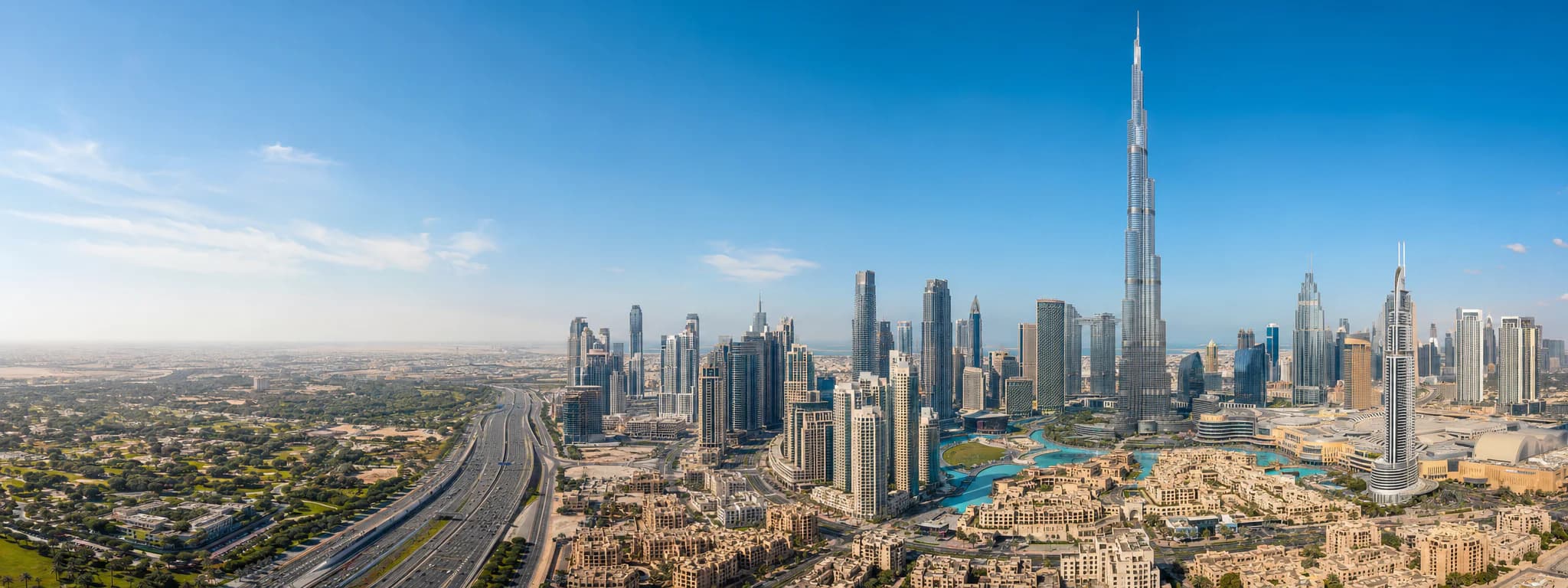
The UAE is seven emirates with very different characters: businesslike Dubai with the world's tallest towers, quieter Abu Dhabi with its museums and grand mosque, cultural Sharjah, the Hajar mountains of Ras Al Khaimah, Fujairah on the east coast and the oasis city of Al Ain. Between the desert and the sea there are beaches, waterparks, mosques, museums and markets, and distances between the emirates are short. A holiday here combines easily with city days, nature and the coast.
TripTech will help you choose a flight and a hotel and put together a route for your dates that takes the heat and the distances into account, so a trip around the UAE stays comfortable.
Where to go in the UAE
- 01
Burj Khalifa — climb the tallest tower in the world
An 828-metre, 163-storey skyscraper in Downtown Dubai and the tallest building in the world since 2010. From the At the Top observation decks on levels 124 and 125 you see the whole city, the desert and the sea, with a higher deck on level 148. At its base are the lake with the Dubai Fountain and the park around the tower.
- 02
Dubai Mall — spend a day in one of the world's largest malls
A vast shopping centre at the foot of Burj Khalifa, with shops, restaurants and entertainment under one roof. Inside are the Dubai Aquarium & Underwater Zoo with its tunnel, an ice rink and a cinema. Outside, an artificial lake with the Dubai Fountain faces the Downtown waterfront.
- 03
Dubai Creek — see the old city
A historic waterway that splits the city into Deira and Bur Dubai, and the place where Dubai began as a trading port. Wooden abra boats cross the water, and the gold and spice souks line both banks. In the Al Fahidi quarter, wind-tower houses survive, and the Al Fahidi Fort, the city's oldest building, houses the Dubai Museum.
- 04
Jumeirah Mosque — discover Islamic architecture
A white mosque in the Jumeirah district, built in Fatimid style with two minarets and a large central dome. It is one of the few mosques in the country that welcomes non-Muslim visitors on guided tours explaining local traditions. Pair the visit with a walk along the Jumeirah waterfront and the nearby Etihad Museum.
- 05
Palm Jumeirah — see a man-made island
An artificial palm-shaped island off the Dubai coast, built from reclaimed sea sand and linked to the mainland by a bridge. A monorail runs along the island, and its trunk and fronds hold hotels, villas and beaches, including Atlantis The Palm with the Aquaventure waterpark. From The View at the Palm observation deck you can see the whole shape of the island and the city skyline.
- 06
Desert safari — drive the red dunes
The trip starts with dune bashing in a 4x4 across the red sands of Lahbab and continues with camel rides and sandboarding. In the evening guests are welcomed at a Bedouin-style camp with dinner, music and dancing, and on a clear night the sky over the dunes fills with stars. Many programmes also include henna painting and quad-bike rides.
- 07
Sheikh Zayed Grand Mosque — see Abu Dhabi's landmark mosque
One of the largest mosques in the world, in Abu Dhabi, clad in white marble with floral inlays. Inside are 82 domes, a vast hand-knotted carpet and huge chandeliers, while the courtyard has colonnades and reflective pools that mirror the building. The tomb of Sheikh Zayed, the first president of the UAE, is here too.
- 08
Louvre Abu Dhabi — walk under the 'rain of light'
A museum on Saadiyat Island, opened in 2017 to a design by the architect Jean Nouvel. Its centrepiece is a huge star-patterned dome that creates the effect of a 'rain of light' inside. The galleries are arranged by theme and chronology rather than by country, bringing works from different civilisations together.
- 09
Qasr Al Watan — step inside a presidential palace
A palace in Abu Dhabi's presidential complex, opened to visitors in 2019. You can see the domed Great Hall, state reception rooms, gifts from foreign delegations and a library of books about the country. The Palace in Motion light show is projected onto the palace facade.
- 10
Sharjah — explore the country's cultural capital
The third-largest emirate and the country's best-known cultural centre, with museums of Islamic civilisation, art and archaeology. In the Heart of Sharjah heritage district, traditional houses, markets and mosques have been preserved, while the Al Majaz waterfront has become a promenade for walks. Sharjah is also known for its international book fair and festivals.
- 11
Ras Al Khaimah and Jebel Jais — head for the mountains
The northernmost emirate, where the road climbs to Jebel Jais, the highest point in the country at around 1,900 metres. A winding mountain road with viewpoints leads up, while below there are hiking routes and the Jebel Jais Flight, the world's longest zipline. The emirate also has a historic village and the Ras Al Khaimah fort.
- 12
Fujairah — reach the east coast
The only emirate on the east coast, facing the Gulf of Oman, with different beaches, mountains and a calmer rhythm. You can see Al-Bidyah Mosque, considered the oldest mosque in the country, and Fujairah Fort, then go snorkelling off the rocky beaches. Around it rise the Hajar Mountains, with wadis, palm groves and springs.
- 13
Al Ain — see the oasis and the Hajar mountains
An oasis city in the emirate of Abu Dhabi near the Omani border, known as the 'garden city'. UNESCO World Heritage sites are here: the Al Ain Oasis with its falaj irrigation system, Hili Archaeological Park and Al Jahili Fort. Nearby, Jebel Hafeet rises above the desert, with a road leading to the top.
- 14
Hatta — cool down in the mountains near Dubai
A mountain enclave of the emirate of Dubai in the Hajar Mountains, visited for its cooler air and water. The main draw is Hatta Dam, where you can kayak and sit by the water, with the Hatta Heritage Village and a restored fort nearby. Hiking and cycling trails have been laid out for active travellers.
- 15
Sir Bani Yas — stay on a nature-reserve island
An island off Abu Dhabi's western coast that has been turned into a nature reserve with hotels and beaches. Arabian oryx, gazelles, giraffes and other animals live here and can be seen on a safari across the island. The island also preserves the ruins of an ancient monastery and traces of early settlement.
- 16
Dubai Marina — walk the waterfront
An artificial canal lined with skyscrapers, where the waterfront becomes a promenade of cafes and boats. Cruise boats and traditional dhows run along the canal, and Jumeirah beach and Bluewaters Island with the Ain Dubai wheel are close by. In the evening the district glows with the lights of the towers.
Resorts and cities
What else is worth trying
Ride an abra
cross Dubai Creek between Deira and Bur Dubai on a traditional wooden boat, the simplest way to see the old city from the water.
Try Emirati food
machboos, luqaimat and dates with cardamom; Dubai and Abu Dhabi have plenty of restaurants serving local dishes.
Go out after sunset
when the heat eases, the lit towers, waterfronts and night markets look completely different.
Rent a car
to link Dubai, Abu Dhabi, the mountains and the east coast in one route, but allow for distances and toll roads.
Kayak the mangroves
in Abu Dhabi's eastern mangroves or in Umm Al Quwain, where quiet water and a slower pace sit just a couple of hours from the city.
Before your trip
The UAE has a desert climate: from October to April the weather suits sightseeing and beach days, while summer is hot and humid, so keep outdoor walks for the morning and evening. For mosques, wear covered clothing and bring a scarf. Driving or buses work well between the emirates, Dubai has a metro and taxis, and local journeys are easy to pay for with a single travel pass. Check current entry conditions on official websites, drink plenty of water and pack a hat and sun cream.
Frequently asked questions
When is the best time to visit the UAE?
From October to April the weather is comfortable for sightseeing and the beach. Summer is hot and humid, so outdoor plans are best kept to early morning and evening. In winter the coast has cool evenings, and desert nights are noticeably colder than the days, so a warm layer is worth packing.
How many days do you need in the UAE?
Five to seven days are usually enough for Dubai and Abu Dhabi. Add the mountains, the east coast or an island and plan ten days or more, otherwise the trip turns into a series of transfers. A week also works well for an unhurried stay in a single emirate.
Dubai or Abu Dhabi?
They are different cities. Dubai is about beaches, malls, contemporary architecture and evening life; Abu Dhabi is a calmer centre of museums, mosques and the presidential palace. If you have time, it makes sense to combine both, as the drive between them is short.
How do you get around the UAE?
Buses, taxis and a rented car link the emirates. Dubai has a metro, a tram and city buses, Sharjah and Ajman are close by, while Abu Dhabi, Ras Al Khaimah and Fujairah are longer drives. For nature and the mountains, a car makes the route much simpler.
Information about places and trip conditions may change or be out of date. Please verify the latest details before you travel.