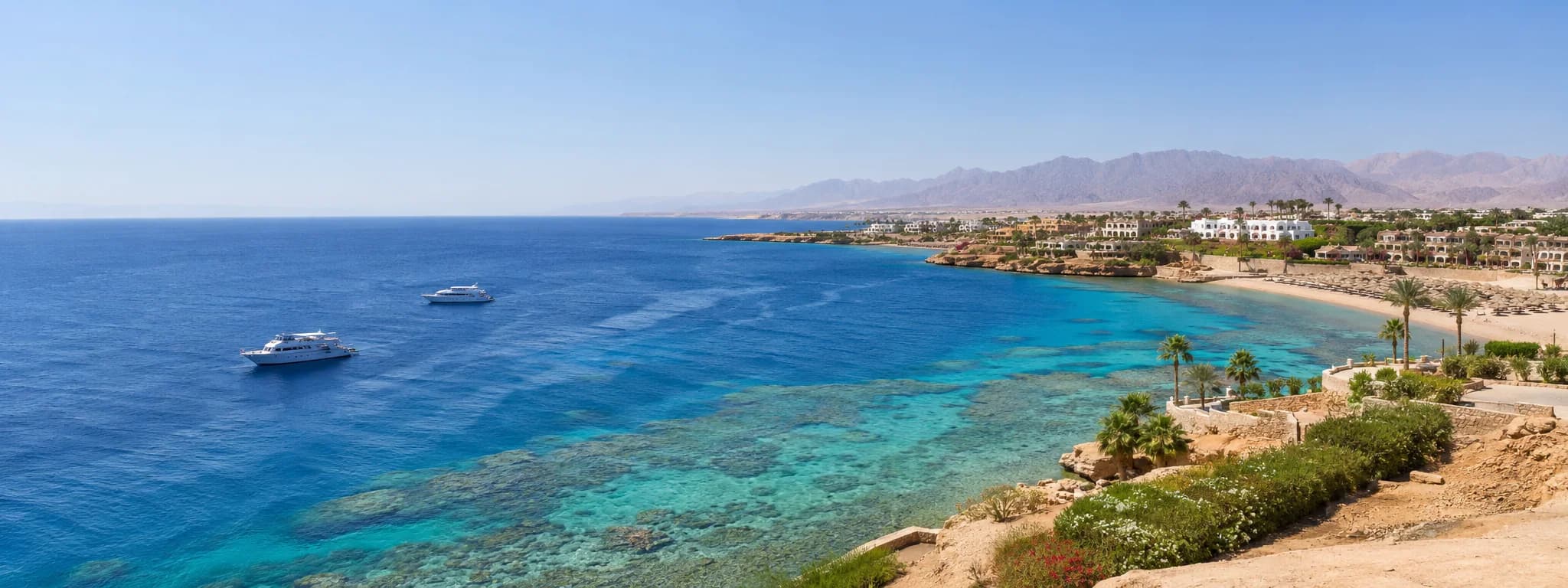
Egypt · Sharm El Sheikh
Sharm El Sheikh tours
We will find a tour departing from Kazakhstan, check the hotel and travel terms, and help with the booking.
TripTech travel guide · Egypt
Sharm El Sheikh for visitors: the complete TripTech guide
A practical Red Sea resort guide: choose the season, bay, hotel and beach, then plan excursions and a safer holiday.
- Author
- TripTech Editorial Team
- Published
- 15 July 2026
- Updated
- 15 July 2026
Contents
In brief: who Sharm El Sheikh suits
Sharm El Sheikh works well for a beach holiday, snorkeling and diving. Its strength is the Red Sea and house reefs at many hotels; its limitation is that a sandy water entry is not available everywhere.
Seven nights is a practical first stay. For the sea, Ras Mohammed, an evening in town and one longer outing without rushing, consider nine or ten nights.
The key choice is not the star rating but the exact bay and hotel beach: wind exposure, pontoon length, depth, house reef and nearby evening facilities define the experience.
Sharm El Sheikh at a glance
- Country
- Egypt
- Sea
- Red Sea
- Ideal stay
- 7–10 nights
- Balanced seasons
- October–November and March–May
- Airport
- Sharm El Sheikh International (SSH)
- Currency
- Egyptian pound (EGP)
- Holiday style
- Hotel, sea, reefs and excursions
- Key choice
- Bay, water entry and house reef
- Best for
- Couples, families and sea lovers
Who a Sharm El Sheikh holiday suits
With the right bay and hotel, the resort can suit a calm family break, a diving-focused trip or a holiday for two.
Beach holidays
Many beachfront hotels and extensive resort facilities.
Snorkeling
House reefs can bring marine life close to the hotel.
Diving
Dive centres and marine sites for different experience levels.
Couples
Choose a quiet bay, an adults-only hotel or an area with evening walks.
Families
Look for sandy entry, shelter, shade and child-friendly facilities.
Winter sun
A popular option, though wind and cool evenings vary by bay and date.
All inclusive
Convenient when most of the holiday will be spent at the resort.
Excursions
Combine the sea with protected areas, desert landscapes and Sinai outings.
When to visit
October — November
- Weather
- Typically a comfortable balance of warm sea and less extreme heat.
- Crowds
- Demand rises around school breaks and holidays.
- Best for
- Beach time, snorkeling, families and a first visit.
- Keep in mind
- Book strong hotels in sheltered bays early.
December — February
- Weather
- Often sunny by day and cooler at night; wind matters in exposed areas.
- Crowds
- Busy around New Year and winter holidays.
- Best for
- A calm break in a carefully chosen bay.
- Keep in mind
- Check pool heating and pack a light evening layer.
March — May
- Weather
- Warmer as the season advances and generally practical for sea and outings.
- Crowds
- Varies around holidays.
- Best for
- A balanced, more active trip.
- Keep in mind
- Sun protection becomes increasingly important.
June — September
- Weather
- Very hot, especially in the middle of the day; the sea is warm.
- Crowds
- Varies with holidays and package prices.
- Best for
- Heat-tolerant travellers focused on the water.
- Keep in mind
- Plan outings early and rest at midday.
How long to stay
5 nights
A short reset with the hotel, sea and one easy outing.
7 nights
A practical first holiday with beach days, Ras Mohammed or Tiran and an evening walk.
10 nights
Enough time to alternate the sea, rest and two or three excursions.
Sharm El Sheikh areas and bays
An area name never replaces checking the exact hotel. Adjacent beaches can have different pontoon lengths, currents, depths and wind exposure.
Naama Bay
- Best for
- First visits and evening walks
- Advantage
- Promenade, cafés and a central resort atmosphere
- Possible drawback
- Busy, and reef quality varies by section
- Transport
- Taxi and walking within the bay
- Atmosphere
- Lively
- Beach
- Often sandy or mixed
- Wind shelter
- Usually more sheltered
- Coral reef
- Depends on the hotel
- Sandy entry
- Often available
- Walkability
- High
- Airport access
- Medium
Sharks Bay
- Best for
- Reefs and a quieter stay
- Advantage
- Beautiful water and airport proximity
- Possible drawback
- Off-resort facilities depend on the hotel
- Transport
- Taxi or transfer
- Atmosphere
- Resort-focused
- Beach
- Often pontoon and reef
- Wind shelter
- Bays are often more sheltered
- Coral reef
- Often strong
- Sandy entry
- Must be checked
- Walkability
- Low–medium
- Airport access
- Short
SOHO Square
- Best for
- Families and evening facilities
- Advantage
- Restaurants, shops and a pedestrian square
- Possible drawback
- Higher prices; the beach depends on the hotel
- Transport
- Walk within SOHO, taxi farther out
- Atmosphere
- Modern
- Beach
- At Sharks Bay hotels
- Wind shelter
- Depends on the beach
- Coral reef
- Often good
- Sandy entry
- Not everywhere
- Walkability
- High within the square
- Airport access
- Short
Nabq Bay
- Best for
- Large resorts and quiet all inclusive
- Advantage
- Spacious properties and resort zone
- Possible drawback
- More exposed to wind, with shallow water and long pontoons in places
- Transport
- Taxi or transfer
- Atmosphere
- Spacious and calm
- Beach
- Shallow water and pontoon
- Wind shelter
- Often windier
- Coral reef
- At the outer edge
- Sandy entry
- Shallow but not always suitable for swimming
- Walkability
- Varies
- Airport access
- Short–medium
Hadaba
- Best for
- Sheltered bays and calmer sea
- Advantage
- Access to Old Market and several beach styles
- Possible drawback
- Not every hotel is waterfront; a beach shuttle may be needed
- Transport
- Taxi or hotel shuttle
- Atmosphere
- Residential and resort
- Beach
- Sand, platforms or reef
- Wind shelter
- Often more sheltered
- Coral reef
- Good at selected beaches
- Sandy entry
- Not everywhere
- Walkability
- Medium
- Airport access
- Longer than Sharks Bay
Ras Um Sid
- Best for
- Snorkeling and reefs
- Advantage
- Well-known coral walls and bays
- Possible drawback
- Steps, slopes and pontoons do not suit everyone
- Transport
- Taxi or transfer
- Atmosphere
- Quiet
- Beach
- Reef or mixed
- Wind shelter
- Often more sheltered
- Coral reef
- Strong
- Sandy entry
- Limited
- Walkability
- Low
- Airport access
- Medium–long
Old Market
- Best for
- Atmosphere, shopping and evening walks
- Advantage
- Market, cafés and Al Sahaba Mosque
- Possible drawback
- Not a single beach resort; transport may be needed
- Transport
- Taxi and walking in the centre
- Atmosphere
- Lively and urban
- Beach
- In neighbouring bays
- Wind shelter
- Depends on the beach
- Coral reef
- Not the area's main criterion
- Sandy entry
- Depends on the beach
- Walkability
- High in the centre
- Airport access
- Longer
Ras Nasrani
- Best for
- House reefs and a quiet hotel
- Advantage
- Close to the airport with a strong marine focus
- Possible drawback
- Few outside facilities and pontoon access is common
- Transport
- Transfer or taxi
- Atmosphere
- Secluded
- Beach
- Pontoon and reef
- Wind shelter
- Depends on beach orientation
- Coral reef
- Often good
- Sandy entry
- Limited
- Walkability
- Low
- Airport access
- Short
How to choose a hotel
In Sharm El Sheikh, choose the hotel from the beach inward. First define how you want to enter the sea and how much the reef, wind shelter and off-resort walks matter.
Bay and wind
Natural shelter matters in winter; no hotel can guarantee completely wind-free conditions.
Water entry
Confirm the sandy entry, shoreline depth, pontoon requirement and pontoon length.
House reef
Ask about reef access, currents and lifeguard restrictions.
Food
Compare restaurant hours, children's options and consistency, not only the all-inclusive label.
Room and grounds
Check renovation, steps, shuttle service and distances to the beach and restaurant.
Children
Prioritise shade, safe entry, seasonal pool heating and access to medical help.
Evening life
Assess travel time to Naama Bay, SOHO or Old Market if you want to leave the resort.
Actual conditions
Room-category photos, a resort map and beach rules matter more than general advertising.
What to see and do
Use a licensed operator and check the programme, insurance, transfers and limitations. Weather and sea conditions can change the route on the day.
Ras Mohammed National Park
Marine scenery, reefs and protected landscapes, with land and boat programmes available.
Tiran
A popular direction for boat trips and snorkeling; sites depend on the programme and conditions.
Naama Bay
Promenade, restaurants and evening resort life.
SOHO Square
A pedestrian area with restaurants, shops and evening entertainment.
Old Market
Markets, cafés, souvenirs and a more urban atmosphere.
Al Sahaba Mosque
An Old Market landmark; respect dress and visitor rules.
Sinai Desert
Sunset, a Bedouin programme or a calmer trip without extreme activities.
Mount Sinai
A long overnight programme with physical demands; assess health, weather and equipment.
Saint Catherine's Monastery
A historic and religious outing with a long drive and its own visiting hours.
Sinai canyons
Routes vary in difficulty and access; proper footwear and a reliable operator are essential.
Diving and snorkeling
Choose a programme for your certification, experience, wellbeing and actual sea conditions.
5, 7 and 10-night itineraries
Treat these as comfortable frameworks, not fixed schedules. Do not place a sea trip directly after a late arrival, and keep a weather buffer.
Sharm El Sheikh in 5 nights
A short holiday with one main outing.
- Day 1Arrival, transfer, hotel orientation and an early night.
- Day 2Sea and gentle snorkeling at the hotel.
- Day 3Ras Mohammed or a boat trip, subject to conditions.
- Day 4Beach time and an evening in Naama Bay, SOHO or Old Market.
- Day 5A reserve beach day, packing and transfer confirmation.
Sharm El Sheikh in 7 nights
A balanced week with sea days and two easy outings.
- Day 1Arrival and adaptation.
- Day 2Beach and the house reef at a relaxed pace.
- Day 3Ras Mohammed or Tiran with a suitable programme.
- Day 4Rest, pool and an evening walk.
- Day 5Diving for trained visitors or more snorkeling.
- Day 6Old Market and Al Sahaba, or a calm desert programme.
- Day 7Weather and departure buffer.
Sharm El Sheikh in 10 nights
A complete resort break without changing activity every day.
- Days 1–2Adaptation, the beach and the house reef.
- Day 3Ras Mohammed.
- Day 4A full rest day at the hotel.
- Day 5SOHO Square or Naama Bay.
- Day 6Tiran, snorkeling or diving if conditions allow.
- Day 7Recovery with no outing.
- Day 8A Sinai programme of suitable difficulty.
- Day 9Old Market and Al Sahaba.
- Day 10Reserve beach day and departure preparation.
Beaches and water entry
A ‘beach’ in Sharm El Sheikh may mean a sandy bay, coral platform or long pontoon to deep water. Confirm the exact setup before booking.
Sandy entry
Often easier for children and hesitant swimmers, though depth and seabed still vary.
Mixed beach
A small sandy zone combined with a pontoon and reef access.
Pontoon
Leads to deeper water and the reef; length, ladder and wave closures matter.
Shallow water
Useful for playing near shore, but the swimming zone may be far away.
Deep reef
Rewarding for confident snorkelers but not a safe-entry substitute for a child.
Water shoes
Useful in permitted areas, but never walk on coral.
Coral reefs and snorkeling
Coral is a living, fragile ecosystem. Never stand on the reef, touch wildlife, take shells or feed fish; follow marked routes and lifeguard instructions.
House reef
Useful for hotel-based snorkeling, but access depends on waves, current and lifeguard decisions.
Ras Mohammed
A major protected area that must be visited under the established rules.
Tiran
Marine sites can be excellent, while the day's route and entry depend on conditions.
Safer snorkeling
Do not swim alone; use suitable equipment and a flotation aid when appropriate.
Currents
A calm surface does not rule out current. Confirm direction and boundaries with the lifeguard.
Reef protection
Keep fins away from coral and minimise your impact on the marine environment.
Airport and transfers
Sharm El Sheikh International Airport (SSH) is close to Sharks Bay, SOHO, Ras Nasrani and parts of Nabq; Hadaba and Old Market are generally farther. Actual transfer times depend on traffic and hotel stops.
A package holiday may include a shared transfer, which can take longer because of multiple stops. A private transfer is often easier for families, late arrivals and large luggage.
Before departure, confirm the terminal and pickup time against your voucher and receiving partner. Do not accept an unofficial substitution without confirmation.
Shared transfer
Practical, but likely to include other hotels.
Private transfer
A direct option with more control for families.
Taxi
Agree a clear fare or use an official hotel channel.
Food and local dishes
Most resorts offer all inclusive, although quality and choice vary. Outside the hotel, try Egyptian and Middle Eastern food at reputable venues and stay careful with drinking water.
- Koshari
- Ful
- Ta'ameya
- Hummus
- Meze
- Kofta
- Grilled dishes
- Seafood
- Umm Ali
- Dates
How to plan your budget
There is no reliable universal figure. Flights, season, bay, room category, meals, excursions and diving all change the total, so budget by category and keep a reserve.
Package or flights
Compare baggage, transfer, insurance and change terms, not only the headline price.
Hotel
Bay, beachfront location, reef, renovation, board basis and room type all affect price.
Transfer
Confirm whether it is included and shared or private.
Excursions
Compare itinerary, tickets, meals, insurance and guide language.
Diving
Allow separately for training, equipment rental, certification and medical requirements.
Connectivity
Roaming, eSIM or local SIM costs depend on your device and trip length.
Tips
Keep a modest amount for service when you are satisfied.
Insurance
Cover must match your route and activities, especially diving.
Reserve
Keep funds for a doctor, taxi, programme changes or unforeseen expenses.
What to check before travel
Check documents, insurance and entry rules through official sources for your travel dates. This guide cannot replace a border authority, doctor or insurer.
Passport and visa
Check passport validity and the correct entry route through the official Egypt e-Visa portal and your carrier.
Sinai arrangements
Do not rely on verbal promises: limits depend on trip duration, purpose and territory.
Insurance
Confirm cover for treatment, excursions, snorkeling and diving, and save assistance contacts.
Health
Carry regular medicines with documents and discuss chronic conditions with your doctor.
Sun and water
Use headwear and sun protection, drink safe water and adapt gradually.
Sea rules
Observe flags, swimming boundaries and lifeguard directions; never swim alone at night.
Clothing
Choose respectful clothing outside the beach and hotel, especially at religious sites.
Offline documents
Save your voucher, insurance, hotel and receiving-party contacts offline.
Sharm El Sheikh with children
For a child, sandy entry and shade matter more than a beautiful reef in a brochure. Confirm shoreline depth, pontoon length, pool heating, steps, children's food and room-to-beach distance.
Avoid overheating and an overloaded schedule. For a boat trip, consider age, motion sickness, a correctly sized life jacket and access to shade.
Carry familiar medicines, sun protection and your insurer's contacts, and check airline documentation rules in advance.
Diving and safety
Dive with a licensed centre and disclose your true training level, recent experience, medicines and health. Certification does not replace a briefing or the operator's right to change the plan.
Do not schedule a flight immediately after diving. The appropriate interval depends on the dive profile, number of dives, dive computer, certified operator guidance and medical circumstances; a single universal number would be unsafe.
Never touch coral, chase wildlife or leave the agreed group. If you feel unwell, cancel the dive and seek professional help.
Before diving
Complete the medical questionnaire honestly, obtain medical clearance where indicated and check insurance.
Operator
Check credentials, equipment, group size, emergency plan and included services.
After diving
Follow your dive computer and centre guidance; avoid an immediate flight and excessive exertion.
Protect the sea
Never touch, break or take coral; fish feeding and walking on reefs are prohibited.
Frequently asked questions
When is the best time to visit Sharm El Sheikh?
October–November and March–May often offer the best balance. In winter choose a sheltered bay; in summer consider your heat tolerance.
Which areas are less windy?
Parts of Naama Bay, Hadaba and Ras Um Sid are often more sheltered, but this is never guaranteed. Check the exact beach.
Which area is best for a first visit?
Naama Bay for walks, Sharks Bay or Ras Nasrani for reefs, Nabq for large resorts, and Hadaba or Ras Um Sid for sheltered bays.
Do all hotels have sandy entry?
No. Many hotels use a pontoon to deep water or have only a small mixed-entry zone.
Is Sharm El Sheikh suitable for children?
Yes, with a safe sandy entry, shade, suitable food and a sheltered bay.
Ras Mohammed or Tiran?
Both focus on the sea and reefs. Choose by programme, weather, duration, vessel and swimming ability.
Does a Kazakhstan citizen need a visa?
The official portal accepts e-Visa applications from Kazakhstan, but confirm the exact regime for your route and dates.
Can I touch coral?
No. Never stand on reefs, take coral or shells, touch wildlife or feed fish.
How many days are enough?
Five nights is a short reset, seven suits a first holiday, and ten allows several outings without rushing.
How is Sharm El Sheikh different from Hurghada?
Sharm is especially known for bays, reefs and pontoon entry. Hurghada more often has broad sandy beaches and a mainland city setting, but the hotel remains decisive.
TripTech · Sharm El Sheikh
We will match Sharm El Sheikh to your holiday style
A TripTech manager will clarify dates, party size, budget and your preferences for the bay, beach and reef, then suggest suitable options.