

Destination guide
Egypt holidays — pyramids, the Nile and the Red Sea
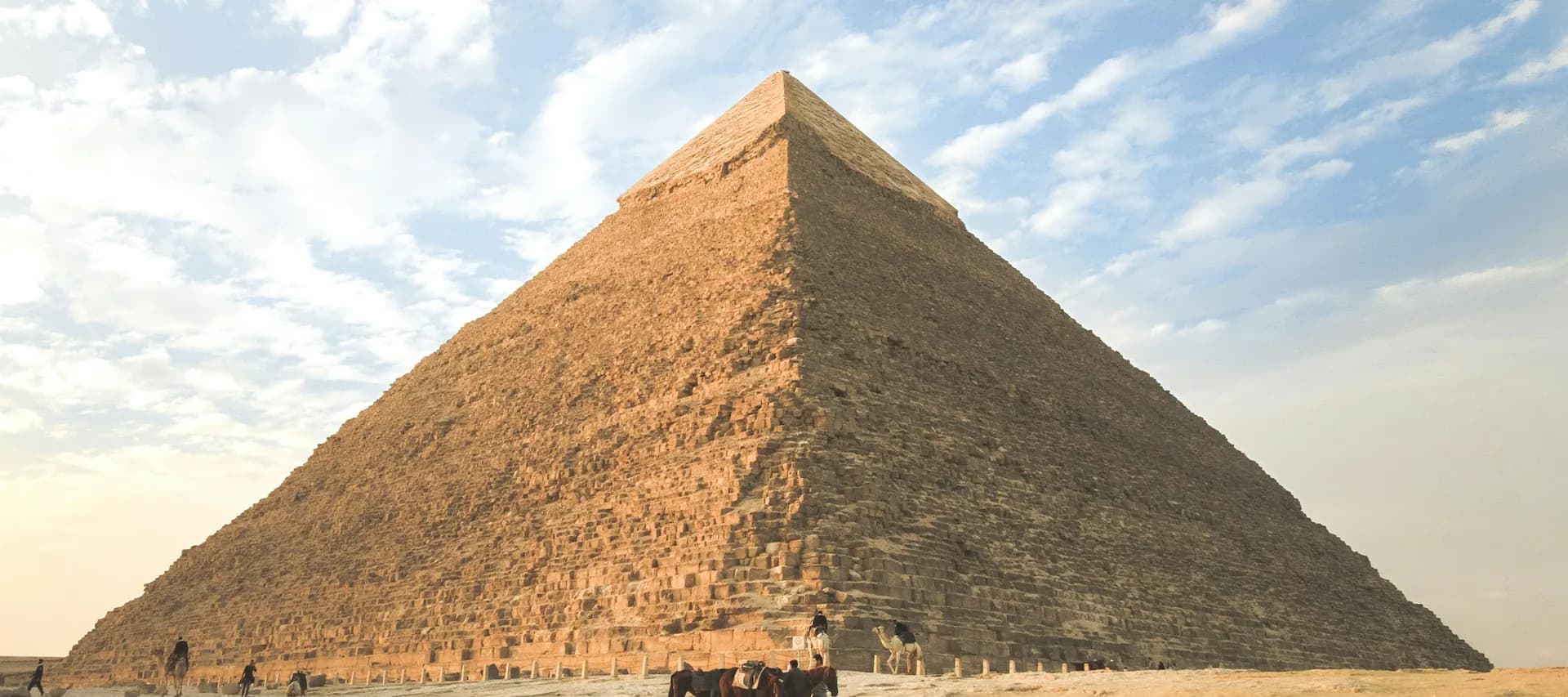
Egypt is several journeys in one country: the pyramids of Giza and the museums of Cairo, the temples of Luxor and the tombs of the Valley of the Kings, the quiet Nile at Aswan, ancient Alexandria and the reefs of the Red Sea. History here spans thousands of years, and moving between ancient sites and resorts is easy. Allow enough time to see both the monuments and the sea.
TripTech will help you choose a flight and a hotel and build a route between Cairo, Luxor and the coast for your dates, so the trip stays comfortable and free of unnecessary transfers.
Where to go in Egypt
- 01
Pyramids of Giza — see the only surviving ancient wonder
The complex of the pyramids of Khufu, Khafre and Menkaure on the Giza plateau, with the Great Sphinx standing nearby. It is the only one of the seven wonders of the ancient world that still stands. The pyramids sit at the edge of the desert, so early morning is the easiest time to visit.
- 02
Egyptian Museum — make sense of thousands of years
One of the country's main museums on Tahrir Square in Cairo, home to one of the largest collections of ancient Egyptian art. Here you can see sarcophagi, statues of pharaohs, papyri and burial objects found in the tombs. The collection is vast, so decide in advance which halls matter most to you.
- 03
Khan el-Khalili — bargain in the old bazaar
A historic market in Cairo's Islamic district, known as a trading place since the 14th century. It sells spices, fabrics, lamps, jewellery and souvenirs, and coffee houses and small mosques hide between the shops. Bargaining is expected, and the bazaar is best explored by walking away from the main streets.
- 04
Saladin Citadel — look over Cairo from above
A medieval fortress on the Muqattam hill, founded by Saladin in the 12th century. Its grounds hold the Muhammad Ali Mosque with its alabaster domes and several museums. From the terraces you get a wide view of the city and a sense of how large Cairo really is.
- 05
Coptic Cairo — see the Christian heritage
The old part of the city, home to Coptic churches including the Hanging Church, built over the gates of the Roman fortress of Babylon. The Coptic Museum and the Church of Saint Sergius, linked to the story of the Holy Family, are nearby. This is a quiet corner of Cairo where early Christian history is visible in the architecture.
- 06
Luxor and Karnak — walk between the temple columns
A city on the site of ancient Thebes, with the Karnak and Luxor temples joined by an avenue of sphinxes. Karnak was built over several centuries, and its hypostyle hall with its tall columns is one of the most striking in Egypt. Allow half a day and carry water.
- 07
Valley of the Kings — go down into the pharaohs' tombs
A necropolis on the west bank of the Nile near Luxor, where pharaohs of the New Kingdom were buried. Dozens of tombs cut into the rock hold paintings and reliefs, and the best known is the tomb of Tutankhamun, found in 1922. The chambers get hot, so an early start helps.
- 08
Luxor Temple — see the ancient city in the evening
A temple in the centre of Luxor dedicated to Amun, with a colonnade, courtyards and statues of pharaohs. In the evening the lights come on and the stone columns look especially dramatic. The temple stands on the Nile corniche, so the visit pairs well with a walk through the city.
- 09
Aswan and Philae — sail to a temple on an island
Aswan is Egypt's southernmost large city and the starting point for trips on the Nile and to Nubian villages. Nearby is the temple of Philae, dedicated to the goddess Isis, which was moved to Agilkia Island in the 20th century to save it from flooding. People come for the feluccas, the calm river and Nubian culture.
- 10
Abu Simbel — see a temple rescued from the water
Two rock-cut temples of Ramesses II in southern Egypt, close to the border with Sudan. The huge statues of the pharaoh and the reliefs inside are known far beyond Egypt, and in the 1960s the whole complex was dismantled and moved higher to keep it out of the reservoir. Getting here takes time, so trips often start very early.
- 11
Alexandria — walk the seafront and touch antiquity
A city on the Mediterranean founded by Alexander the Great, once known for its library and lighthouse. Here you can see the Roman amphitheatre, the Catacombs of Kom el-Shoqafa and Fort Qaitbay, built on the site of the ancient lighthouse. Alexandria feels very different from Cairo, with the sea and a milder climate.
- 12
Hurghada — combine the sea with the desert
A resort on the western shore of the Red Sea with a long coastline and hotels close to the water. It is an easy place to learn diving, join boat trips and head into the desert to Bedouin camps. Buses and flights also link Hurghada with Luxor, so it often serves as a base for excursions.
- 13
Sharm el-Sheikh — dive into coral reefs
A resort at the southern tip of the Sinai Peninsula, known for coral reefs close to the shore. Ras Mohammed National Park and the Strait of Tiran are the main draws for underwater scenery. The resort stretches along the coast, and trips into the desert or to Saint Catherine's Monastery also feature in local programmes.
- 14
Dahab — head for quiet diving
A small town on the east coast of Sinai, popular with divers and windsurfers. The Blue Hole is a well-known dive site, and the coastal reserves and steady wind make Dahab a favourite for windsurfing. The pace is calmer than at the big resorts, with plenty of small cafés by the water.
- 15
Marsa Alam — see untouched reefs
A resort in the south of the Red Sea coast, between Hurghada and the border with Sudan. The reefs are less crowded, and nearby seagrass beds are home to dugongs and sea turtles that boat trips go out to see. The town itself is small, so most of the holiday happens on the beaches and around the reefs.
- 16
Siwa and the White Desert — see another side of Egypt
The Siwa Oasis in the west of the country is known for its salt lakes, mud-brick fortress and palm groves, while the White Desert is famous for chalk rock formations that look like snowdrifts. Both lie in the Western Desert, far from Cairo and the sea, so the trip is planned over several days. Here you can camp and watch the stars far from city lights.
Resorts and cities
What else is worth trying
Try the local food
koshari, ful, ta'ameya, fresh fish and herbal tea — simple dishes worth trying in town, not only at the hotel.
Plan excursions for the morning
the south gets hot during the day, so see the pyramids and temples early and keep the afternoon for a museum or the water.
Take a guide where it matters
in temples and tombs a guide explains the scenes painted on the walls, but check their licence and agree on the route in advance.
Pack the right bag
water, a hat, a light scarf for mosques and churches, sunscreen and comfortable shoes are the minimum for Cairo and Luxor.
Keep small notes for tips
thanking people for service is customary in Egypt, so small notes are useful for taxis, cafés and guides.
Before your trip
Egypt is hot and dry, so trips to Cairo and Luxor are best planned for spring or autumn, while the Red Sea coast is comfortable almost all year. In mosques, churches and temples, covered shoulders and knees help, and the reefs are protected areas where touching coral is not allowed; book diving with a reputable centre. Flights connect the cities, cruise boats run along the Nile, and in Cairo a driver or a taxi is the practical way to get around. Check current entry conditions on official websites and carry some cash for small expenses: cards are not accepted everywhere.
Frequently asked questions
When is the best time to visit Egypt?
For sightseeing in Cairo, Luxor and Aswan, autumn through spring is the most comfortable, when the heat eases. The Red Sea works almost all year, though summer days are very hot and winter water is cooler.
How many days do you need in Egypt?
Three or four days are usually enough for Cairo and the pyramids, and another four or five for Luxor and Aswan. Add the sea and the trip needs at least ten days, otherwise it turns into a series of transfers.
Should you choose the Red Sea or the sights?
They are different holidays: the sea is about beaches, reefs and diving, while the sights are about pyramids, temples and museums. It makes sense to start in Cairo and Luxor and finish at a resort to rest after a busy programme.
How do you get around Egypt?
Domestic flights link Cairo, Luxor, Aswan and the resorts, and a Nile cruise is a comfortable way to travel between Luxor and Aswan. In cities people use taxis or a car with a driver, while trips to temples and the desert are usually organised tours.
Information about places and trip conditions may change or be out of date. Please verify the latest details before you travel.