

Destination guide
Azerbaijan holidays — Baku, mountains and the Caspian
Azerbaijan brings the sea, the mountains and old cities into one trip: Baku and the Absheron peninsula on the Caspian, the rock carvings of Gobustan, Shamakhi, Sheki, Qabala and Quba below the Greater Caucasus, the highland village of Khinalig in the north, subtropical Lankaran in the south and Ganja with the Nakhchivan exclave in the west. Distances are short here, so a single route can take in the sea, the mountains and ancient monuments alike.
TripTech will help you choose a flight and a hotel and build a route between Baku, Sheki and Quba for your dates, so travelling around Azerbaijan stays comfortable and free of unnecessary transfers.
Where to go in Azerbaijan
- 01
Icherisheher — lose yourself in the old city
The walled old city of Baku, where narrow streets, stone houses, mosques, bathhouses and small courtyards form a world of their own. It is a pleasure to wander here without a plan and find passages between the quarters, and the city's main monuments are all inside the walls. Allow half a day and look into the workshops and tea houses.
- 02
Maiden Tower — climb the symbol of Baku
A massive tower in the very centre of Icherisheher that is considered the symbol of Baku. A museum works inside, and from the viewing level the bay and the old quarters open up below. The purpose of the building is still debated, which makes the place even more interesting, and the fortress walls and busy streets begin right beside it.
- 03
Palace of the Shirvanshahs — see a ruler's residence
A palace complex on the high point of old Baku that served as the residence of the Shirvan rulers. The main building, the divankhana, the burial vault and a mosque with a minaret survive here, with a mausoleum and old bathhouses nearby. The place shows how the city elite lived before the empires arrived, and the terrace opens a wide view over the city.
- 04
Flame Towers — see Baku at night
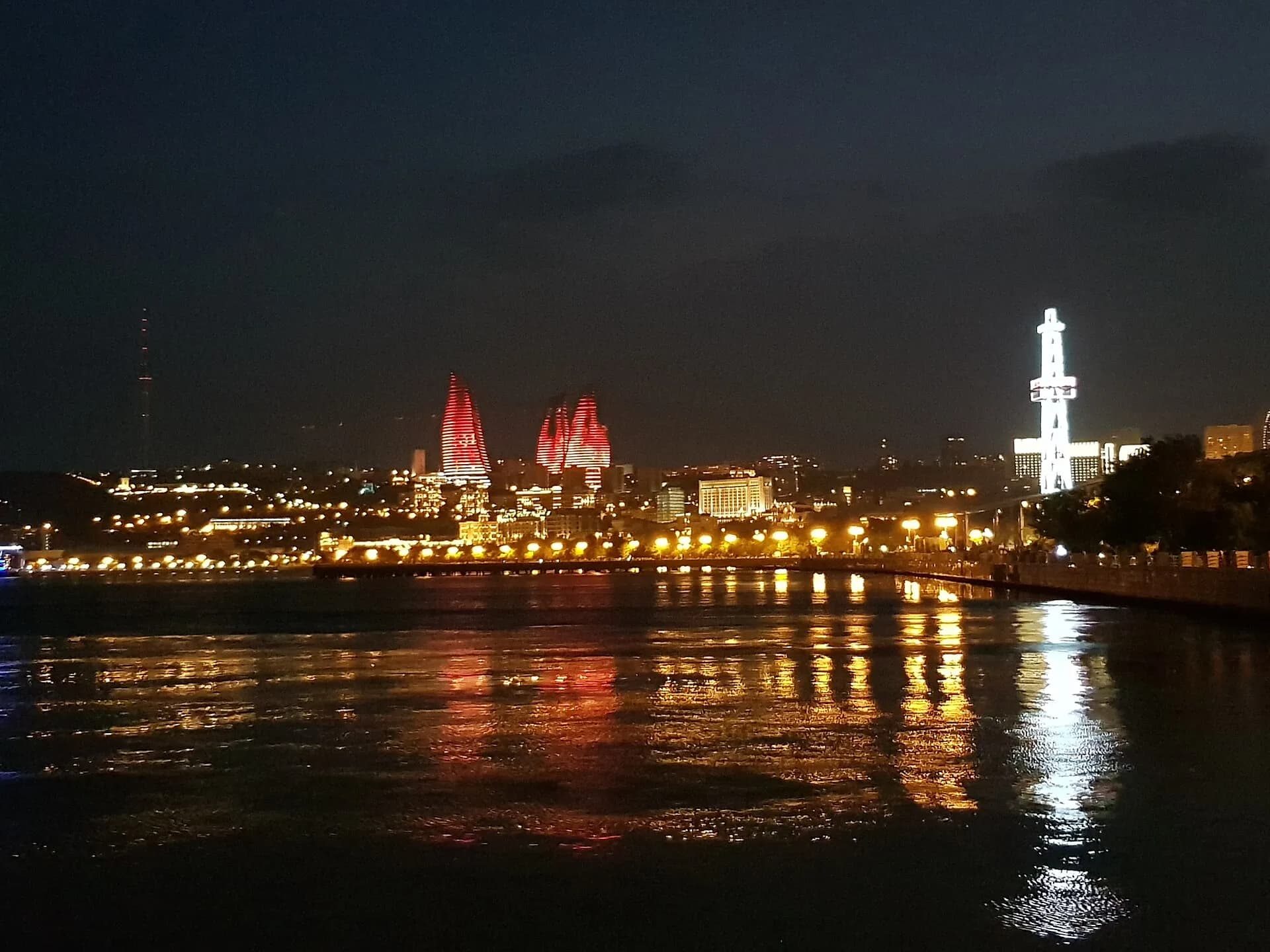
Three high-rise buildings shaped like tongues of flame have become the modern symbol of the city and look best after dark. By day they are offices and apartments, and in the evening the lighting turns them into the main feature of the skyline. They can be seen from the hill by the old city and from the waterfront, so a walk fits neatly around them.
- 05
Baku Boulevard — walk along the Caspian
A long waterfront promenade with palms, parks, cafés and views over the Caspian Sea. The boulevard is at its best in the evening, when the lights come on, and it is possible to walk from the old city to the new districts. Boat piers, playgrounds and the places where locals come to relax are all along the way.
- 06
Gobustan — study ancient rock art
A reserve an hour from Baku where thousands of petroglyphs survive on the rocks: people, bulls, hunting scenes, boats and the daily life of ancient communities. Some of the carvings are thousands of years old, and campsites and inscriptions from different eras lie nearby. Summer here is hot and shadeless, so come in the morning and carry water.
- 07
Ateshgah — see a temple of fire
A fire temple on the Absheron peninsula, built where natural gas came out of the ground and fed a flame. The complex with arches, cells and an altar in the centre grew around the site, and merchants and pilgrims of different faiths came here. Today the fire is lit for visitors, but the place still makes a strong impression.
- 08
Yanar Dag — watch a burning hillside
A slope on the Absheron peninsula where natural gas reaches the surface and has burned for a very long time, surviving rain and wind. The flame can be seen from a viewing platform, so it is worth coming after dark, when the fire is at its brightest. The site is tied to local ideas about fire and to the Zoroastrian tradition that left its mark across the country.
- 09
Shamakhi and Giz Galasi — climb to old fortresses
A town in the foothills of the Greater Caucasus that was once the capital of Shirvan and a centre of craft and trade. Old fortresses stand nearby, including Giz Galasi on a rock, with wide views over the valley and the mountains. In town it is worth seeing the Juma Mosque and trying the local sweets and fruit from the surrounding orchards.
- 10
Ganja and the Nizami mausoleum — remember a great poet
One of the oldest cities in the country, home to the mausoleum of the poet Nizami Ganjavi, a slender building with a tall portal that draws travellers and locals alike. In the historic centre you can see the Juma Mosque, old bathhouses and quarters with carved facades. Ganja works well as a base for trips to Lake Goygol and towards Shamkir.
- 11
Palace of the Sheki Khans — see glass and carving
A small 18th-century palace in the town of Sheki, known for stained-glass windows, carved niches and wall paintings. It is unlike the ceremonial residences of empires: the building is intimate and arranged around an inner courtyard. In town it is also worth seeing the old caravanserai, the fruit markets and trying the local halva.
- 12
Lahij — visit a craft village
A highland village in the Ismayilli district where copper dishes, jewellery and weapons have been made for centuries. Workshops open right by the road, and stone houses climb the slope above the gorge. Lahij is one of the most colourful settlements in the country, and the trip pairs easily with Sheki and the Qabala district.
- 13
Qabala and Tufandag — ride the cable car
A city at the southern foot of the Greater Caucasus that acts as the gateway to mountain routes. A cable car climbs from here to the Tufandag ridge, where people ski in winter and walk the trails for the views in summer. Waterfalls, an old church and mountain lakes are nearby, so the district deserves two or three days.
- 14
Quba and Red Sloboda — see a highland tradition
A city in the north-east of the country where the roads into the mountains and to the highland villages begin. Nearby lies Red Sloboda, a settlement of Mountain Jews with synagogues, museums and small craft shops. Routes to Khinalig and toward Shahdag also start in Quba, which makes the town a convenient base for several days.
- 15
Lankaran and Talysh — see the subtropical south
A city in the south of the country on the Caspian Sea, surrounded by humid subtropics and the low mountains of the Talysh range. The landscapes and the climate are different here: dense forests, tea plantations, warm springs and large markets. Nearby you can see an old fortress, and on the coast sandy beaches and the places where migratory birds stop.
- 16
Nakhchivan and Momine Khatun — see a masterpiece of the 12th century
The autonomous republic is cut off from the rest of the country, but it deserves a place on the route for the 12th-century Momine Khatun mausoleum, with its intricate ornament and slender silhouette. Nakhchivan city also has the tomb of Noah, old mosques and an eastern bazaar. Around it you can see the Alinja fortress on its rock and the salt mountains with working underground mines.
Resorts and cities
What else is worth trying
Try the local food
plov, dolma, kutab, saj and kebab — dishes best found in tea houses and small family restaurants rather than only in the hotel.
Drink tea with jam
in Azerbaijan tea comes with white jam made from quince, walnuts or rose petals, and it is a ritual of hospitality all of its own.
Head for the mountains
the roads to Sheki, Qabala and Quba pass through gorges and over passes, and the views of the Greater Caucasus open up straight from the car.
Take a cable car
the lifts in Qabala and Shahdag climb to the ridges, and in summer this is an easy way to reach the trails without a long walk up.
Browse a market
for spices, pomegranates, dried fruit and cheese — an hour at the bazaars of Baku, Ganja or Lankaran is enough to taste the whole country.
Before your trip
Weather in Azerbaijan depends on the region: summers on the Absheron peninsula are hot and windy, the mountains are cooler, and the south around Lankaran is warm and humid almost all year. Spring and autumn suit a trip across the country, when walking is easy in both the cities and the mountains. Roads between the regions are mostly good, but mountain roads are narrow and winding, so allow extra time. The food is rich and hearty and tea is drunk at any hour, so do not rush your lunches. Change money at banks or exchange offices: cards work in the cities, but villages need cash. Trains, buses and minibuses link the towns, Baku has a metro, and for mountain routes a car with a driver is the comfortable choice. Check entry rules in advance and make sure your passport has enough validity left.
Frequently asked questions
When is the best time to visit Azerbaijan?
Spring and autumn are the most comfortable for most of the country: the air is mild and the heat does not get in the way of walking around the cities. Summer on the Absheron peninsula is hot and windy, the mountains hold snow in winter, and the south around Lankaran is humid in summer. Winter in Baku is quieter, but the days are short and it often rains.
How many days do you need in Azerbaijan?
Three or four days are enough for Baku and the Absheron peninsula. If you add regions such as Sheki, Qabala and Quba, plan seven to ten days, otherwise the trip turns into transfers. With Nakhchivan included, allow about two weeks.
Should you choose Baku or the regions?
They are different trips. Baku is about history, museums, architecture and the waterfront, while the regions are about mountains, villages and crafts. If you have time, start in Baku, head for the mountains and come back to the sea at the end, finishing on the boulevard.
How do you get around Azerbaijan?
Buses and trains connect Baku with Ganja, Qabala and Quba, and there are domestic flights as well. In towns, taxis and public transport are practical, while mountain routes are best done with a car and a driver or an organised tour. Nakhchivan is reached by plane.
Information about places and trip conditions may change or be out of date. Please verify the latest details before you travel.
Photograph: Avisadehh · CC0 · Wikimedia Commons