

Destination guide
Thailand holidays — from Bangkok to the islands
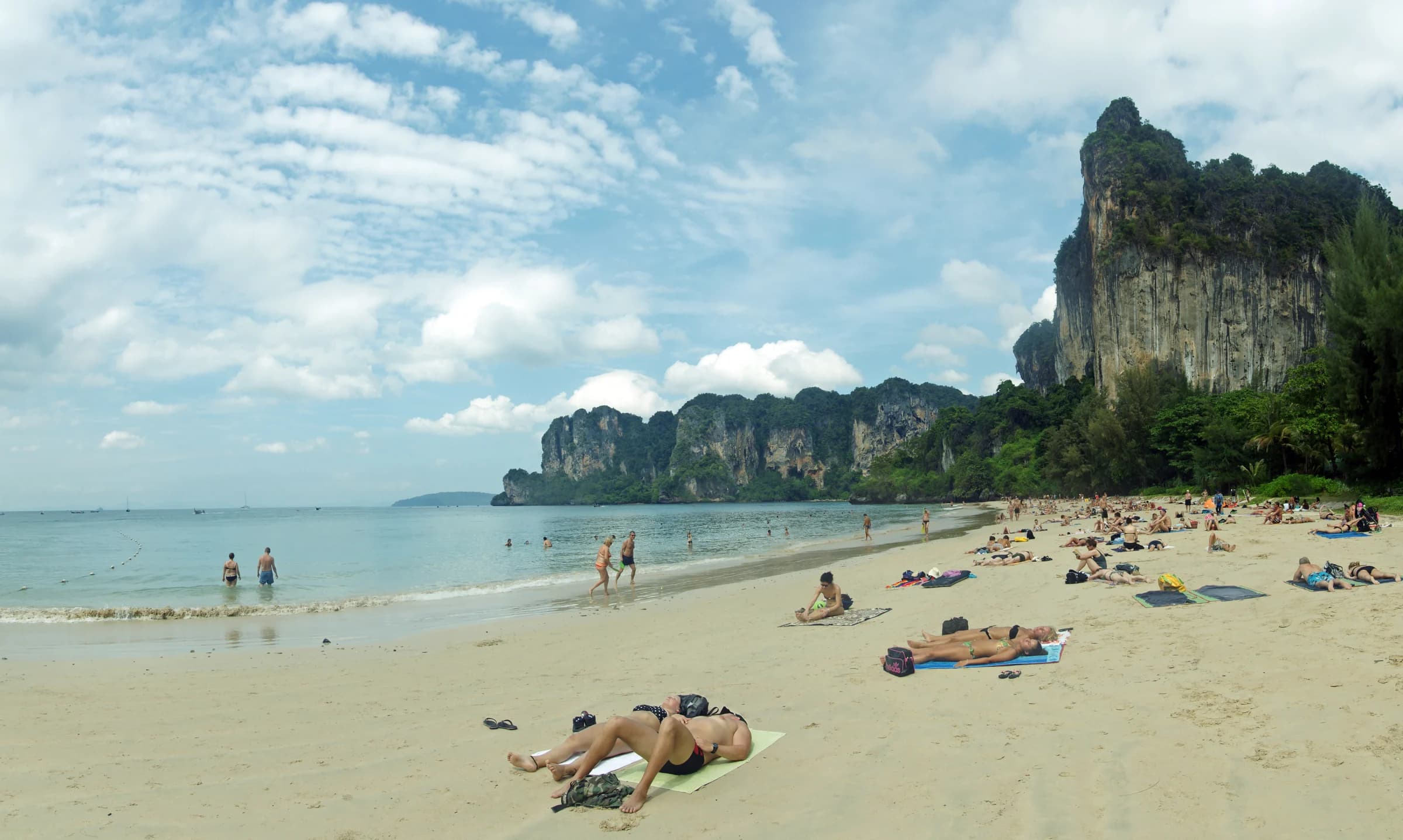
Thailand packs a great deal into one trip: the metropolis of Bangkok, the old capitals of Ayutthaya and Sukhothai, the mountains and temples of the north, and the islands of the Andaman Sea and the Gulf of Thailand. Street food, Thai massage, Buddhist shrines and national parks come on top, so the route is best put together without rushing.
TripTech will help you choose a flight and a hotel and put together a route for your dates, so travelling around Thailand stays comfortable and free of unnecessary transfers.
Where to go in Thailand
- 01
The Grand Palace — see the residence of Siamese kings
A palace complex on the Chao Phraya that served as the residence of Siamese kings from the late 18th century. Inside are the throne halls and the Temple of the Emerald Buddha, one of the country's main shrines. The palace stands near Wat Pho, so both sights fit into a single day.
- 02
Wat Pho — see the giant reclining Buddha
One of Bangkok's oldest and largest temples, known for its reclining Buddha about 46 metres long. It also houses a traditional Thai massage school, so the temple is interesting for its living tradition as well as its architecture. It is a short walk from the Grand Palace.
- 03
Wat Arun — admire the temple at sunset
The Temple of Dawn on the west bank of the Chao Phraya, whose central prang is decorated with fragments of ceramic and porcelain. A ferry crosses from the opposite bank, and the best views of the temple open up from the river. At sunset, the illuminated silhouette becomes especially striking.
- 04
Chatuchak — get lost in the weekend market
The weekend market in Bangkok, where thousands of stalls across the park sell clothes, crafts, plants and food. It is easy to spend half a day looking at antiques, ceramics and street kitchens. Arriving early helps in the heat, before the crowds grow.
- 05
Ayutthaya — walk through the ruins of an ancient capital
A historic city about 80 kilometres north of Bangkok that was the capital of the Ayutthaya Kingdom from the 14th to the 18th century. Brick ruins, stupas and Buddha statues remain where palaces and temples stood, and the whole historical park is a UNESCO World Heritage Site. The ruins are pleasant to explore by bicycle, which can be picked up near the entrance.
- 06
Chiang Mai — feel northern Thailand
The largest city in the north, ringed by mountains, with the moat and gates of the old city still in place. Here you can see Doi Suthep temple on the mountainside, browse the night bazaars and try the local khao soi noodles. Chiang Mai is often used as a base for elephant visits, jungle trips and tea plantations.
- 07
Chiang Rai — see the white temples and the Golden Triangle
A province in the far north, known for the White Temple, the Blue Temple and tea plantations. From here it is possible to reach the Golden Triangle, where the borders of Thailand, Laos and Myanmar meet. Mountain roads wind a lot, so allow a full day for the trip.
- 08
Sukhothai — see the first capital of Siam
A historical park on the site of the Sukhothai Kingdom capital from the 13th century, one of the first major states in what is now Thailand. Among the ruins are stupas, temples and famous Buddha statues, and the park is well suited to walking and cycling. The old city is easy to reach by bus from Chiang Mai or Bangkok.
- 09
Phuket — combine beaches with the old town
The largest island in Thailand, on the Andaman Sea, with the long beaches of Patong, Kata and Karon. The old town keeps Sino-Portuguese shophouses, cafés and galleries, while a large Buddha statue stands on a hill above the island. Phuket is a convenient base for boat trips to neighbouring bays and islands.
- 10
Khao Lak — relax on the quiet Andaman coast
A resort on the mainland of Phang Nga province, with long sandy beaches and green hills behind them. It is much quieter than Phuket, and in season dive trips leave from here for the Similan Islands. Waterfalls and Khao Lak National Park are nearby for walks in the jungle.
- 11
Krabi and Railay — climb among the limestone cliffs
A province on the Andaman coast, known for limestone cliffs, mangrove forests and Ao Nang beach. Railay is a peninsula cut off from the mainland by cliffs and reached by longtail boat; it has climbing routes and the Phra Nang lagoon. From Krabi it is easy to take boats to the Four Islands and to Phi Phi.
- 12
Phi Phi — see the bays and cliffs of the Andaman Sea
An archipelago of two main islands: inhabited Phi Phi Don and rocky Phi Phi Leh with Maya Bay. People come for clear water, snorkelling and the view from the viewpoint on the isthmus. Ferries run from Phuket and Krabi, while boat trips depend on weather and season.
- 13
Koh Samui — holiday on an island in the Gulf of Thailand
An island in the Gulf of Thailand off the coast of Surat Thani, known for palm-lined beaches and the Big Buddha temple. It has lively areas with cafés and nightlife as well as quiet bays on the north and east coasts. Trips run from Samui to Ang Thong Marine Park, an archipelago of dozens of small islands.
- 14
Koh Tao — learn to dive
A small island in the Gulf of Thailand whose name translates as turtle island. Many dive centres are based here, and shallow reefs around the island suit learning and snorkelling. Ferries connect it with Samui and the mainland, and the island itself is easy to explore on foot.
- 15
Pattaya — combine a city break with the sea
A resort city on the Gulf coast a few hours from Bangkok. It has a long city beach, the Nong Nooch tropical garden and the Sanctuary of Truth, a wooden temple built without a single nail. Boats leave the pier for Koh Larn, where the water is clearer than at the city shore.
- 16
Kanchanaburi — see the bridge over the River Kwai
A province west of Bangkok linked to the history of the railway built across the River Kwai during the Second World War. The bridge, a war cemetery and museums devoted to those events are here. The province also has the seven-tier Erawan waterfall and several national parks.
Resorts and cities
What else is worth trying
Eat street food
in Bangkok and at the night markets of the north, from Thai noodles and green curry to fruit desserts.
Try Thai massage
not only in spas but also in temple schools where the tradition has been passed down for centuries.
Take to the water
a boat along the Chao Phraya in Bangkok or a longtail boat between the islands.
Respect temple rules
cover shoulders and knees, take off your shoes and treat images of the Buddha with respect.
Choose responsible operators
for elephant visits, pick places that let you observe the animals rather than ride them.
Before your trip
Thailand's climate is shaped by the monsoon: the dry, cooler season runs from November to February, March to May is hot, and the rainy season lasts from June to October. Rain often comes in short heavy showers, and the Andaman coast and the Gulf islands feel the seasons differently. Pack light clothing that covers shoulders and knees for temples, sun protection, mosquito repellent and travel insurance. Flights, trains and buses link the cities, ferries and catamarans serve the islands, and it is worth agreeing on the route with a tuk-tuk or songthaew driver before you set off. Check current entry conditions on official sources.
Frequently asked questions
When is the best time to visit Thailand?
The dry, cooler months from November to February are the most comfortable for beaches and sightseeing. March to May is hot, while June to October brings rain, often in short heavy showers. The Andaman coast and the Gulf islands experience the wet season at slightly different times, so it is worth checking your specific destination.
How many days do you need in Thailand?
A week is enough for one region. To combine Bangkok, the north and one or two islands, plan at least ten days, otherwise the trip turns into transfers. Two weeks gives room for several islands and national parks.
Which islands should you choose?
On the Andaman Sea, Phuket, Krabi and Phi Phi offer cliffs, snorkelling and diving. In the Gulf, Samui suits a relaxed family holiday and Koh Tao is known for learning to dive. The choice depends on the season and on your flight route.
How do you get around Thailand?
Domestic flights, trains and buses are convenient between cities. Ferries and catamarans connect the islands, and Phuket, Samui and Krabi have airports. In towns, tuk-tuks and songthaews are common, and Bangkok also has a metro and skytrain.
Information about places and trip conditions may change or be out of date. Please verify the latest details before you travel.