

Resort guide
Bangkok — Thailand
Bangkok works as the first stop on a Thailand route: a major hub, a clear transport system and a packed programme within a few metro stops. Palaces and temples sit beside night markets, street food and shopping malls.
TripTech selects a hotel for your plan — business district, riverside or Old City — checks flights into BKK and DMK, prices the transfer and explains how to combine the city with the islands sensibly.
Where to go: Bangkok and nearby
Start with the resort itself, then add the country highlights that fit your route.
- 01
Wat Pho — see the giant reclining Buddha
One of Bangkok's oldest and largest temples, known for its reclining Buddha about 46 metres long. It also houses a traditional Thai massage school, so the temple is interesting for its living tradition as well as its architecture. It is a short walk from the Grand Palace.
- 02
Chatuchak — get lost in the weekend market
The weekend market in Bangkok, where thousands of stalls across the park sell clothes, crafts, plants and food. It is easy to spend half a day looking at antiques, ceramics and street kitchens. Arriving early helps in the heat, before the crowds grow.
- 03
Ayutthaya — walk through the ruins of an ancient capital
A historic city about 80 kilometres north of Bangkok that was the capital of the Ayutthaya Kingdom from the 14th to the 18th century. Brick ruins, stupas and Buddha statues remain where palaces and temples stood, and the whole historical park is a UNESCO World Heritage Site. The ruins are pleasant to explore by bicycle, which can be picked up near the entrance.
- 04
Sukhothai — see the first capital of Siam
A historical park on the site of the Sukhothai Kingdom capital from the 13th century, one of the first major states in what is now Thailand. Among the ruins are stupas, temples and famous Buddha statues, and the park is well suited to walking and cycling. The old city is easy to reach by bus from Chiang Mai or Bangkok.
- 05
Pattaya — combine a city break with the sea
A resort city on the Gulf coast a few hours from Bangkok. It has a long city beach, the Nong Nooch tropical garden and the Sanctuary of Truth, a wooden temple built without a single nail. Boats leave the pier for Koh Larn, where the water is clearer than at the city shore.
- 06
Kanchanaburi — see the bridge over the River Kwai
A province west of Bangkok linked to the history of the railway built across the River Kwai during the Second World War. The bridge, a war cemetery and museums devoted to those events are here. The province also has the seven-tier Erawan waterfall and several national parks.
Other resorts: Thailand
Practical details
Why travellers choose Bangkok
Bangkok is Thailand's capital and main transport hub. Most routes from Almaty and Astana pass through it, which makes the city an easy first or last stop: a few days for temples, food and shopping, then a flight to the sea.
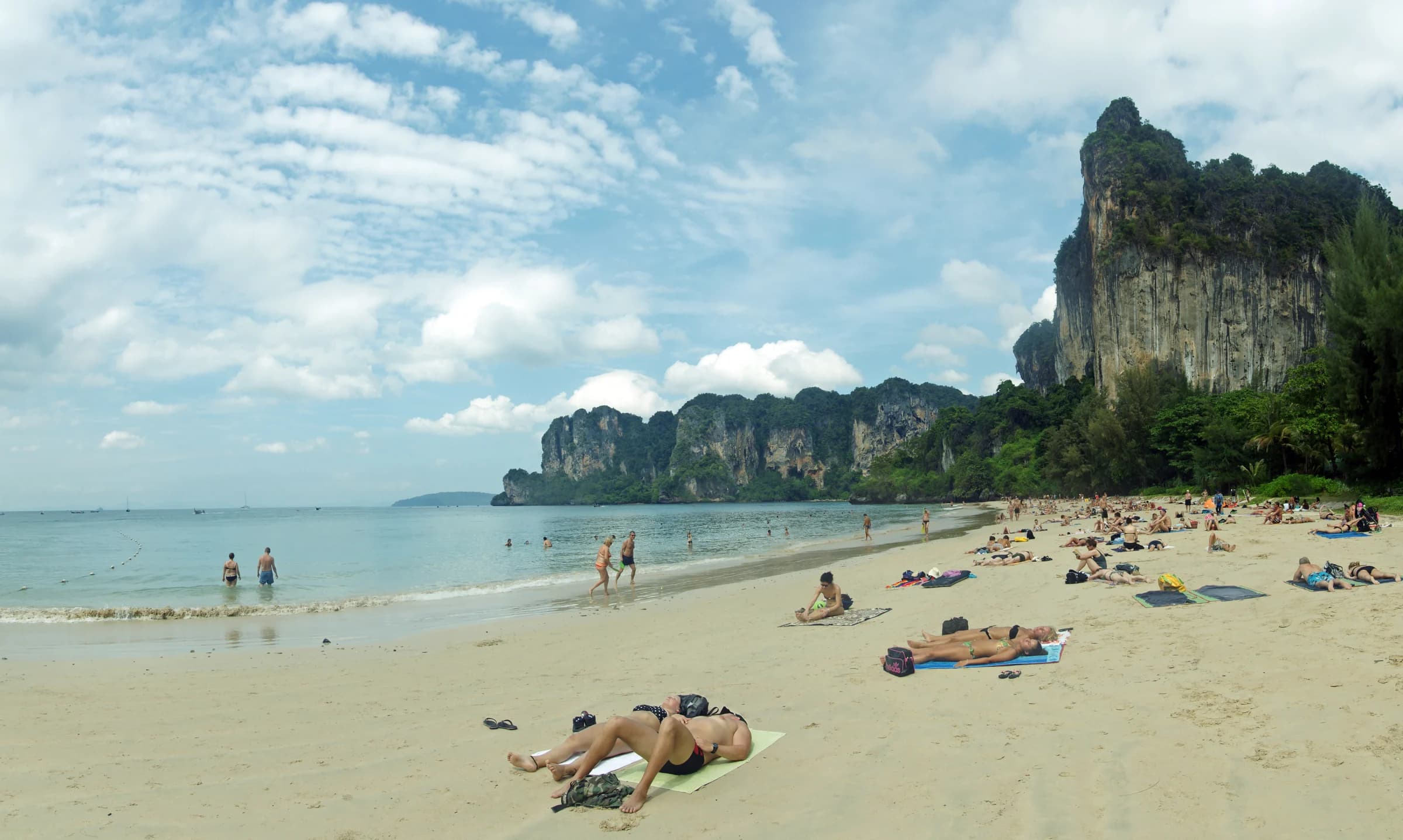
The city is not a resort: there is no beach, but there is a dense urban fabric, river transport, markets and museums. If you want sightseeing plus beach time, Bangkok combines naturally with Phuket, Samui or Krabi.
Where to stay: areas to compare
Sukhumvit is a long street of hotels, malls and restaurants, and the BTS line makes the area convenient for cross-city trips. Silom and Sala Daeng sit closer to the business core and parks, while Riverside offers river views and easy access to the ferry piers.
The Old City (Rattanakosin) is the Grand Palace and Wat Pho district: more atmosphere and lower rates, but evenings are quiet and the metro often means a walk or a short ride. For a first visit of two or three nights, Sukhumvit or Silom is easier; for atmosphere, choose Riverside.
Airports, BTS and the metro
Bangkok has two airports: Suvarnabhumi (BKK) handles most international flights, while Don Mueang (DMK) mostly serves low-cost and domestic routes. From BKK the Airport Rail Link runs to Phaya Thai, where you can change to the BTS.
The BTS Skytrain and MRT metro are the practical way to cross town: they avoid the traffic jams Bangkok is known for. Take taxis and motorbike taxis outside rush hour; at peak times a few kilometres can take far longer than expected.
Sights and local rules
The Old City's key stops are the Grand Palace with the Emerald Buddha and Wat Pho with the reclining Buddha; Wat Arun stands across the river, and Chinatown adds markets and food streets. Allow half a day for the palace complex and arrive early, before the heat and crowds.
Temples enforce a dress code: shoulders and knees covered, shoes off at the entrance. The Grand Palace can close for ceremonies, and tickets are cheapest at official counters — guided offers at the gate usually cost more.
Weather and season
From November to February Bangkok is relatively dry and cooler: daytime walks are comfortable and evenings feel fresh. This is high season, so hotels cost more and popular places are worth booking ahead.
March to May is hot and humid, and June to October brings rain, usually in short heavy bursts. Showers are more likely in the afternoon; low season is cheaper, but some excursions may shift because of the weather.
Food, markets and shopping
Street food is a reason to visit in itself: food courts, night markets and stalls serving noodles, soups and grills. Pick places where food is cooked in front of you and locals are eating, and drink bottled water.
For shopping, head to the Siam malls or Chatuchak, a huge weekend market. Bargaining is normal at markets and not in malls; before buying electronics or branded goods, compare prices and check the warranty.
Bangkok with children and budget
With children, hotels with a pool near the BTS, the aquarium and amusement parks work well. Keep transfers short: heat and traffic tire faster than expected, so split temple visits across two days.
The budget depends on the area, hotel category, season and whether breakfast is included. Plan separately for transport, entrance tickets, excursions and insurance; the manager calculates exact amounts for your dates.
What else is worth trying
Eat street food
in Bangkok and at the night markets of the north, from Thai noodles and green curry to fruit desserts.
Try Thai massage
not only in spas but also in temple schools where the tradition has been passed down for centuries.
Take to the water
a boat along the Chao Phraya in Bangkok or a longtail boat between the islands.
Respect temple rules
cover shoulders and knees, take off your shoes and treat images of the Buddha with respect.
Choose responsible operators
for elephant visits, pick places that let you observe the animals rather than ride them.
Before your trip
Thailand's climate is shaped by the monsoon: the dry, cooler season runs from November to February, March to May is hot, and the rainy season lasts from June to October. Rain often comes in short heavy showers, and the Andaman coast and the Gulf islands feel the seasons differently. Pack light clothing that covers shoulders and knees for temples, sun protection, mosquito repellent and travel insurance. Flights, trains and buses link the cities, ferries and catamarans serve the islands, and it is worth agreeing on the route with a tuk-tuk or songthaew driver before you set off. Check current entry conditions on official sources.
Frequently asked questions
Which Bangkok airport should I fly into?
It depends on the flight: Suvarnabhumi (BKK) is better for international arrivals and the Airport Rail Link, while Don Mueang (DMK) mostly serves low-cost carriers. The manager checks the options for your dates.
Do I need a visa for Thailand from Kazakhstan?
Entry rules depend on the length and purpose of the trip and are updated regularly. Check the current visa and stay requirements before you book.
When is the best time to visit Bangkok?
November to February is dry, relatively cool and comfortable for walking. March to May is the hot season, and June to October is the rainy one.
Can I combine Bangkok with a beach?
Yes, it is a common route: two or three nights in the city, then a flight to Phuket, Samui or Krabi. Work out the order in advance.
How do I get around Bangkok?
BTS and MRT, river ferries, taxis and motorbike taxis. At rush hour the rail lines are the better choice.
How does Bangkok differ from Pattaya?
Bangkok is a metropolis of temples and markets; Pattaya is a beach resort with a promenade. They pair well, with about two hours between them.
Information about places and trip conditions may change or be out of date. Please verify the latest details before you travel.