

Destination guide
Cyprus holidays — an island of beaches, mountains and two cultures
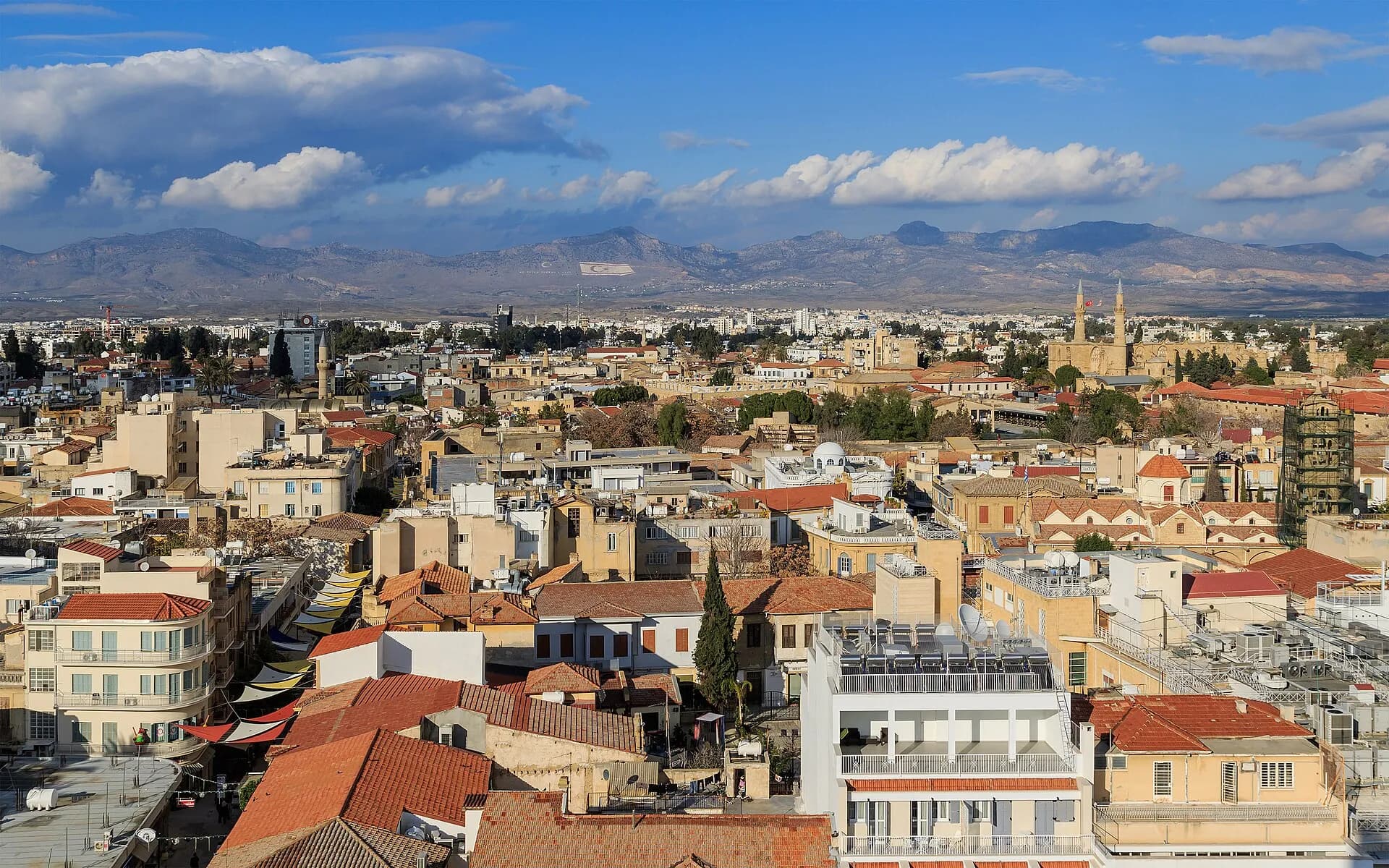
Cyprus is an island in the eastern Mediterranean where a few hours of driving take you from sandy bays to the pine forests of the Troodos mountains. The beaches of Ayia Napa and Protaras, the seafronts of Larnaca and Limassol, the ancient sites of Paphos, the old town of Nicosia and the northern coast around Kyrenia and Famagusta all fit into one trip. Greek and Turkish communities live side by side here, so the food, the architecture and the pace of life change from one region to the next.
TripTech will help you choose a flight and a hotel and put together a route for your dates, so travelling around the island stays comfortable and free of unnecessary transfers.
Where to go in Cyprus
- 01
Nicosia old town and Ledra Street — see the divided capital
The capital of Cyprus fits inside Venetian walls, and behind them lie narrow streets, houses with carved balconies, the Buyuk Han caravanserai and the Gothic Selimiye Mosque. Ledra Street is the old town's main pedestrian artery, running up to the buffer zone and its crossing point. Start the walk at Eleftheria Square and finish with coffee on a side street, where the city turns quiet and almost like a village.
- 02
Limassol promenade — walk by the sea in a port city
The Molos promenade runs from the old port to the marina and counts among the best-kept seafront walks on the island. Palm trees, sculptures, playgrounds and cafés make it easy to stroll in the evening, with the sea always in view and no buildings in the way. Limassol Castle and the old port are a short walk away, and boats leave from there, so the promenade pairs well with a look at the historic centre.
- 03
Kourion Archaeological Park — explore an ancient city above the sea
An ancient city on a high cliff west of Limassol, where a theatre overlooks the sea and Roman villas keep their mosaics, baths and an early Christian basilica. Greco-Roman Kourion was an important city-state, and the ruins still show its layout clearly. The drive here is short, and after the visit you can go down to the water and finish the day on the beach below the cliffs.
- 04
Dionysus mosaics and the Tombs of the Kings — understand Roman Paphos
Two highlights of Kato Paphos are best seen on the same day: the archaeological park displays the mosaic floors of Roman villas, including the House of Dionysus, while nearby the Tombs of the Kings are cut deep into the rock. Both belong to the World Heritage site and together show how ancient Paphos lived and how it buried its dead. Allow half a day and carry water, as there is little shade on the site.
- 05
Petra tou Romiou — watch the sunset at Aphrodite's rock
A huge rock in the sea off the southern coast, tied to the legend of Aphrodite rising from the foam. People come at sunset, when the stone turns warm in colour and the waves sound louder than usual; there is a pebble beach and a viewpoint above the road. Swimming here needs care because of the rocks and the current, and the drive from Paphos to Limassol is worth a stop on its own.
- 06
Finikoudes and St Lazarus Church — spend a day in Larnaca
The Finikoudes promenade, lined with palms, is Larnaca's main place to walk, and the town beach starts right in the centre. A few steps away stands the Church of St Lazarus, built over an older shrine and linked to the friend of Christ who was raised from the dead. Around it lies the old town with narrow lanes, craft shops and coffee houses, so the promenade and the church fill an unhurried day.
- 07
Larnaca Salt Lake — see the flamingos
Larnaca Salt Lake is a winter home for flamingos: from November to March the birds gather on the shallows and can be watched from the shore without getting close. In summer the lake dries out and turns into a crust of salt, while footpaths and an old aqueduct run around it. The Hala Sultan Tekke mosque stands nearby, so a walk here fits easily with a look at the area.
- 08
Choirokoitia — step into a Neolithic settlement
A Neolithic settlement on a hillside where people built round houses of stone and clay about seven thousand years ago. Today you can see reconstructed huts, the remains of walls and a small exhibition, and get a sense of life before towns existed. The site is a World Heritage property, lies close to the motorway between Larnaca and Limassol, and makes a good short stop on the road.
- 09
Nissi Beach — swim in Ayia Napa's best-known view
A sandy beach with shallow water and a small island reached by a sandbar — the most recognisable view of Ayia Napa. It is busy and loud in season, with music playing and water sports on offer, and groups arrive early to claim a place near the water. For quiet, come at the start of the day, then walk along the seafront into the centre, where the cafés and bars are.
- 10
Sea caves and Cape Greco — walk the edge of the island
The sea caves are sheer cliffs with natural arches and grottoes carved by the waves, visited for their turquoise water and unusual views. From there the road climbs to Cape Greco, the south-eastern tip of the island, where a lighthouse stands and the open sea spreads out below. Trails cross the park, and the quiet bays are good for a swim when the wind is calm.
- 11
Fig Tree Bay — white sand and clear water
A bay of white sand and clear water at Protaras, often called the best beach on the island. A small island sits offshore and the water stays shallow for a long way out, which makes it easy to swim with children. The beach is well kept, a promenade with cafés runs behind it, and boats leave the pier to follow the coast to sandy coves hidden between the rocks.
- 12
Famagusta old town and Lala Mustafa Pasha Mosque — see Gothic and Ottoman layers
Famagusta's old town is ringed by Venetian walls, and inside them stands a Gothic cathedral that became the Lala Mustafa Pasha Mosque after the Ottoman conquest. Near it are Othello's Castle, the ruins of churches and old caravanserais, with coffee houses and workshops in between. The ruins of Salamis and a long sandy beach are close, so the town fits easily into a route along the north coast.
- 13
Kyrenia Castle and the Old Harbour — picture a medieval port
Kyrenia Castle stands right by the old harbour, where boats rock against stone quays and the mountains rise behind them. Inside the fortress a museum holds the remains of a ship raised from the seabed, and the towers open views over the port and the town. From here it is pleasant to walk the waterfront, look into lanes full of coffee houses and spend a beach day at Coral Bay nearby.
- 14
Bellapais Abbey — find Gothic arches above the sea
A thirteenth-century abbey hidden among cypresses and orange trees above Kyrenia. Gothic arches, stone vaults and a courtyard feel almost like a stage set, and the terrace opens a view over the sea and the town. The abbey sits in the quiet village of Bellapais, which has small tavernas, so people come for half a day to walk, rest in the shade and watch the sunset.
- 15
Kykkos Monastery and Omodos — head up into the Troodos mountains
The road into the Troodos mountains climbs through pine forest to Kykkos Monastery, which keeps a revered icon of the Virgin and walls covered in gold mosaics. On the way, stop in Omodos, a stone village with wine workshops and an old church, or in Kakopetria, where houses crowd above a stream. The mountains are cooler than the coast, and even in summer there are shady trails to walk.
- 16
Latchi and Aphrodite Hills — reach the north-western bays
The north-western coast around Polis stays quiet and green: boats leave Latchi for the Blue Lagoon, and tavernas line the shore facing the sea. Towards the hills the Akamas begins, with the Baths of Aphrodite and trails through dry forest, while high ground opens views of bays with clear water. This is a good place to combine beaches, boat trips and slow walks through villages far from city bustle.
Resorts and cities
What else is worth trying
Try Cypriot food
grilled halloumi, meze, sheftalia, olives and loukoumades — simple dishes best tasted in a village taverna rather than in a hotel.
Take a boat trip
to the Blue Lagoon from Latchi or along the cliffs at Ayia Napa — the island looks different from the water, and some bays can only be reached by sea.
Spend a day at the beaches
sandy Nissi and Fig Tree Bay, the pebble coves of the west coast and Coral Bay — here you can change beach every day.
Head into the mountains
to Omodos, Kakopetria and Lefkara, where it is cooler than on the coast and people sell wine, lace and silver.
Go under water
a large sunken ferry lies off Larnaca, rocks and caves wait at Protaras and Ayia Napa, and the clear water suits first dives.
Before your trip
Cyprus works almost all year: the swimming season usually runs from May to October, while April, May, September and October are more comfortable for sightseeing, when the heat is not exhausting; the Troodos mountains stay cooler in any season and can hold snow in winter. Traffic keeps left, so drivers need to get used to junctions and to overtaking on the right, and tap water is better avoided — buy bottled. Churches and monasteries ask for covered shoulders and knees, and mosques for removed shoes, so light clothing and a scarf help. Cards are widely accepted, but cash is useful in villages and markets. A car makes it easy to move between the coasts and the mountains, though parking in old towns is best sorted in advance.
Frequently asked questions
When is the best time to visit Cyprus?
For a beach holiday, May to October works well, and the most comfortable months are May, June, September and October, when the sea is warm but the heat is gentler. Spring and autumn suit sightseeing and the mountains, while winter is quiet and cool on the coast — yet the lake near Larnaca fills with flamingos.
How many days do you need in Cyprus?
Five to seven days are usually enough for one part of the island, mixing beaches with trips to the mountains and ancient sites. To see both the west and the east, and the northern coast as well, plan ten days or more, otherwise the trip turns into transfers.
Should you choose the west or the east?
The west means Paphos and Limassol with ancient monuments, cliffs and sunsets, and beaches that are more pebbly. The east means Ayia Napa and Protaras with sandy coves, warmer water and evening life. With time to spare, split the holiday: a few days in the west and a few in the east.
How do you get around Cyprus?
A rented car is the easiest option, as it reaches mountain villages and quiet bays that buses do not serve. Intercity buses link the towns, and taxis or transfers are convenient from Larnaca and Paphos airports. The northern part is reached through crossing points, so carry your documents.
Information about places and trip conditions may change or be out of date. Please verify the latest details before you travel.
Photograph: A.Savin · FAL · Wikimedia Commons