

Resort guide
Rhodes — Greece
Rhodes, Greece: holidays and tours. We compare hotels, flights, meals and transfers and check the terms before payment. Tell us your dates and budget and a manager will match options for your trip.
TripTech will help you choose a flight and a hotel and put together a route for your dates, so travelling around Greece stays comfortable and free of unnecessary transfers.
Where to go: Rhodes and nearby
Start with the resort itself, then add the country highlights that fit your route.
- 01
Rhodes — walk the streets of the knights' city
A Dodecanese island whose walled old town is a UNESCO site. Here the streets of the Knights Hospitaller sit beside mosques, synagogues and houses from different eras, and columns by the port are a favourite evening walk. See the Palace of the Grand Master, the Street of the Knights and the old harbour where boats leave. Lindos and the beaches of the east coast are easy day trips, and the city itself is best explored on foot.
- 02
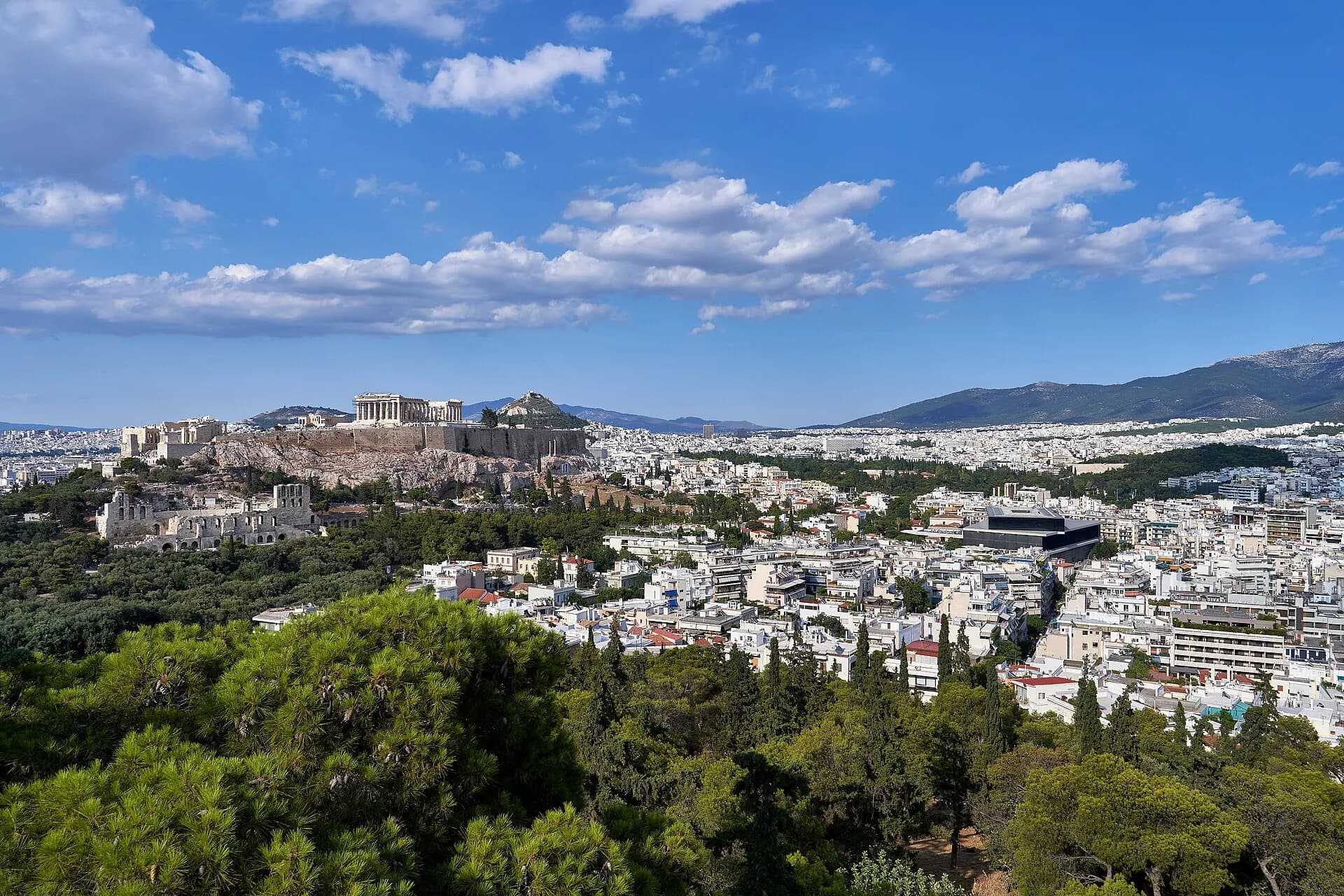
Acropolis — see the Parthenon above Athens
The main symbol of Athens: a rock crowned by the Parthenon, the Erechtheion and the temple of Athena Nike, with the city growing around it. The climb starts at the foot of the hill and passes through the Propylaea, where the view opens over the city and the sea. In summer, come early in the morning or towards evening, when there is no heat and no large groups, and bring water. Allow a couple of hours so you are not rushed among the columns and can stop at the viewpoint.
- 03
Delphi — meet the oracle at the temple of Apollo
A sanctuary on the slope of Parnassus where the oracle of Apollo is said to have spoken, while Greek cities kept their offerings here. The temple of Apollo, the treasuries, the theatre and the stadium still stand, and the museum nearby shows the bronze Charioteer. The site is ringed by mountains, and the view over the valley opens up from the road. The climb to the stadium is steep, so wear comfortable shoes and leave enough time.
- 04
Meteora — climb to the monasteries on the rocks
Rock pillars in Thessaly with working monasteries from the 14th to the 16th century on their summits. Monks once climbed up on ropes, and today roads and staircases lead to the houses. Inside, look for frescoes, carved iconostases and small museum collections, while the terraces offer views over the valley. The paths are stony, so wear good shoes, and in the shade at the top it is noticeably cooler than below.
- 05
Rotunda and Hagia Sophia — see the mosaics of Byzantine Thessaloniki
Two monuments that let Thessaloniki call itself a Byzantine city: the Rotunda, built in the time of Galerius, and Hagia Sophia with its massive dome and mosaics. The Rotunda stands on a square, while Hagia Sophia is a few blocks from the waterfront, so both fit into one day. Inside, pay attention to the dome mosaic and the old inscriptions on the walls. It is pleasant to finish on the Nikis waterfront, looking across the bay.
- 06
Ioannina and the island — feel Epirus
A city on Lake Pamvotis in mountainous Epirus, known for its island of quiet lanes and monasteries. Small boats cross to the island, where churches and houses linked to the story of Ali Pasha are worth seeing. In the city, the fortress, the Fethiye Mosque and the old quarters by the lake are the highlights. Ioannina makes a good base for trips to the stone villages of Zagori and the Katara pass.
Other resorts: Greece
What else is worth trying
Try a Greek breakfast
bread with olive oil, cheese, yoghurt with honey and strong coffee, taken slowly — in Greece it is a ritual of its own.
Take a ferry
between the islands or out of Piraeus to see how the country looks from the water and to reach small harbours.
Rent a car
on the mainland or a large island to reach viewpoints, old villages and beaches that buses do not serve.
Sit in a taverna
with meze, fresh fish and local wine at a table by the water, unhurried and with conversation.
Swim in different seas
on the Aegean, Ionian and Cretan coasts — each has its own character, temperature and colour of water.
Before your trip
Weather in Greece depends on the region and the season: summers on the islands are hot and dry, the mountains of Epirus and Thessaly stay cooler, and spring and autumn suit sightseeing in Athens and the Peloponnese. Ferries link the mainland and the islands, but timetables depend on the wind, and in high season seats are worth looking for in advance. In working monasteries such as Meteora and Patmos, shoulders and knees need to be covered, so pack a light wrap. Cards are widely accepted, yet small tavernas, ferries and kiosks often need cash. Book a rental car ahead if you plan to drive around the Peloponnese or Crete: roads are narrow, parking in towns is limited, and your driving licence must meet the rental conditions.
Frequently asked questions
How much does a tour to Rhodes cost?
The price depends on dates, hotel, meal plan, flights and party size. A manager will shortlist options for your budget and show the full price before payment.
When is the best time to visit Rhodes?
The best season depends on your dates, budget and holiday style. A manager will check current options for your specific dates.
Can I depart from my city?
We search departures from Almaty, Astana and other cities in Kazakhstan; availability depends on dates and flights.
Do you help with documents?
We check current requirements for your citizenship and help prepare documents. The visa decision is made by the consulate.
When is the best time to visit Greece?
May, June and September are the most comfortable for sightseeing in Athens and the Peloponnese, when the heat is not exhausting. The islands come alive from May to October, while July and August are very hot and busy. In winter the mainland is quieter and cooler and part of the island season closes, but it is a calm time for city walks.
How many days do you need in Greece?
Four or five days are enough for Athens and one trip nearby. Add the Peloponnese or Meteora and a week to ten days makes sense, while a route with two or three islands and Crete needs two weeks or more. Ferries between islands take hours, so transfers eat into the time.
Information about places and trip conditions may change or be out of date. Please verify the latest details before you travel.
Photograph: George E. Koronaios · CC BY-SA 4.0 · Wikimedia Commons