

Destination guide
Sri Lanka holidays — ocean, tea hills and ancient temples
Sri Lanka is an island in the Indian Ocean where the scenery changes within a few days: the west coast around Colombo with its sandy beaches, the south with Galle Fort and the bays of Mirissa, the east with Trincomalee and the surf of Arugam Bay, the Central Highlands with tea plantations and the cool air of Nuwara Eliya, and the Cultural Triangle with the ancient cities of Anuradhapura, Polonnaruwa and Sigiriya. The climate is just as varied: two monsoons mean it is dry on one coast while the other sees rain. Give the route enough time to take in the ocean, the mountains and the temples.
TripTech will help you choose a flight and a hotel and put together a route across the island for your dates, so the trip stays comfortable and free of unnecessary transfers.
Where to go in Sri Lanka
- 01
Colombo and Galle Face Green — meet the capital by the ocean
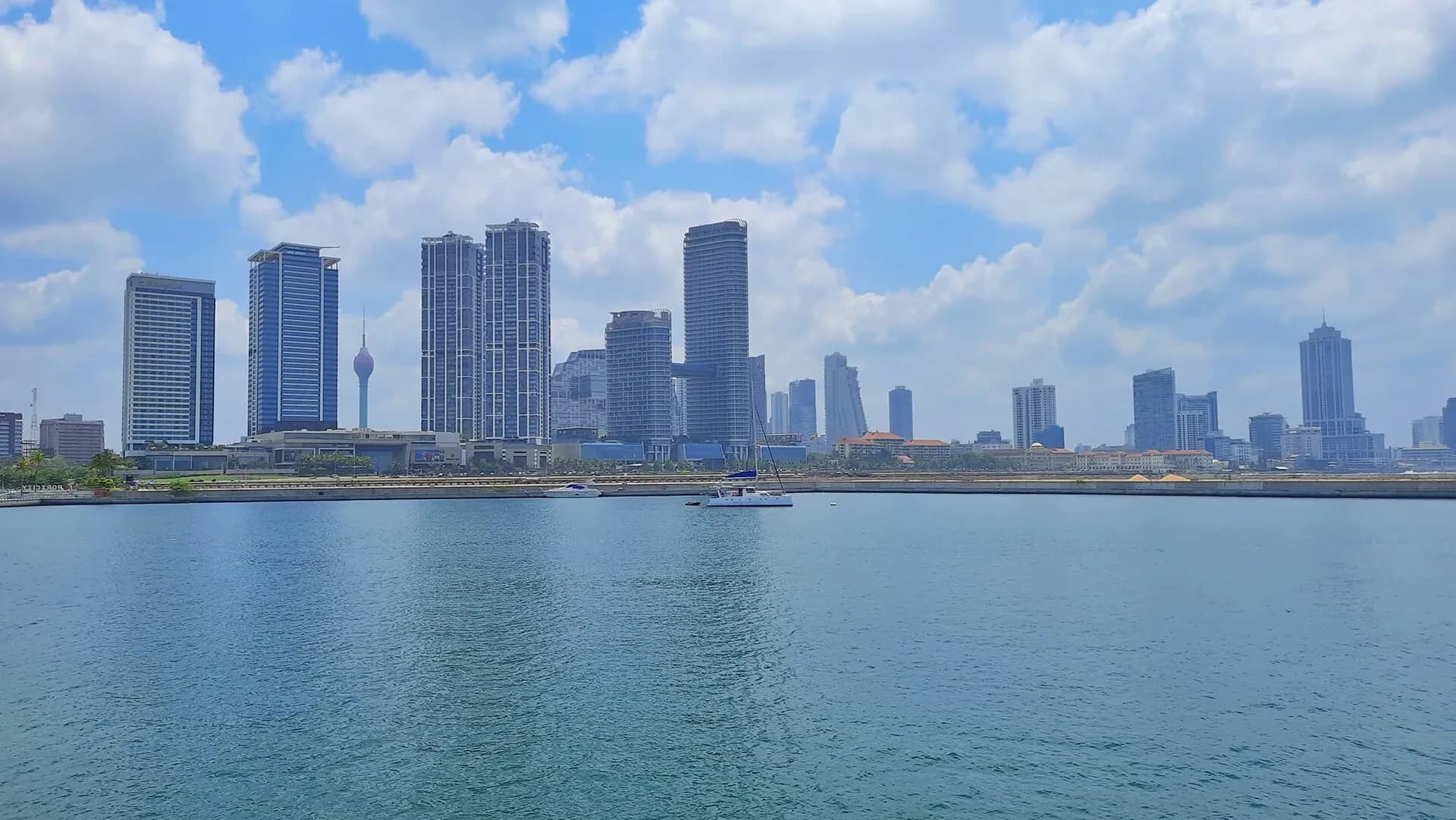
Colombo brings together the business district, the colonial Fort, the busy Pettah market and the Gangaramaya Temple. Along Galle Face Green locals walk in the evening, play cricket and try street food while the towers of the financial centre rise behind them. The city is easy to explore on foot and by tuk-tuk, pairing the seafront with the lanes of the old Fort.
- 02
Pinnawala — watch elephants at the river
An elephant orphanage in the Kegalle area that takes in animals left without a herd or harmed by people. The calmest hours are the bath in the Maha Oya river, when the herd comes down to the water, and the feeding on the grounds. The elephants live here in large groups, so keep your distance and skip the elephant rides.
- 03
Kandy and the Temple of the Tooth — touch a Buddhist shrine
A hill city that is home to Sri Dalada Maligawa, the temple that keeps the tooth relic of the Buddha. Around Kandy Lake are the royal palace, viewpoints and old quarters, and in July and August the Esala Perahera fills the streets with elephants and dancers. The temple is a working shrine, so visitors remove their shoes and cover their shoulders.
- 04
Dambulla — step into the cave temples
Five caves on top of a rock that keep old paintings and more than a hundred Buddha statues. The Golden Temple and the large Buddha at the foot of the rock serve as a landmark, and the climb up the stairs opens a view over the plain. It is cool and dim inside, so bring a light jacket and take your time. Monkeys are common by the stairs outside, so keep food inside your bag.
- 05
Sigiriya and Polonnaruwa — the Lion Rock and a royal capital
The Lion Rock rises over the jungle like a fifth-century fortress: terraces, water gardens and stairways lead up to it, and frescoes survive on the walls. Polonnaruwa, the island's capital in the twelfth century, holds the royal palace, the statues of Gal Vihara and the large Parakrama Samudra lake. The two are usually seen in one day, starting with Sigiriya in the morning.
- 06
Anuradhapura and Mihintale — follow the roots of Buddhism
An ancient capital where the Bodhi tree grows, said to come from a cutting of the tree at Bodh Gaya, and where the white stupas of Ruwanwelisaya and Jetavanarama stand. Nearby is Mihintale, the rocky hill from which Buddhism spread across the island in the third century BCE. Climb the steps in the morning, before the heat builds.
- 07
Adam's Bridge — the shoals between two countries
A chain of sandbanks and islands between Sri Lanka and India that Sri Lankans call Ram Setu. Talaimannar keeps a pier, old railway tracks and quiet fishing villages, with plenty of birds and shallow water around. The place is tied to pilgrimage and legend, but swimming is best avoided because of the currents.
- 08
Trincomalee — a clifftop temple and easy reefs
A port on the east coast with one of the largest natural harbours in the world. The Hindu Koneswaram Temple stands on Swami Rock, and Fort Frederick and the Kanniya hot springs are close by. At Pigeon Island National Park you snorkel over coral, and in season boats head out from the town to see whales. North of the town stretch the beaches of Uppuveli and Nilaveli, with Pigeon Island close by.
- 09
Arugam Bay — catch a wave on the east coast
A bay on the south-east coast known for long waves and an unhurried atmosphere. People learn to surf here, take a board out at sunrise and watch the sunset by Elephant Rock. Around the bay are lagoons where birds and crocodiles can be seen, and Kumana National Park suits an early-morning safari. Small guesthouses and cafés ring the bay, and they are easy to reach on foot.
- 10
Yala and Tissamaharama — go on safari among leopards
A national park in the south-east with dry forest, lagoons and rock outcrops that shelter leopards, elephants, sloth bears and peacocks. Nearby stands Tissamaharama with its old stupa and a reservoir ringed by birds. Safaris run early in the morning and in the evening, and the whole route is worth a full day.
- 11
Ella and Nine Arch Bridge — watch the train in the clouds
A hill village among tea plantations, with views over the valley and the ridges around it. The Nine Arch Bridge of stone and brick spans a gorge, and walkers reach it through jungle and tea gardens. Visitors also climb Little Adam's Peak and Ella Rock, and the train from Kandy to Ella is counted among the world's most beautiful journeys.
- 12
Nuwara Eliya — walk through tea country
A town at around two thousand metres that is called Little England for its villas, club and cool climate. Tea plantations surround it, factories show the way from leaf to cup, and the views reach the mountains. It stays cool even in summer, so bring warm clothes and keep walks unhurried. Gregory Lake sits close to the centre, with an easy path along the water.
- 13
Horton Plains — hike to World's End
A national park of cloud forest and plateau where a trail leads to the World's End escarpment. From the edge you look down into the valleys, and along the way are Baker's Falls, dwarf trees and herds of deer. Start early, before the mist rises, and carry water and a warm jacket. The trail forms a loop, and it is worth walking slowly so as not to miss the viewpoints.
- 14
Mirissa — whales and sunsets in the south
A small bay on the south coast with palms by the water and an easy way into the sea. In season boats leave from here for blue whales and dolphins, and in the evening everyone gathers on Coconut Tree Hill for the sunset. The beach runs on to Secret Beach and Parrot Rock, both within walking distance. The water is warm and the waves are usually moderate, so even beginners can swim comfortably.
- 15
Unawatuna — swim in a bay below the pagoda
A crescent-shaped beach near Galle, sheltered by a coral reef and easy for swimming with children. A peace pagoda stands above the bay, and around it are Rumassala hill with its jungle paths down to Jungle Beach. Calm sea, snorkelling and trips to the fort and nearby fishing villages fit easily into one day. Galle is a short ride from here, and small cafés open on the beach in the evening.
- 16
Galle Fort — walk the walls of a Dutch fortress
A fort on the ocean shore, built by the Dutch in the seventeenth century on the site of a Portuguese stronghold. Inside the walls are narrow streets, veranda houses, the Dutch Reformed Church, a lighthouse and a mosque, while the bastions look out over the water. It is a place for slow walks, small shops and sunsets. The fort is a UNESCO World Heritage Site and still a lived-in quarter where school events and weddings take place.
Resorts and cities
What else is worth trying
Ride the hill-country railway
the line from Kandy to Ella through tea plantations is often called one of the world's most beautiful journeys, so reserve a seat in advance.
Try the local food
rice and curry, coconut sambol, hoppers and watalappam — the dishes are spicy, so say how hot you would like them.
Go on safari
Yala and Udawalawe are known for leopards and elephants, and in season boats leave the south coast for whales — follow park rules and keep your distance.
Hire a tuk-tuk for a day
a driver will show you places you would otherwise miss, but agree the route and the length of the trip beforehand.
Visit a tea factory
in the hills you can see how a leaf becomes tea, and a tasting helps you choose a favourite and slow down.
Before your trip
Weather in Sri Lanka follows the monsoons: from May to September rain falls on the west, the south and in the hills, while from October to January it moves to the north-east, so there is always a dry coast — choose the west and south from November to April and the east from May to September. Trains are a comfortable way to cross the island, especially the hill line from Kandy to Ella, but seats are worth reserving in advance. Most visitors need an electronic ETA visa, arranged before the trip on the official portal. Drink bottled or filtered water and choose food where there is a good turnover of customers. Cards are accepted in hotels and larger towns, yet small villages and markets run on cash. In temples, cover shoulders and knees, remove shoes and hats, and avoid turning your back on images of the Buddha when taking photos.
Frequently asked questions
When is the best time to visit Sri Lanka?
It depends on the coast. Choose the west and south from November to April and the east from May to September, while the ancient cities of the Cultural Triangle work almost all year. The hills are cooler in any season, and in January and February nights on the plateau can be cold.
How many days do you need in Sri Lanka?
A first route covering Colombo, the Cultural Triangle, the hills and the south coast usually needs two weeks. In a week you can see either the ancient cities and the hills or the beaches, but not all of it.
Should you choose the beaches or the culture?
They are different trips, but the island is compact enough to combine them. It makes sense to start in Colombo and the Cultural Triangle, move on to the hills and finish by the sea on the south coast.
How do you get around Sri Lanka?
Trains and buses link the towns, tuk-tuks are handy for short hops, and for a few days a car with a driver is the practical choice: mountain roads are slow and self-drive rental is less common.
Information about places and trip conditions may change or be out of date. Please verify the latest details before you travel.
Photograph: T Chamika · CC0 · Wikimedia Commons