

Destination guide
A Bali holiday — an island worth exploring slowly
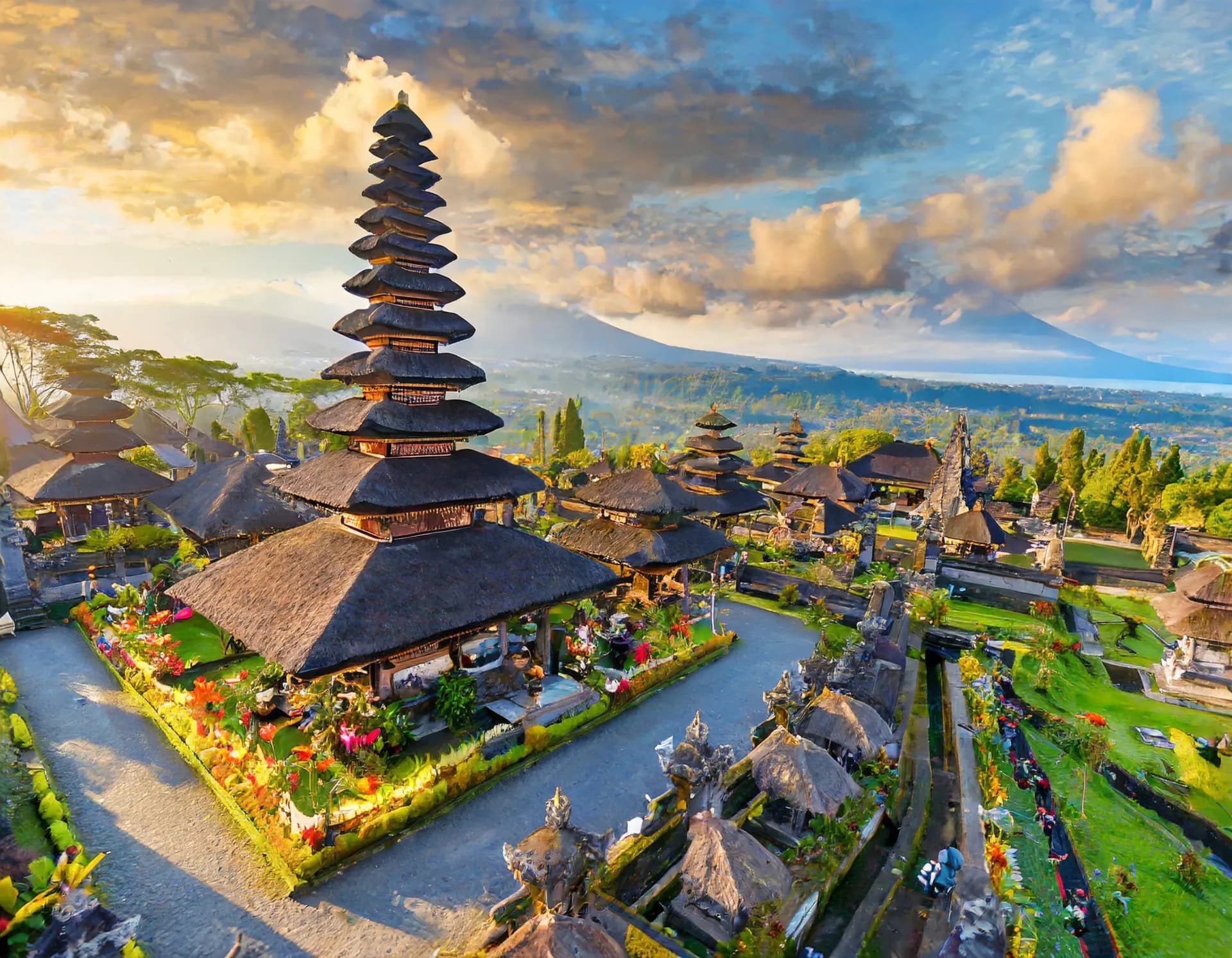
Bali is a small Indonesian island, yet its regions feel like different destinations. The south is built around beaches, surf schools and restaurants, central Bali moves at the pace of rice terraces and Ubud's workshops, and the east and north bring volcanic ridges and quiet villages. A single trip can combine nature, local ritual and unhurried time by the water.
TripTech builds the trip around your dates: we select flights from Kazakhstan that suit your schedule and hotels that match the area, budget and kind of holiday you want, from an active route around the island to a slow beach stay. We compare flight and hotel options, explain how the regions differ, and hand you a plan rather than a list of links.
Where to go in Bali
- 01
Tanah Lot — a sea temple on the rock at sunset
The Hindu temple sits on a rock formation that high tide almost entirely surrounds with water. People come for the ocean view and the sunset, so the viewing terraces near the entrance are usually busy. It fits easily into a drive from Kuta or Seminyak, roughly an hour away.
- 02
Uluwatu Temple — a cliffside shrine above the ocean
Pura Luhur Uluwatu stands at the south-western tip of the Bukit peninsula, about seventy metres above the sea. Besides the panorama, visitors come for the Kecak dance performed at sunset. The resident monkeys are bold, so keep glasses and bags close.
- 03
Ubud Monkey Forest — a sacred forest with temples
The site's full name is the Sacred Monkey Forest Sanctuary: banyan trees and old temple structures fill the grounds. A large group of long-tailed macaques lives here, and the paths run under dense shade. Do not feed the monkeys or leave food in open bags, since they are used to people and persistent.
- 04
Tegallalang rice terraces — the classic Balinese landscape
The terraces north of Ubud are shaped by subak, the communal irrigation system recognised by UNESCO. Arrive early in the morning, when the paths are quieter and the light is softer. Part of the walk follows narrow clay steps, so wear shoes with grip.
- 05
Tirta Empul — the temple of the holy spring
This complex near Tampaksiring is known for its spring-fed pools, where Balinese Hindus perform a purification ritual. Visitors follow the same dress code as at other temples: a sarong and a sash. If you are not taking part in the ritual, walking the grounds and watching the water from above is enough.
- 06
Mount Batur — sunrise above the caldera
The climb starts before dawn so that you reach the crater rim for sunrise over the caldera lake. The route takes a few hours and a guide is required, as walking it alone is not permitted. It is cold and windy at the top, so bring a jacket.
- 07
Besakih Temple — the Mother Temple on Agung's slopes
Bali's largest and holiest temple complex is made up of dozens of separate shrines on the flank of the volcano. Access can be restricted during major ceremonies, so confirm before you go. A sarong is worn throughout, and a local guide is usually hired for the visit.
- 08
Tegenungan Waterfall — a wide cascade near Ubud
The falls sit in southern Ubud and drop in a broad curtain over basalt rock. Hundreds of steps lead down to the viewpoints, and the climb back up is the harder part. Swimming is sometimes restricted because of the current, so check on the day.
- 09
Lempuyang Temple — the Gates of Heaven facing Agung
Pura Lempuyang Luhur is in east Bali, on the slope of Mount Lempuyang. The famous split gate frames Mount Agung, but the queue for that photo can be very long. The upper temples sit at the top of a long stairway, climbed in a sarong.
- 10
Handara Gate — a mountain photo stop
The entrance to the golf course at Bedugul is marked by a traditional split gate, set against green hills. It is a popular photo spot, and mornings are noticeably quieter. The road there crosses cool highland country where mist and rain are common.
- 11
Seminyak — the west coast for sunsets and long dinners
Seminyak is a town rather than a resort strip: a wide beach, restaurants and shops from local labels. The ocean is open here and the surf can be strong, so swimming is not for everyone. Come down early in the evening if you want a spot for sunset.
- 12
Canggu — surf, coffee and short hops
Canggu stretches along Berawa and Batu Bolong, where people learn to surf and watch the sun go down. There are plenty of coffee shops and small restaurants, but the roads between them are congested even in the daytime. A scooter or a pre-booked car works better than walking between stops.
- 13
Kuta — Bali's first beach and its surf schools
Kuta is a long beach with a gentle slope and steady surf, which is why surf schools and board rentals cluster here. The area is lively, with the airport, markets and nightlife close by. Anyone looking for quiet should choose another part of the island.
- 14
Jimbaran — a bay for dinner on the sand
The bay on the southern coast is sheltered from the big swell, and in the evening seafood restaurants set tables along the water. Dinner at sunset is a local ritual, so reserving ahead makes sense. It is close to the airport, which suits the last day of a trip.
- 15
Nusa Penida — cliffs and viewpoints off Bali
The island south-east of Bali is known for cliffs such as Kelingking and lookouts above the bays. Roads are narrow and winding, and journeys take longer than the map suggests. Most people join a day trip or stay one or two nights.
- 16
Nusa Lembongan — a small island at a slower pace
Lembongan is separated from Penida by a strait and is much calmer: people come for snorkelling, mangroves and low cliffs by the water. Getting around is mostly by scooter or on foot. The crossing from the harbour at Sanur is the easy option.
What else to try
Scooter or driver
renting a scooter gives you freedom, but it needs a licence and experience in heavy traffic; if you are unsure, book a car with a driver, because the roads in the south are overloaded.
Warung food
a warung is a small family-run eatery where rice, noodles and chicken dishes are cooked to local recipes, and it is the simplest way to eat what Balinese families eat.
Sunrise on a volcano
the climb up Batur or Agung starts at night and ends in cold wind at the summit, so bring a jacket and agree the details with a guide beforehand.
Spa and massage
Balinese massage and herbal baths are part of the local tradition, but choose a place by its experience and reviews rather than by what the sign outside promises.
Ceremonies
processions with music and offerings are a common sight; watch from a respectful distance, and ask before photographing, because many temples have their own rules.
Before you go
Bali is a densely populated island: traffic in the south is heavy and a short distance on the map can take far longer, so build in slack and avoid planning too many transfers in one day. Temples require a sarong and covered shoulders, and during ceremonies do not walk in front of people praying. The year splits into a dry and a wet season; the rainy months bring short downpours and high humidity, along with fewer visitors. Drink bottled water and choose local food by how fresh it looks and how busy the place is. Treat the offerings on the pavement and the rituals around you with respect, since they are part of daily life rather than decoration.
Frequently asked questions
When is the best time to visit Bali?
The dry season runs roughly from April to October, with less rain and more clear days. July and August are the busiest months, while the wet season from November to March brings short, heavy showers. The weeks between seasons are a good compromise.
How many days do you need in Bali?
A first trip usually takes eight to ten days, enough for the southern coast, Ubud and one nearby island. If you also want the east, the north and Amed, plan from two weeks. A five- or six-day trip only makes sense if you stay in one area.
How do you get around the island?
The simplest option is a car with a driver for the day, especially if you want several stops. A scooter suits experienced riders with a licence, but it demands care in dense traffic. Boats and ferries connect the islands, and tickets are best booked ahead.
Which area should I stay in?
For the beach and sunsets, look at Kuta, Seminyak or Canggu; for culture and the rice terraces, Ubud; for quiet and diving, Amed or Sanur. On a short trip, avoid changing hotels more than once.
Information about places and trip conditions may change or be out of date. Please verify the latest details before you travel.