

Destination guide
Dominican Republic holidays — the Caribbean, the mountains and the Atlantic
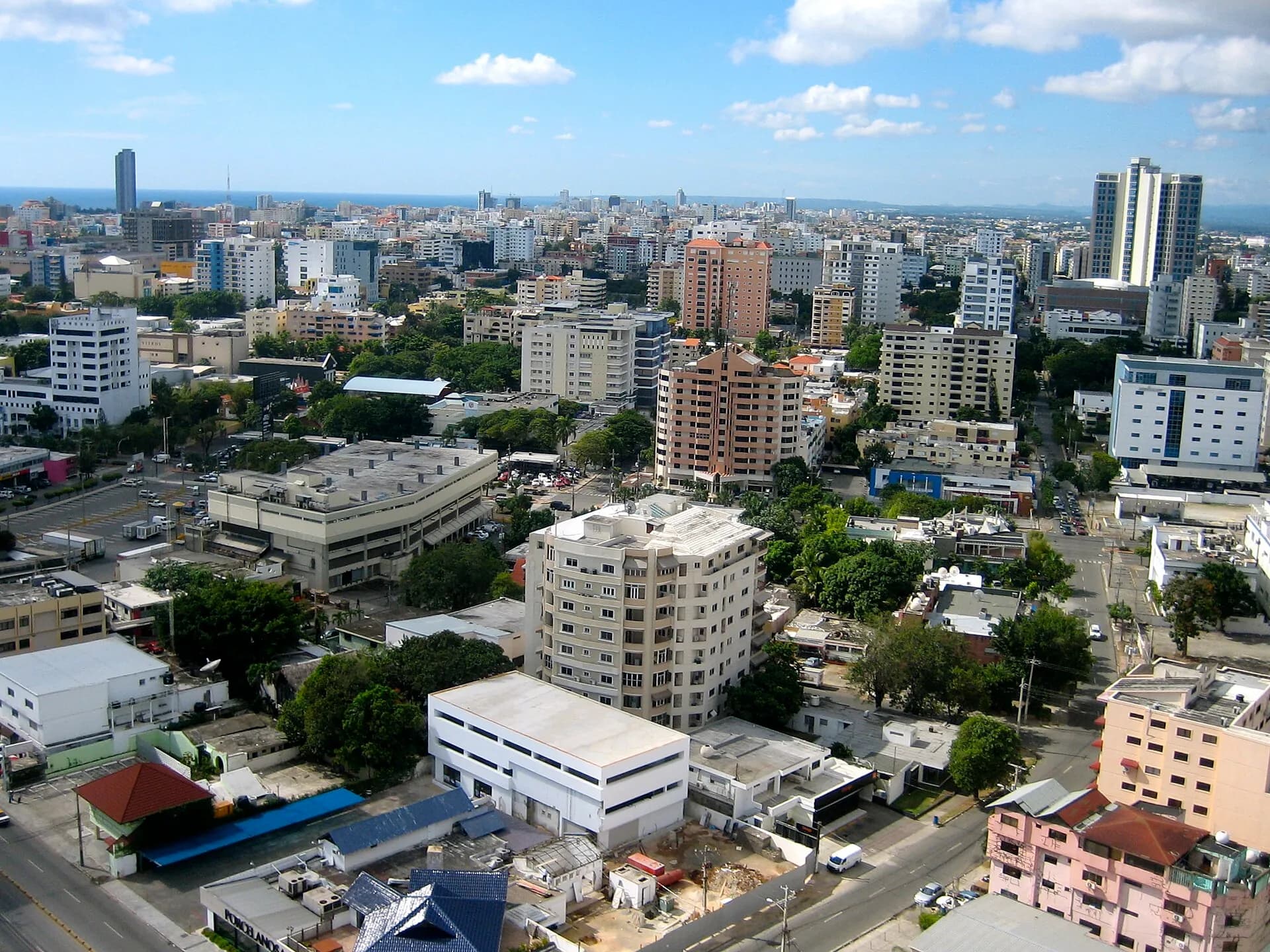
The Dominican Republic takes up the eastern part of Hispaniola, yet a few hours on the road will carry you from a palm-lined shore to cool mountains. The Caribbean brings calm water and coral reefs around Punta Cana, Samana and La Romana, the Atlantic sends long waves and wind for kitesurfing on the north coast at Cabarete and Puerto Plata, and in the middle rise the Cordillera Central with Pico Duarte, the Jarabacoa waterfalls and the valley of Constanza. Add a colonial capital, carnivals and music, and the distances between regions stay short.
TripTech will help you choose a flight and a hotel and build a route across the country for your dates, from the Colonial Zone of Santo Domingo to the wild beaches of Pedernales, so the trip stays comfortable and free of unnecessary transfers.
Where to go in the Dominican Republic
- 01
Santo Domingo Colonial Zone — walk the oldest city in the Americas
The historic centre of the capital keeps streets and houses from the early 16th century: Calle Las Damas, Columbus Square and the first cathedral built in the New World. The Alcazar de Colon, the palace of Columbus's son, now holds a museum of period furniture and objects. It is a district for walking, looking up at the facades and eating in old courtyards, so give it a full day.
- 02
Punta Cana and Bavaro — relax on white sand
The resort area at the eastern tip of the island, where Bavaro and Uvero Alto beaches run along the coral reef. The water stays calm, palms grow almost at the shoreline and most hotels put the sea within a short walk. Nature parks, cenotes and snorkelling spots are close by, so a day splits easily between the beach and a short trip inland.
- 03
Cap Cana — swim in the Hoyo Azul cenote
A gated area next to Punta Cana with a marina, a golf course and limestone caves. The main draw is the Hoyo Azul cenote, reached by a forest trail, where the water stays cool and clear. Quiet beaches and the spot where boats head out to the reef are here too. Cap Cana fits well into a Punta Cana day when you want a walk instead of another hour by the pool.
- 04
Altos de Chavon — look down on the river
A stone village on the high bank of the Chavon river, built in the style of a Mediterranean hill town, with narrow lanes, an amphitheatre, a church and craft workshops. The viewpoints look over the forested river gorge, and the galleries show work by local artists. Casa de Campo with its golf courses and beaches is next door, so the visit usually pairs with a stay in the south-east.
- 05
Isla Saona — sail to an island of white sand
An island off the south-east coast, reached by boat from the fishing village of Bayahibe. Palms line the beach, the sand stays white and soft, and starfish lie in the shallows. Boats often stop in the mangrove channels and at a natural pool of clear water on the way. There are no large hotels on the island, so it works as a day trip rather than a place to stay.
- 06
Salinas de Barahona — see the salt pans
Salt works on the southern coast near the town of Barahona, where sea water is left to evaporate in shallow ponds. Depending on the season the water turns pink, red and blue, and birds gather along the dikes. Dry valleys and the Sierra de Bahoruco rise nearby, so people stop here on the way to the wild southern beaches. It is a working site rather than a museum, which is worth keeping in mind.
- 07
Bahia de las Aguilas — reach a wild beach
A beach in Jaragua National Park in the south-west, close to the border with Haiti and not far from Pedernales. A dirt road runs through cactus scrub, and the last stretch is often covered by boat or in a four-wheel drive. The reward is a shore of white sand, clear water and almost no buildings. There are no hotels or shops, so carry water, food and sun protection with you.
- 08
Samana Bay — watch humpback whales
A bay in the north-east where humpback whales arrive every year to give birth to their calves. In season, boats take observers out, and the peninsula keeps the water inside the bay calm. Out of season the bay is known for Cayo Levantado, Rincon beach and mangrove shores. Book the whale trip in advance and choose a licensed boat with life jackets on board.
- 09
Los Haitises — take a boat between mangrove islands
A national park of forested hills, mangrove islands and caves that still hold paintings on their walls. Boats leave from Samana and Sanchez, and the trip usually lasts a few hours. Cliffs rise straight out of the water, and there are far more birds here than people. Go with a guide, and wear shoes and clothes you do not mind getting muddy.
- 10
Rio San Juan — swim at Playa Grande
A small town on the north coast, handy for the Gri-Gri lagoon with its mangrove channels and for Playa Grande. The beach sits in a bay below the cliffs, so the waves are bigger than in the south and the wind draws surfers. In the lagoon, boats weave between the roots of the trees past birds and a small fishing settlement. From here the road continues west to Puerto Plata or east to Samana.
- 11
Damajagua Falls — slide down the cascades
A chain of twenty-seven waterfalls and pools in the Damajagua river gorge near Puerto Plata. The route runs downhill: some sections are crossed along natural chutes in the rock, others by jumping into the water, and a trail brings you back up at the end. Bring trainers, a change of clothes and a willingness to get wet. In the rainy season the flow grows stronger and the route is sometimes shortened.
- 12
Cabarete — get on a kiteboard
A long beach on the north coast, known for steady wind and kite schools. Hotels, rental shops and small cafes line the shore, and in the evening surfers and travellers gather on the sand. Sosua, with coral reefs and calmer water, is close by and makes an easier spot for snorkelling when the wind picks up. Cabarete suits several days of active holiday.
- 13
Monte Cristi — see the mangrove lagoons and El Morro
A town on the north-west coast with mangrove lagoons, salt works and the flat-topped El Morro hill. A road climbs to the top, with views over the ocean and the Siete Hermanos islets, while birds nest in the scrub along the shore. There are almost no large hotels, but plenty of quiet and local fishing boats. Monte Cristi is the easiest base for the far north-west.
- 14
Jarabacoa — hike to the Jimenoa falls
A town in the central mountains and the start of the trails to Salto de Jimenoa and Salto Baiguate. The rivers run cool, pines and coffee grow around the valleys, and the Yaque del Norte river is used for rafting and quad trips. Temperatures drop at night, so a warm jacket helps even in summer. Jarabacoa works well as a base for two or three days between Santo Domingo and Constanza.
- 15
Constanza and Pico Duarte — climb the highest point in the Caribbean
Constanza lies in a mountain valley often called the land of eternal spring: strawberries, vegetables and coffee grow here, and the nights stay cool all year. Trails to Pico Duarte, the highest peak in the Caribbean, start from these valleys, and Valle Nuevo National Park has pines and waterfalls of its own. Climb with a guide and allow several days for the summit. On the way, stop at the market and try the local berries.
- 16
La Vega — see carnival in the Cibao valley
A city in the fertile Cibao valley, known for its carnival in February, one of the liveliest in the country. The rest of the year it is worth seeing the old church, the market with local produce and the farms around town where chocolate and coffee are made. La Vega sits on the road between Santo Domingo and the north coast, so it makes a natural stop. Jarabacoa and Constanza are less than an hour away.
Resorts and cities
What else is worth trying
Try Dominican food
sancocho, la bandera with rice and beans, mangu and fresh fish are best ordered in small local canteens: portions are generous and recipes change from province to province.
Listen to merengue and bachata
bars with live music open in the evening and dancing starts early; concerts and festivals often take over the streets.
Rent a car or hire a driver
distances between regions are short, but public transport outside the capital is irregular and mountain roads need experience.
Keep cash in pesos
cards work in hotels and larger restaurants, while markets, minibuses and beaches run on cash; small notes are also useful for tips.
Mind the sun
the sun is strong all year, so sunscreen, a hat and water are needed even on a cloudy day, and swimming is calmer in the morning.
Before your trip
The dry season runs from December to April, with short showers and lower humidity; from June to November the rains return and tropical storms and hurricanes are possible, so watch the forecast and travel with insurance. All-inclusive hotels already cover food and drinks, yet towns and markets still need cash, and pesos are best bought at a bank or an official exchange office. Tap water is not drunk — even in cities people buy bottled water — and ice is safest in places you trust. Buses, rented cars and drivers connect the regions, while Santo Domingo has a metro and city buses. Entry requires a valid passport and a tourist card, usually issued at the airport or included in a package; check the current rules with official sources before you travel.
Frequently asked questions
When is the best time to visit the Dominican Republic?
December to April brings dry, sunny weather and suits beaches and trips alike. May to November is hotter and wetter, and tropical storms and hurricanes are possible between June and November. In winter the north coast is windier, while the mountains stay cool all year.
How many days do you need in the Dominican Republic?
A week is usual for a single resort, but seeing the country deserves at least ten days: three or four for the capital and the east, one for Samana and two or three for the mountains. Roads take time, so fewer transfers make a better trip.
Should you choose Punta Cana or Samana?
Punta Cana means calm sea, long beaches and all-inclusive hotels; Samana means nature, whales, waterfalls and mangrove bays. Punta Cana is easier for a first visit, while Samana suits travellers who want to move around and explore.
How do you get around the country?
Domestic flights and buses link the resorts and cities, and a rented car gives freedom but needs experience. In Santo Domingo the metro and taxis work well, while distant beaches such as Bahia de las Aguilas are reached with a driver or on an organised excursion.
Information about places and trip conditions may change or be out of date. Please verify the latest details before you travel.
Photograph: Jjc09 · Public domain · Wikimedia Commons