

Destination guide
Philippines holidays — an archipelago of seven thousand islands
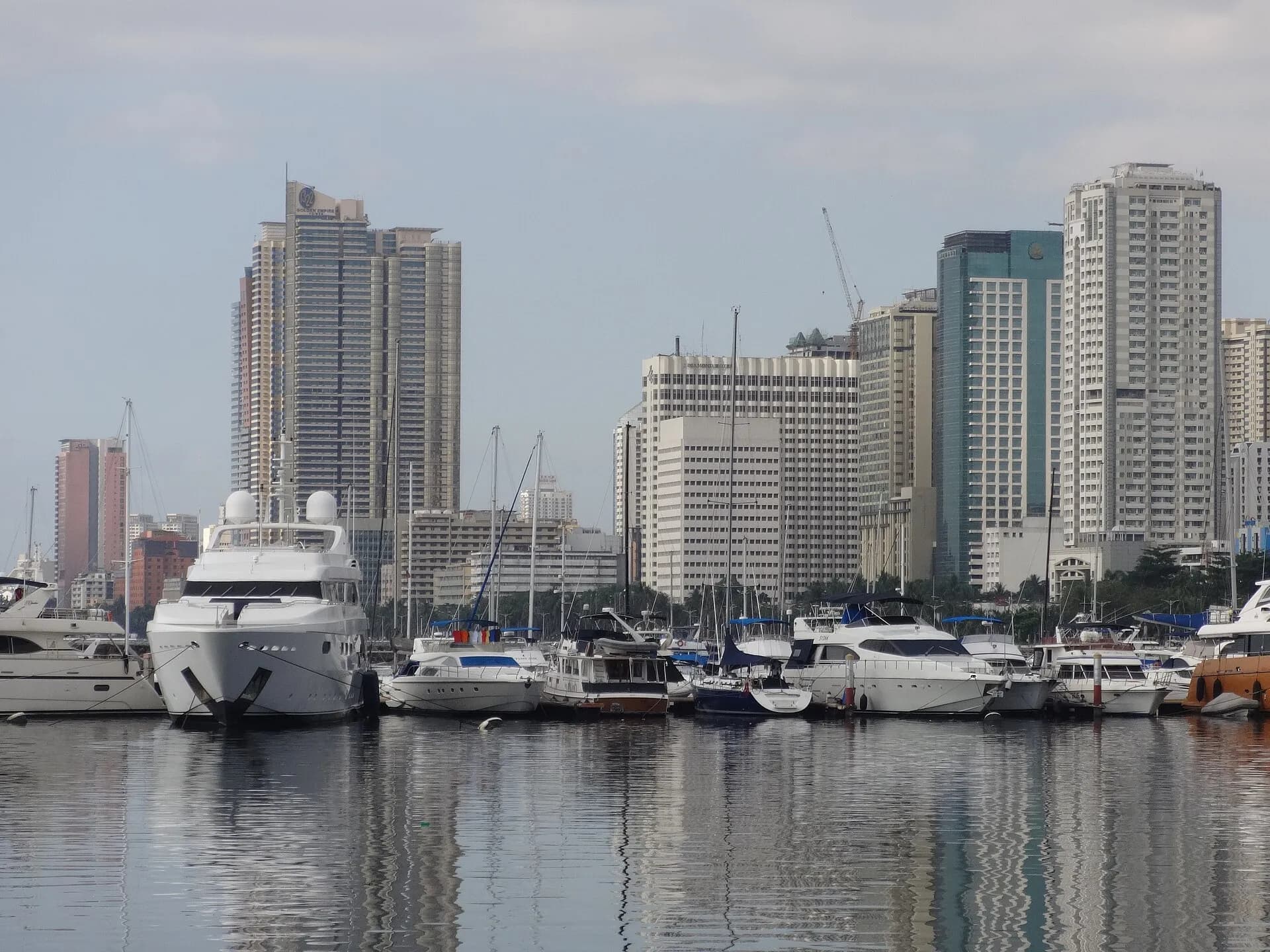
The Philippines is an archipelago that holds several countries in one trip: busy Manila and the volcanoes of Luzon, the rice terraces of Ifugao, the white beaches of the Visayas, the karst lagoons of Palawan and the cities of Mindanao in the south. Spanish-era churches, markets, coral reefs and long ferry crossings between the islands come on top, so the route is worth building with time to spare.
TripTech will help you choose a flight and a hotel and put together a route that accounts for domestic flights and ferries, so travelling around the Philippines stays comfortable and free of unnecessary transfers.
Where to go in the Philippines
- 01
Intramuros and Rizal Park — see the old Manila
The historic centre of Manila, ringed by 16th-century walls: Fort Santiago, the cathedral, San Agustin Church, old houses and city gates. Rizal Park and the waterfront with its view over the bay are right next door, so both fit into one day. The cobbled streets are best explored on foot, and a guide makes the history of the quarters clearer: how the city lived through the Spanish period and the war.
- 02
Bay City and Pasay — watch the sunset over the bay
The district on the reclaimed shores of Manila Bay, where the waterfront, shopping centres and museums line a long promenade. People come at dusk to see the sun set over the water, one of the most striking sights in the country. Roxas Boulevard links the area with the old city, and it is easy to finish the walk with dinner by the bay and return to the hotel after sunset.
- 03
Corregidor — follow the traces of war
An island fortress at the entrance to Manila Bay, with the ruins of barracks, gun batteries and a Pacific War memorial. People come for the quiet, the views over the bay and the clear story of the defence and the landings of the 1940s. A boat gets you there, and an open bus with a guide is the easiest way around the island; without one the ruins look like plain stones.
- 04
Taal and Batangas — look at a volcano in a lake
One of the best-known natural sites on Luzon: the active Taal volcano rises as an island out of the lake of the same name. The panorama is usually taken in from the Tagaytay ridge, with the crater, the bay and green hills in view, while the Batangas coast offers beaches and snorkelling spots. Rules for visiting the volcano island often change, so check them in advance and avoid the climb on a rainy day.
- 05
Pagsanjan — ride a canoe to the falls
A small town in Laguna province where narrow boats head up the river between cliffs, tropical trees and low rapids. The goal is Magdapio Falls, where you can stand under the falling water and cool off. Start the trip in the morning and choose clothes that can get soaked: spray on the river is unavoidable.
- 06
Vigan — walk the streets of the 18th century
The capital of Ilocos Sur, where the Spanish colonial townscape survives: cobbled Crisologo Street with merchants' houses, a church and a square. Horse carriages still run through the quarter, and the finest façades have latticed windows, brick bases and wooden balconies. In the evening the street is lit by lamps and the town looks especially cinematic.
- 07
Banaue rice terraces — climb to walls of rice
Rice terraces in the mountains of Ifugao province, farmed by local communities for centuries: the slopes are cut into stepped fields fed by a system of channels. Nearby lie the Batad amphitheatre and Tappiya Falls, and trails run along the terraces between villages. Mountain weather changes quickly, so a rain jacket and sturdy shoes are essential even in the dry season.
- 08
Sagada — hanging coffins and a sea of clouds
A mountain town in Mountain Province, where coffins of an old burial tradition are fixed to the cliffs, and the Sumaguing and Lumiang caves hold underground chambers and a river. At dawn the Kiltepan viewpoint opens onto clouds filling the valley, and the cool climate makes walking a pleasure. The road from Banaue winds through the mountains, takes most of a day and is best not left for the evening.
- 09
Chocolate Hills and tarsiers — the symbols of Bohol
The hills around Carmen that turn chocolate brown in the dry season, and a sanctuary for tarsiers, tiny primates with enormous eyes. A tour of the island usually adds a boat trip on the Loboc River and the old churches of Baclayon and Loboc. See the animals only in the sanctuary, where they are cared for, and keep flashes away from them.
- 10
Cebu — follow Magellan's route
A city on Cebu island tied to Magellan's expedition: the cross and the Basilica del Santo Niño commemorate it, and old Fort San Pedro stands nearby. In January the city hosts Sinulog, one of the country's most visible festivals, with street dancing and processions. From the city it is easy to reach waterfalls, the reefs of Moalboal and the south of the island, where whale sharks gather in the sea.
- 11
Siquijor — an island without the crowds
A small island known for the Cambugahay cascades, Salagdoong Beach and an old balete tree wrapped in local beliefs. Big hotels are few, but there are quiet coves, viewpoints and long roads through coconut groves. Ferries arrive from Negros and Bohol, so the island fits neatly into a Visayas route and does not need a week of its own.
- 12
Boracay — stay by white sand
A small island whose main beach, White Beach, stretches for several kilometres along the sea. Here people swim, sail at sunset, eat by the water and walk across the whole island, while Puka Beach offers a different mood. The island can be crossed in a couple of hours, but the main beach is busy in high season, so plan the quiet hours for the morning.
- 13
Puerto Princesa — go down into the underground river
The capital of Palawan, the starting point for the underground river national park, where boats pass beneath the cave vaults and monkeys and karst cliffs appear on the shore. In town, see the old church and the waterfront; around it, the Honda Bay islands offer sandbars and snorkelling. Boats in the park are best caught early in the morning, before the heat and the queue.
- 14
El Nido — swim in the lagoons of the archipelago
A village in north-eastern Palawan where boats set out for the Bacuit archipelago: the Big Lagoon and Small Lagoon, the Secret Lagoon, Matinloc point and beaches for snorkelling. The water in the lagoons shifts colour through the day, and the cliffs around them look like film sets. Boat schedules depend on weather and tides, so agree the route on the spot in the morning and take sun protection.
- 15
Davao and Samal Island — meet the south
A large city in Mindanao where markets sell durian and local coffee, and waterfalls, farms and the slopes of Mount Apo lie nearby. Close by, on Samal Island, there are sandy beaches, resorts with pools and quiet coves for snorkelling. It is a convenient place to continue across Mindanao if you want to see more than the Visayas and Palawan.
- 16
Siargao and Surigao — catch a wave and the quiet
An island in Surigao del Norte, known for the Cloud 9 wave, Sugba Lagoon and the natural pools of Magpupungko. People come to learn surfing, swim with a mask and ride around between palm groves and small cafés. Dozens of smaller islands lie around it, close enough for a full day out, with dinner on the shore in the evening.
Resorts and cities
What else is worth trying
Try the local food
adobo, sinigang, lechon, halo-halo and fresh seafood — try these in ordinary cafés and markets, not only at the hotel.
Take boat trips early
head to the islands and beaches in the morning: the sea is calmer, there are fewer people and you are back before the heat peaks.
Learn to dive and snorkel
the country is known for its reefs, so book with a reputable centre and check that the gear fits properly.
Carry water and sun protection
drink bottled water, use sunscreen that is safe for reefs and do not forget a hat.
Keep a buffer on transfer days
domestic flights and ferries depend on the weather, so leave spare time between connections for delays.
Before your trip
The Philippines has a dry season and a rainy season, and typhoons are possible from July to October, so check the forecast before fixing the route and never leave a crossing for the last day. Domestic flights between Manila, Cebu, Palawan and Mindanao are often easier than ferries, but ferries remain essential between neighbouring islands, and a time buffer always helps. Drink bottled water, be careful with ice and uncooked food, and wear a hat in the heat. Cash in pesos is useful at markets, for tricycles and on small islands; cards work in cities and hotels, but ATMs are not everywhere. In churches, cover shoulders and knees and take off your shoes at the door, and check visa rules on official sources before booking tickets.
Frequently asked questions
When is the best time to visit the Philippines?
The dry season runs from December to May, when the sea is calm and the islands see less rain, though this is also the busiest time. From June to November the chance of downpours and typhoons rises, so keep plans flexible and book flights and ferries with room to change. In the Visayas the weather is often gentler than in northern Luzon.
How many days do you need in the Philippines?
Two weeks is a sensible minimum for two or three island groups, because a single transfer can eat half a day. A week suits one direction, such as Palawan or the Visayas, while three weeks make it possible to combine Luzon, the Visayas and Palawan without rushing.
Should you choose islands or cities?
They are different parts of a trip and work well together. Manila and Cebu are about history, food and transport hubs; the islands are about beaches, reefs and a slower pace. It makes sense to start in a city, spend the main time on the islands and return to a large city before the flight home.
How do you get around the Philippines?
Planes link the regions: hubs connect Manila, Cebu, Clark, Puerto Princesa and Davao, and from there ferries and fast boats run to the smaller islands. Locally people use tricycles, jeepneys and minivans, and an airport transfer is best arranged in advance.
Information about places and trip conditions may change or be out of date. Please verify the latest details before you travel.
Photograph: Patrick Roque · CC BY-SA 4.0 · Wikimedia Commons