

Resort guide
Rome — Italy
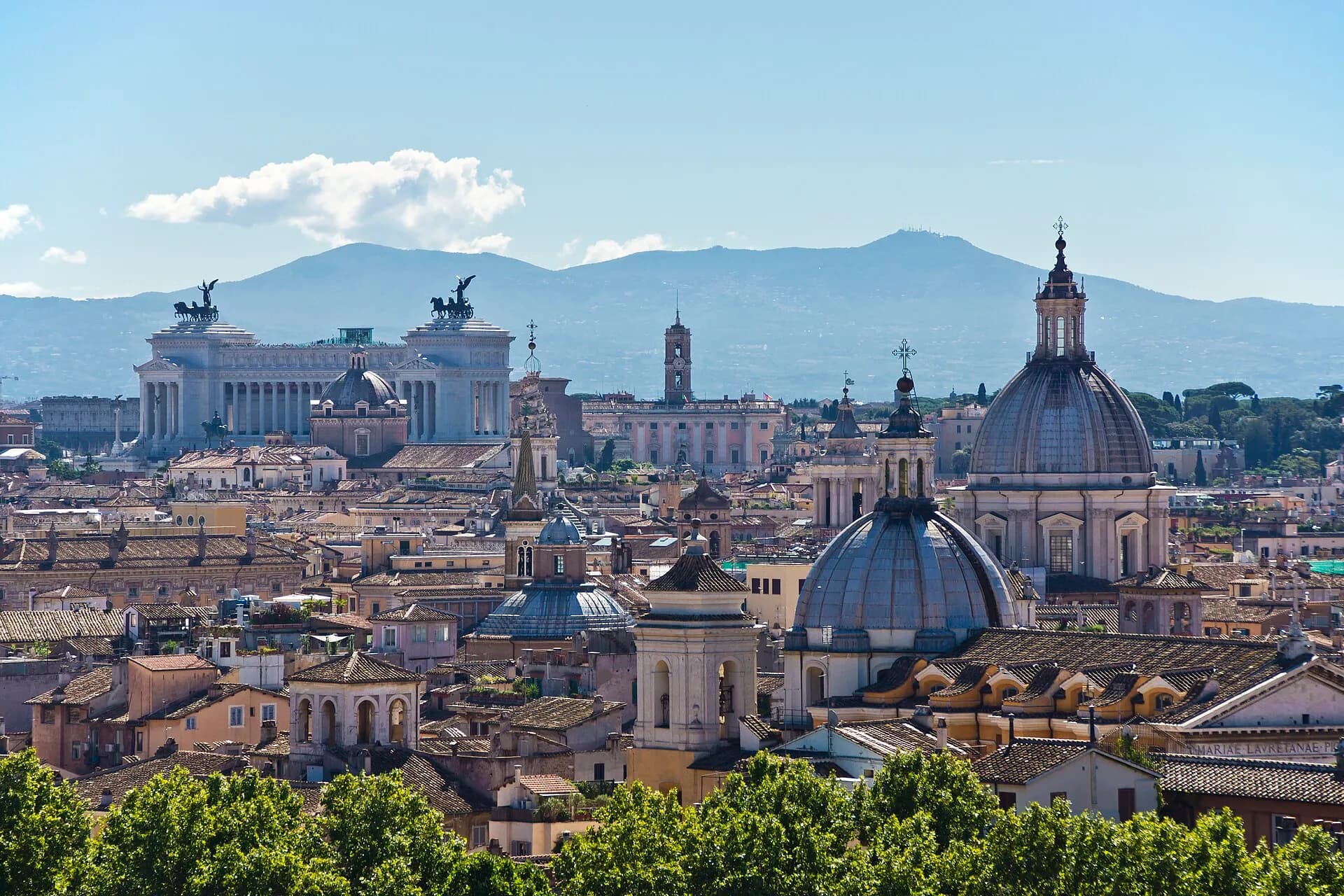
Rome, Italy: holidays and tours. We compare hotels, flights, meals and transfers and check the terms before payment. Tell us your dates and budget and a manager will match options for your trip.
TripTech will help you choose a flight and a hotel and put together a route for your dates, so travelling around Italy stays comfortable, without unnecessary transfers or rush.
Where to go: Rome and nearby
Start with the resort itself, then add the country highlights that fit your route.
- 01
Colosseum and Roman Forum — touch ancient Rome
Rome's main ancient ensemble: the Flavian Amphitheatre, the Arch of Constantine and the ruins of the Roman Forum with temple columns and the senate house. They stand next to each other, so it makes sense to see them in one day, starting at the Colosseum and walking down to the Forum through the Arch of Titus. Book Colosseum tickets in advance and wear comfortable shoes: the ancient paving is uneven.
- 02
Vatican and St Peter's Basilica — see art at the heart of Rome
The world's smallest state in the centre of Rome, home to St Peter's Basilica, Bernini's colonnaded square and the Vatican Museums with the Sistine Chapel. Climbing the dome rewards you with a view over the city, and the museums deserve several hours. Cover your shoulders and knees in the basilica, and book museum tickets in advance so you can arrive close to opening time.
- 03
Pantheon — step under the perfect dome
A temple to all the gods on Piazza della Rotonda, built under Hadrian in the 2nd century and preserved almost intact. Inside, the dome with its open oculus is the highlight, and the walls hold the tombs of Raphael and Italian kings. The Pantheon still works as a church, so keep your voice down and respect the dress code; afterwards, a coffee on the square is part of the visit.
- 04
Assisi — feel the stillness of Umbria
A town in Umbria that grew up on a hillside above the valley, known for the basilica of St Francis with Giotto's frescoes and the home of St Clare. Explore it on foot, climbing the lanes to the Rocca Maggiore fortress and the viewpoints. Umbria is a region of quiet towns, so Assisi pairs well with a trip to Spoleto and Perugia.
- 05
Florence — walk through the city of the Renaissance
The capital of Tuscany, where a small area holds the Duomo with Brunelleschi's dome, the Uffizi Gallery, the Ponte Vecchio and the basilica of Santa Croce. The city is easy to explore on foot, but book Uffizi and Accademia tickets in advance. Climbing the dome or the Palazzo Vecchio tower is worth it for the view over the terracotta roofs, though the queues can be long.
- 06
Bologna — wander beneath the red porticoes
A city with one of Europe's oldest university traditions, red porticoes and Piazza Maggiore with the basilica of San Petronio. Try the local pasta, climb the Asinelli tower and follow the arcades uphill to the sanctuary of San Luca. Bologna works well as a stop between Florence and Venice and as a base for day trips to Modena and Parma.
Other resorts: Italy
What else is worth trying
Try the food of each region
every city has its own pasta, risotto, cheeses and wines: order carbonara in Rome, tagliatelle in Bologna, and cannoli and fish in Sicily.
Drink coffee the Italian way
a cappuccino or a cornetto at the bar in the morning, an espresso after lunch; standing at the bar is quicker and cheaper than taking a table.
Book museums in advance
the Uffizi, the Vatican Museums and The Last Supper work best with a timed entry booked ahead, otherwise you can lose half a day in queues.
Take the train between cities
high-speed trains link Rome, Florence, Bologna, Milan and Venice, while regional services are handy for short hops such as Pompeii or Assisi.
Respect the rhythm of the day
many shops close after lunch and restaurants open late for dinner, so leave some slack in the day instead of filling every hour.
Before your trip
Weather in Italy depends on the region and the season: summers in the north are warm and thundery while winters are cold, the south is hot and dry in summer, and spring and autumn suit sightseeing. Trains are the easiest way between cities, tickets for popular museums and domes are worth booking in advance, and working churches ask for covered shoulders and knees. Carry some cash for small towns, though cards are widely accepted. A car helps in the countryside and on the islands, but historic centres have ZTL limited-traffic zones, so find parking in advance and remember that fines for entering them often arrive after the holiday.
Frequently asked questions
How much does a tour to Rome cost?
The price depends on dates, hotel, meal plan, flights and party size. A manager will shortlist options for your budget and show the full price before payment.
When is the best time to visit Rome?
The best season depends on your dates, budget and holiday style. A manager will check current options for your specific dates.
Can I depart from my city?
We search departures from Almaty, Astana and other cities in Kazakhstan; availability depends on dates and flights.
Do you help with documents?
We check current requirements for your citizenship and help prepare documents. The visa decision is made by the consulate.
When is the best time to visit Italy?
Late April to June and September to October are the most comfortable for cities and sightseeing, with mild weather and fewer visitors. July and August are hot and busy, and many Italians take their holidays then. The north and the Dolomites have a longer season, while the sea in the south stays warm into early autumn.
How many days do you need in Italy?
Three or four days usually cover one city: Rome with its museums and the Vatican, a little less for Florence or Venice. For a first trip, ten to fourteen days with two or three bases works well and avoids spending the holiday in transit.
Information about places and trip conditions may change or be out of date. Please verify the latest details before you travel.
Photograph: Bert Kaufmann · CC BY-SA 2.0 · Wikimedia Commons