

Resort guide
Tbilisi — Georgia
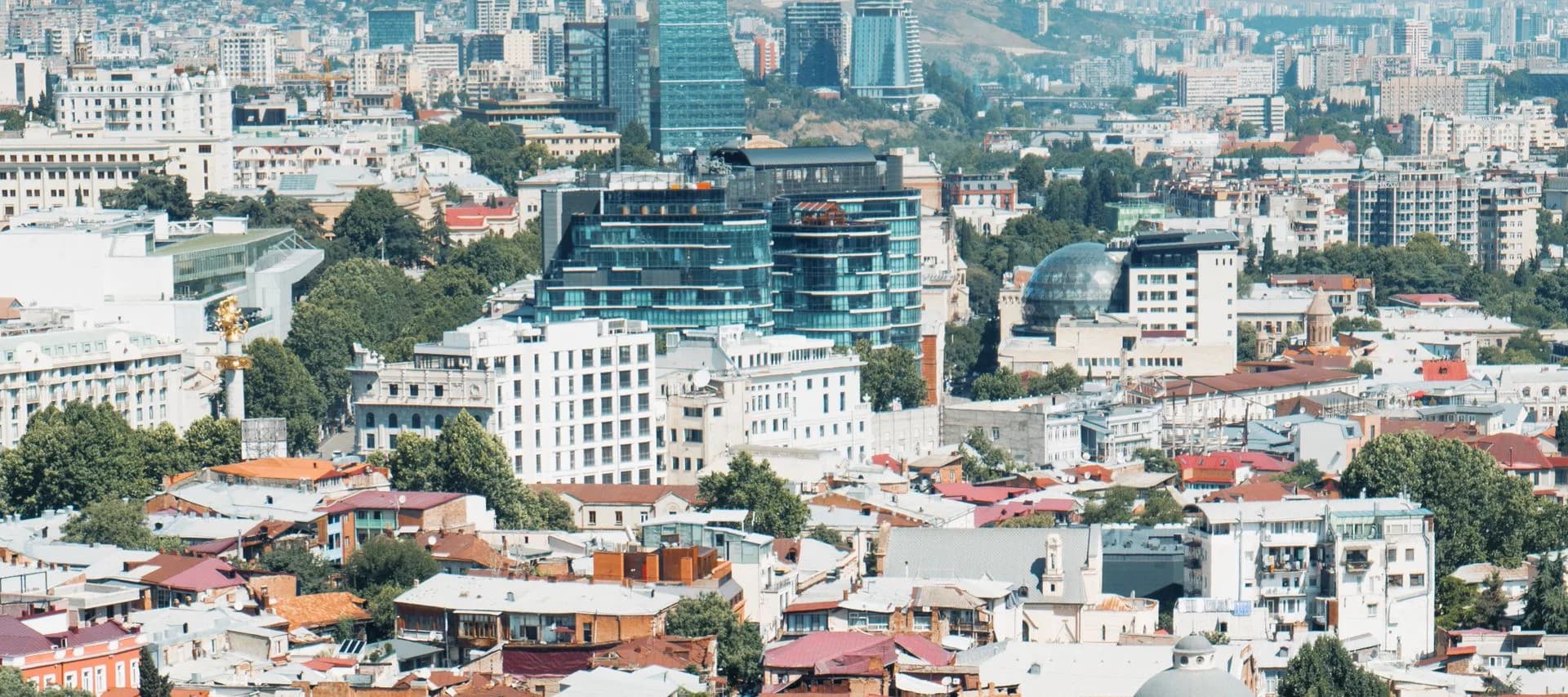
Tbilisi is a compact capital where old balconied houses, sulphur baths and modern bars sit within a few blocks of each other. It works for a short 3–4 day break and as a base for a wider route across Georgia.
TripTech selects a hotel in a convenient district, checks the flight to TBS, the transfer and the excursions, and explains how to combine the capital with Kakheti, Gudauri or Batumi. Prices and availability are confirmed with the operator before payment.
Where to go: Tbilisi and nearby
Start with the resort itself, then add the country highlights that fit your route.
- 01
Tbilisi Old Town — wander a city of balconies
The historic heart of the capital, with winding lanes, carved wooden balconies, inner courtyards and small churches. It is easy to walk here without a plan, drifting down from Sololaki to the Mtkvari river. Legend says the city grew around warm springs found during a royal hunt.
- 02
Narikala Fortress — look down over the city
A citadel on the hill above the old town, with a panorama of Tbilisi, the river and the surrounding hills. Footpaths lead up to it, and a cable car runs from Rike Park. Nearby stands the statue of Mother Georgia, holding a sword and a bowl of wine.
- 03
Abanotubani sulfur baths — soak in the warm springs
A district of the old town built around natural sulfur springs, with domed bathhouses above them. The springs are said to have given the city its name, since tbili means warm. The brick domes are a sight in themselves and can be seen from the surrounding streets.
- 04
Mtskheta — go back to the country's origins
Georgia's ancient capital, half an hour from Tbilisi at the confluence of the Mtkvari and Aragvi rivers. Jvari Monastery stands on the hill above and Svetitskhoveli Cathedral in the town; both are on the UNESCO World Heritage list. Mtskheta remains one of the main centres of the Georgian church.
- 05
Bridge of Peace — see the modern city
A pedestrian bridge across the Mtkvari that links Rike Park with the old town. Its glass and steel canopy, designed by the Italian architect Michele De Lucchi, has become a symbol of the city's new architecture. After dark, the lighting makes it stand out against the historic quarters.
- 06
Uplistsikhe — walk through a town cut in rock
A complex carved into a rocky slope near Gori, with halls, stairways and passages. It is one of the oldest urban settlements on Georgian territory and was a major stop on the trade routes. Wear sturdy shoes: the climbs are stony and exposed to the sun.
Other resorts: Georgia
Practical details
Why Tbilisi is the first stop in Georgia
Most flights from Kazakhstan arrive in Tbilisi, which makes the capital a natural first stop. The centre is walkable: it takes about half an hour on foot from Freedom Square to the sulphur baths, and the main sights need no long transfers.
The city suits different travellers: architecture lovers get the Old Town and the art nouveau of Rustaveli Avenue, food lovers get restaurants and wine bars, and families get parks and short excursions. A day trip to Mtskheta or Kakheti is easy to fit around dinner.
TBS airport and the transfer into town
Tbilisi Shota Rustaveli Airport (TBS) is about 18–20 km from the centre. A taxi takes 25–40 minutes depending on the time of day, with heavier traffic on weekday mornings and evenings.
You can reach the city by taxi, with Bolt or Yandex Go, or on a city bus. For a family with suitcases or a late arrival, a pre-booked transfer is easier: the driver meets you in the arrivals hall and you do not have to find a car at night.
The Old Town, Abanotubani and Narikala
The Old Town starts around Vakhtang Gorgasali Square: narrow lanes, carved balconies, churches and souvenir shops. Below it lies Abanotubani, the sulphur bath quarter, where bathhouses offer private rooms and shared halls, with a small waterfall nearby.
Narikala fortress rises above the district; you can climb on foot or take the cable car from Rike Park. The walls open onto the Bridge of Peace, the Kura river and tiled roofs — the best place for your first photos of the city.
Rustaveli, Mtatsminda, Vera and Saburtalo
Rustaveli Avenue is the city's grand axis: the National Museum, the Opera and Ballet Theatre, parliament and bookshops line the street. From here it is a short walk to Freedom Square, and in the evening to the cafés and wine bars in the side streets.
Mtatsminda rises above the city: a funicular climbs the hill to a park with a Ferris wheel and viewing terraces, next to the pantheon of writers. Vera and Saburtalo are chosen for quieter streets, bakeries, coffee shops and hotels away from the tourist crowds.
When to go: April–June and September–October
The most comfortable months in Tbilisi are April, May, June, September and October: warm but not scorching, so walking the hilly streets stays pleasant. Spring fills the city with greenery, while autumn brings grape harvest and young wine.
July and August are hot, with temperatures often above +30 °C, so plan sightseeing for the morning. Winter is cool and windy but quiet; trips into the mountains then depend on snow and road conditions.
Wine, cafés and Georgian food
Tbilisi is an easy place to discover Georgian cooking: khinkali, adjaruli khachapuri, lobio, badrijani, mtsvadi and churchkhela are available in almost every block. Locals often start the day with khachapuri and coffee and finish with a long table, wine and toasts.
Georgia is one of the oldest wine regions in the world, producing saperavi, rkatsiteli and amber wines in clay qvevri. The city has plenty of wine bars with tastings, and a trip to Kakheti lets you see the wineries and taste wine where it is made.
Getting around and travelling across Georgia
Tbilisi has a metro, buses and taxi apps; a transport card is handy for several rides. The centre is best explored on foot, but streets are hilly and full of stairs, so wear comfortable shoes and avoid over-planning the day.
Mtskheta, Gudauri, Kakheti and Batumi are all reachable from the capital. Some routes are easier by car with a driver, others by train or minibus; mountain roads can close in winter, so check plans the day before.
What else is worth trying
Try Adjarian khachapuri
a boat-shaped bread with egg and butter, usually eaten at breakfast rather than in the evening, and a good way to start a day of walking.
Sit down to a Georgian table
with a tamada, toasts and wine: lunch here is rarely quick, and the rules of the feast are part of the trip.
Taste qvevri wine
amber wines and family bottles in Kakheti, with cheese, herbs and fresh bread from the market.
Drive the Georgian Military Road
one of the most scenic routes in the Caucasus, but plan for hairpins, weather and passes that can close in bad conditions.
Hike in the mountains
routes for every level run through Svaneti, Kazbegi and Borjomi, so pack hiking shoes and warm layers.
Before your trip
Weather in Georgia depends on the region: summers in Tbilisi and the east are hot, the mountains are cooler and can hold snow even in the warm season, and Batumi and Adjara are the most humid part of the country. Spring and autumn suit sightseeing and wine trips, summer is best for the beach and winter for skiing. In monasteries and churches a dress code applies: women usually cover their head and shoulders, and men should avoid shorts. Trains, buses and minibuses link the regions, while public transport and taxi apps are convenient in Tbilisi. Check current entry conditions on official websites and keep some cash with you: cards are widely accepted, but not everywhere in the mountains and small villages.
Frequently asked questions
Do I need a visa to visit Tbilisi?
Citizens of Kazakhstan can enter Georgia visa-free for up to 365 days. Working without a permit is prohibited and can lead to a fine and expulsion, so check the current rules before travel.
How much does a Tbilisi holiday cost?
The price depends on dates, flights, the hotel, meals and excursions. A manager will shortlist options and confirm the current price with the operator before payment.
How do I get from TBS airport to the centre?
The distance is about 18–20 km. A taxi or a pre-booked transfer is the easiest option, and there is also a city bus; the drive takes 25–40 minutes depending on traffic.
When is the best time to visit Tbilisi?
April–June and September–October are the most comfortable. Summer is hot and winter is cool, but the city welcomes visitors all year.
How many days do I need in Tbilisi?
Two or three days are enough for the city, four or five with the surroundings. If you add Batumi, allow extra days for the journey.
Is Tbilisi suitable for children?
Yes, if you pick a hotel with family rooms and plan walks with breaks. Mtatsminda Park and short trips to Mtskheta usually go down well with children.
Information about places and trip conditions may change or be out of date. Please verify the latest details before you travel.