

Destination guide
Morocco holidays — from the medinas to the Sahara
Morocco packs several worlds into a single trip: the noisy medinas of Marrakech and Fes, the forts and gardens of Rabat, the mosque above the ocean in Casablanca, the blue streets of Chefchaouen and the windy beaches of the Atlantic. Further south rise the High Atlas, the mud-brick kasbahs, the oases of the Draa Valley and the dunes of the Sahara, while the north brings the Rif mountains and Tangier. Distances between regions are long, so the route is worth building with time to spare.
TripTech will help you choose a flight and a hotel and put together a Morocco route for your dates, so the transfers between cities, mountains and desert stay comfortable and leave time for the country itself.
Where to go in Morocco
- 01
Jemaa el-Fna — dive into the life of Marrakech
Marrakech's main square and the heart of its medina, busy with trade all day and lined with hundreds of food stalls in the evening. Musicians and storytellers perform here, fortune tellers and street artists work the crowd, and this is the easiest place to feel the rhythm of the city. The winding alleys of the souks and the rows of the spice market begin right around it.
- 02
Majorelle Garden — rest among colour and greenery
A small garden in Marrakech created by the French painter Jacques Majorelle and known for the deep blue of its walls. Cacti, bamboo and palms surround the villa and a small museum, and the garden with Yves Saint Laurent's house stands next door. It is a quiet spot for an hour away from the noise of the medina.
- 03
Fes medina — get lost in a medieval city
The old city of Fes is one of the largest living medinas in the world, with several thousand streets and alleys forming a genuine maze. Here stand the ancient Qarawiyyin university, mosques, madrasas with carved wood and craft markets selling leather, carpets and copper. Exploring with a guide is easy, while a slow walk on your own works just as well.
- 04
Chouara tanneries — see a centuries-old craft
The leather workshops of the Fes medina, where hides are still soaked, tanned and dyed the traditional way. Terraces of the surrounding houses look down on dozens of round vats in different colours, and the smell and the work of the tanners leave a stronger impression than any exhibition. Arrive early, before the sun heats the stone, and take a sprig of mint.
- 05
Meknes and Volubilis — see two eras in one day
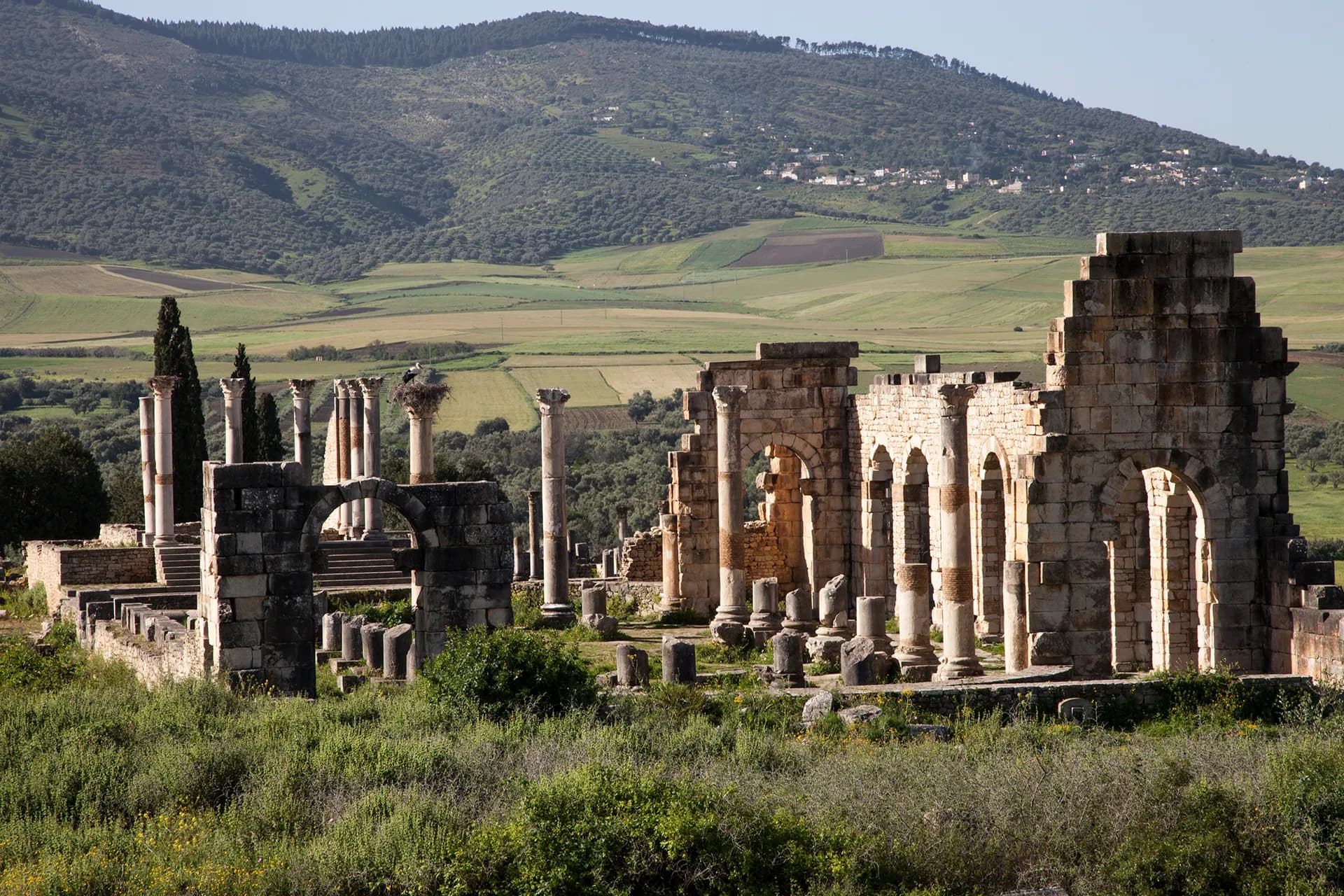
Meknes is a former capital that keeps the vast Bab el-Mansour gate, the treasuries and the stables of Sultan Moulay Ismail. Half an hour away lies Volubilis, Morocco's largest Roman city, with the Arch of Caracalla, the columns of the basilica and mosaics. The two fit easily into one day, which makes Meknes a convenient stop between Fes and Rabat.
- 06
Rabat — walk between the kasbah and the Hassan Tower
Morocco's capital, where the old Kasbah of the Udayas stands right above the ocean and the Hassan Tower rises beside the columns of an unfinished mosque. The city also holds the mausoleum of Mohammed V, the walls of Chellah and an archaeology museum, and its streets feel calmer than those of Marrakech. Rabat is a convenient base for the Atlantic coast.
- 07
Hassan II Mosque — step into a vast prayer hall
The symbol of Casablanca and one of the largest mosques in the world, built on the very edge of the ocean. Its tall minaret is visible from many parts of the city, while inside you find a huge hall of columns, carved stone and windows that let the light pour in. Guided visits run on set days, so it is worth checking the timing in advance.
- 08
Chefchaouen — wander the blue streets of the Rif
A small town in the Rif mountains where the walls of the houses are painted in shades of blue. It is a pleasure to walk the alleys lined with flower pots, climb to the viewpoints and step into small carpet and textile workshops. Trails into the mountains start from Chefchaouen, with the Akchour waterfalls and the peaks of Talassemtane national park nearby.
- 09
Tangier — stand where Africa meets Europe
A port city in the north, closer to Europe across the Strait of Gibraltar than to any other part of Morocco. See the old medina, Cape Spartel and the ruins of Ksar es-Sigir, then walk the seafront in the evening when the city fills with people. Tangier often becomes the first or last point of the route for travellers arriving by sea.
- 10
Essaouira — stroll along the Atlantic
A coastal town of white houses, blue boats and long windy beaches that are famous well beyond Morocco. Inside the fortified medina you can listen to music, bargain for wooden crafts and have fish for dinner, while outside the walls you can watch surfers catch a wave. It is noticeably cooler than Marrakech, so a light jacket helps in the evening.
- 11
Taroudant — see the ramparts and the market
A town in the Souss valley that was once the capital of the south and still keeps complete ramparts with towers. A large market fills the centre, with argan oil, spices and silver on sale, and a fertile valley of orange groves stretches around it. Taroudant is smaller and calmer than Marrakech, a good place to feel the south without the crowds.
- 12
High Atlas — climb towards Mount Toubkal
The highest part of Morocco's mountain system, home to Mount Toubkal and many Berber villages. Trails to the summit start from Imlil, hairpin roads cross the passes, and high above the clouds the ridges seem to have no end. Many travellers come for a trek of several days, while in winter the routes call for proper gear and a guide.
- 13
Ait Ben Haddou — see a fortress of mud brick
A fortified village of clay on a hillside that almost everyone has seen in the cinema. The ksar is made of houses, towers and granaries that have stood here for centuries, and the far bank of the river gives the best view of the whole complex. It is easy to stop at Ait Ben Haddou on the road from the Atlas to Ouarzazate, as the desert comes closer.
- 14
Ouarzazate — the Taourirt kasbah and film studios
A town at the foot of the Atlas that is often called the gateway to the Sahara. Here you find the Taourirt kasbah with its mud-brick towers, film studios where many movies were shot, and several museums. Routes to the Draa and Dades valleys start from Ouarzazate, so most travellers give it a day or two and spend the night before the desert.
- 15
Draa Valley — drive through the oases
One of the longest valleys in Morocco, with a road that runs past palm oases, ksars and mud-brick villages. Along the way come kasbahs, old fortresses on the rocks and viewpoints over the whole valley. The route works well as the continuation of the road from Ouarzazate to the Sahara, especially if you travel without hurry and stop often.
- 16
The Sahara at Merzouga — spend a night under the stars
A village on the edge of the Erg Chebbi dunes, where camel and jeep trips into the desert begin. The dunes change colour through the day, and at night the sky above them has no town lights at all, which is why many people stay overnight in a camp. Winter and spring are the best seasons here, with warm days and nights that are not too cold.
Resorts and cities
What else is worth trying
Try Moroccan food
tagine, couscous, bissara and mint tea — dishes best ordered in small family places, not only at the hotel.
Browse a spice market
saffron, cumin, ras el hanout and argan oil are sold next to the craft stalls, where you can also bargain for pottery.
Visit a hammam
a traditional bath with steam, black soap and a scrub — a routine for locals and a good way to recover after a long walk.
Sleep in the desert
a camp among the dunes with fireside talk and drumming stays with you longer than the road itself, but bring warm clothes for the night.
Drive across the Atlas
a road over the passes and through Berber villages, with mountain waterfalls and views of the ridges — the kind of route worth taking with a driver.
Before your trip
Weather depends on the region and the altitude: summers are hot on the coast and in Marrakech, nights are cooler in the Rif and the Atlas, and spring and autumn suit sightseeing and trekking, while the Sahara can be extremely hot in summer. In medinas, modest clothing and comfortable shoes help, and respect for local traditions is welcome everywhere. Bargaining is fine in markets and souvenir shops, but not in shops with fixed prices or in cafés. Keep some dirhams in cash: cards work in hotels and larger places, but not always in small shops, taxis or markets. A car is often useless inside a medina, so you walk there, while buses, trains and domestic flights link the cities. Check current entry conditions on official websites.
Frequently asked questions
When is the best time to visit Morocco?
It depends on the region. Spring and autumn are the most comfortable for cities and sightseeing, when the days are less hot, while the cooler months from autumn to spring suit the Sahara. In summer the coast and the mountains feel better than Marrakech, and in spring the Atlas valleys are in bloom with fewer visitors.
How many days do you need in Morocco?
Five or six days are usually enough for Marrakech, Rabat and Casablanca. Add Fes, the Atlas and the Sahara and you should plan at least ten days, while a longer route that includes the north needs two weeks, or the trip turns into driving.
Should you choose Marrakech or Fes?
They are different cities. Marrakech is brighter and much more geared to tourism, with Jemaa el-Fna, its gardens and the mountains nearby. Fes is older and calmer, with a huge medina, living crafts and an academic history. If time allows, see both.
How do you get around Morocco?
Trains and buses are convenient between cities, and for the south and the Sahara people often hire a car with a driver. Inside medinas you walk, Marrakech has taxis and local minibuses, and domestic flights save time on the long legs.
Information about places and trip conditions may change or be out of date. Please verify the latest details before you travel.
Photograph: Subhros · CC BY-SA 3.0 · Wikimedia Commons