

Destination guide
Oman holidays — forts, mountains and desert
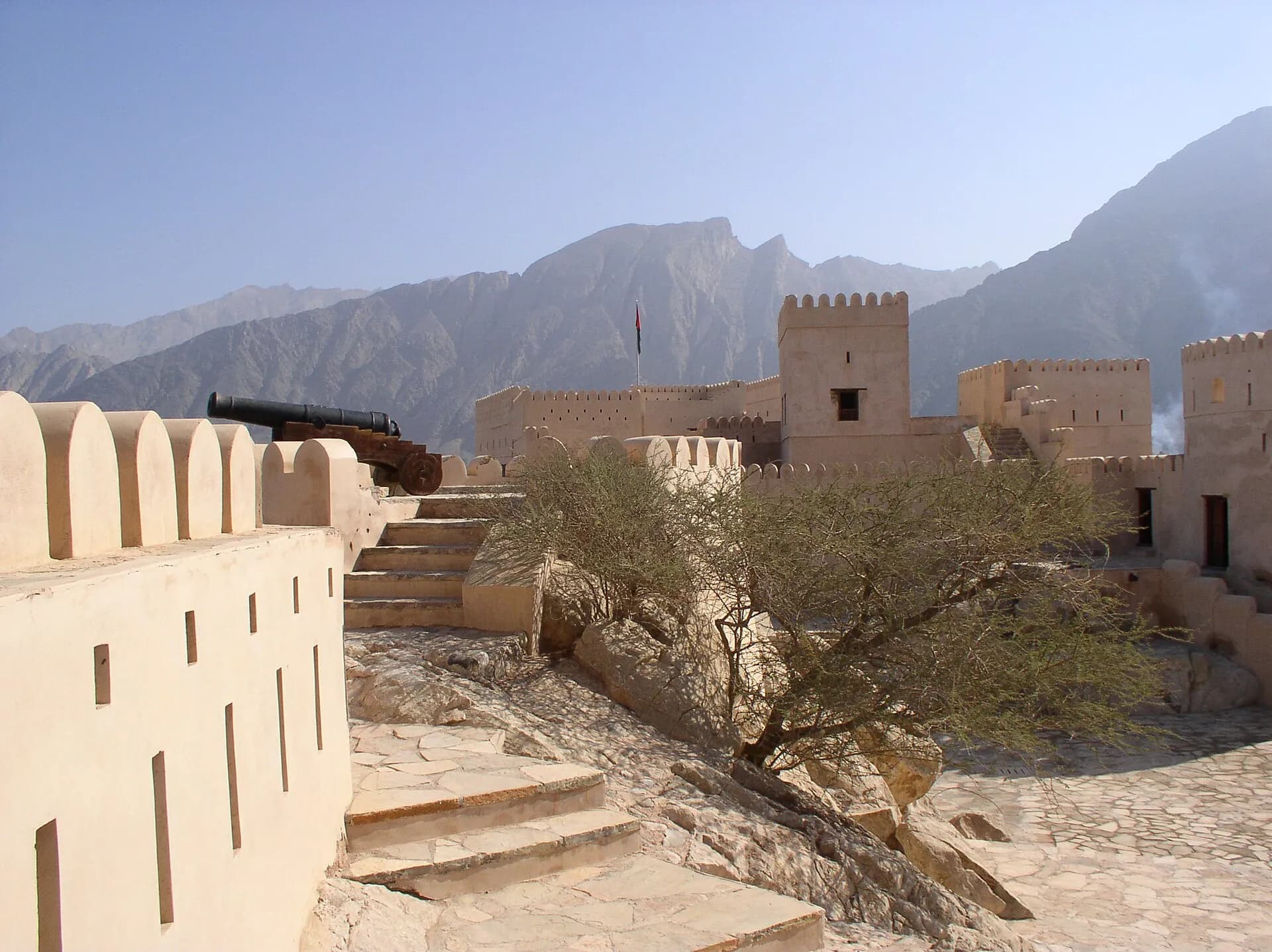
Oman packs striking contrasts into one country on the south-east corner of the Arabian Peninsula: the white stone quarters of Muscat, forts and castles in the inland oases, the Hajar mountains with cool wadis and terraces, the dunes of the Wahiba sands and the coast of the Indian Ocean. In the north the country ends in the fjords of Musandam, in the south in Dhofar under the khareef monsoon, and between them stretch palm oases, markets and fishing villages. Travelling here means moving between forts, wadis and beaches, so it pays to plan the route with time to spare.
TripTech will help you choose a flight and a hotel and build a route between Muscat, the mountains and the coast for your dates, so travelling around Oman stays comfortable and free of unnecessary transfers.
Where to go in Oman
- 01
Sultan Qaboos Grand Mosque — see the country's main mosque
Muscat's main mosque, opened in 2001 and named after Sultan Qaboos bin Said. It is worth seeing for the vast carpet in the prayer hall, the chandeliers and the pale marble that make the interior feel especially grand. This is a working mosque, so visitors are admitted at set times and should come in modest clothing. A landscaped garden surrounds the building, a pleasant place for a walk after the visit.
- 02
Royal Opera House — look at modern Muscat
An opera house in the centre of Muscat, opened in 2011 and now one of the symbols of the city's new architecture. The building blends Arab motifs with modern forms: the facades are clad in stone, and inside is an auditorium with rich decoration. Opera and ballet productions, concerts and festivals take place here, and during the day you can join a tour of the halls. Even without a performance it is worth dropping in for the interiors and the atmosphere.
- 03
Muttrah and the souq — walk the old trading quarter
The old part of Muscat with a corniche, a harbour and the market known as Souq Muttrah. It sells frankincense and incense, spices, silver, fabrics and pottery, and the narrow lanes between the shops recall centuries of trade. The harbour fort of Al-Mirani stands nearby, with boats and small vessels moored along the waterfront. It is easy to combine the market with a walk by the water and a view of the rocky hills.
- 04
Nakhal Fort — see a fortress below the Hajar mountains
A 17th-century fort on a rock base at the foot of the Hajar mountains, surrounded by palm groves. It is known for its round towers, thick walls and inner courtyards, and from the upper levels there is a view over the valley and the gardens. Small halls inside hold household objects and weapons that tell of life in the garrison. Nakhal lies close to Muscat, so the trip pairs easily with a drive through Al Batinah.
- 05
Nizwa Fort and Jabreen — step into Oman's inland castles
Nizwa is a historic town at the foot of Jebel Akhdar, home to a large fort with a massive keep and tower. The many-tiered structure rises above the town market, and from its walls you can see the old quarters and the palm gardens. A few kilometres away stands Jabreen Castle, decorated with paintings and wood carving. Both forts fit into one day if you start at the Nizwa market.
- 06
Wadi Bani Khalid — swim in a palm-lined valley
A valley in the Hajar mountains with clear pools, smooth rock and palm groves that follow the streambed. You can swim in the cool water, walk the bank and find shade to rest, and the road to the wadi crosses desert scenery. Mornings are easier, before the heat and the crowds, and it is worth remembering that some pools by the rocks are deep. The wadi is often added to a route after a trip to the Wahiba dunes.
- 07
Wadi Shab — walk through water between the cliffs
A narrow valley in Ash Sharqiyah where water has cut a canyon between high cliffs. The route starts near the palm gardens, follows channels and streams and leads to pools of clear water that in places you reach by swimming. The path is slippery in parts, so bring shoes you do not mind getting wet and something to protect your belongings. Afterwards you can walk down to the village and rest by the water.
- 08
Wadi Dayqah — visit a valley of dams and cliffs
A valley in Ash Sharqiyah known for its reservoir and the canyon the river cuts through. Viewpoints and paths are laid out here, and water stays in the wadi even in the hot months, so the valley often turns green. Villages with palm gardens and slopes with mountain views lie around it. It is a quiet stop on the road between Muscat and Sur, well suited to a break.
- 09
Jebel Shams — look into Oman's grand canyon
The highest point of the Hajar mountains, with a plateau that overlooks the deep Wadi Ghul canyon. People come for the walk along the rim, for lunch with a view of the valley and for a night in a guesthouse, while the villages on the plateau keep small garden terraces and old water channels. The road is partly unpaved and it is noticeably cooler up here, so pack long sleeves. You can drive up from Nizwa or from Al Hamra village, leaving the car at the trailhead.
- 10
Jebel Akhdar — see green terraces on the plateau
A tableland in the Hajar mountains known as the Green Mountain for its cool climate and the terraces where pomegranates, roses and walnuts grow. You climb here from Nizwa or through Al Batinah, and the road runs along mountain slopes past villages and gardens. The plateau is good for walking: trails link viewpoints, old water channels and stone villages. Because of the altitude the weather is cooler than on the plain, which is especially welcome after the heat.
- 11
Sur — watch traditional boats being built
A town on the Indian Ocean known for its shipyards, where wooden dhows are still assembled with traditional methods. Here you can see hulls under construction, the craftsmen's tools and finished boats at the water, while the town keeps a fort and watchtowers. The coast around is good for walks and boat trips, and the turtle beaches of Ras al Hadd are not far away. Sur fits neatly into a route between the Wahiba sands and the east coast.
- 12
Musandam and Khasab — cruise the fjords
A peninsula in the north of the country, cut off from the rest of Oman by the United Arab Emirates, with fjords, cliffs and small fishing villages. Boats leave Khasab for the inlets, where you can watch dolphins, swim and look up at rock walls rising straight from the water. There are old forts and viewpoints too, and the coastal villages keep the peninsula's distinct culture. The road here crosses mountains and a border, so allow a full day for the trip.
- 13
Salalah and Dhofar — catch the khareef season
The south of the country, where the khareef monsoon blows from June to September: Dhofar turns misty and rainy, with green hills, grass on the slopes and waterfalls. In Salalah see the frankincense plantations, the Al Husn market and the corniche, and nearby the springs of Wadi Darbat, Ain Razat and the beaches of Mughsail. In summer families come from across the Gulf, so book hotels in advance. At other times Dhofar is quiet and suits unhurried walks.
- 14
Daymaniyat Islands — head for the coral gardens
A group of small islands off the coast of Muscat, protected as a reserve where seabirds nest and turtles live. The water is clear, with coral gardens and fish visible just below the surface, which makes the islands popular with snorkellers and with anyone who enjoys a boat trip. Arrange landing and swimming with an operator who follows the reserve rules: do not touch the coral or disturb the animals. Mornings are best, when there is less wind and the water is calmer.
- 15
Ras al Hadd — watch turtles come ashore
A fishing village on the eastern tip of Oman, close to beaches where sea turtles lay their eggs. People come for night watches: females walk out of the water, dig nests and return to the sea, and local guides run the visits under reserve rules. By day the village offers boats, a market and a lagoon where birds stop on migration. Watching turtles takes silence and patience, and torches and flashes are not allowed.
- 16
Sharqiya Sands and Wahiba — meet sunset on the dunes
A sand sea in Ash Sharqiyah with dunes that shift from gold to red, and camps at the foot of the ridges. People come for drives over the sand in four-wheel drives, for sliding down the slopes and for a night in the open, and Bedouin families host guests in the camps. Morning and evening light makes the dunes most dramatic, while the middle of the day is hot and best spent in shade. It is safer to head into the desert with a guide who knows the route and how to drive on sand.
Resorts and cities
What else is worth trying
Try Omani food
shuwa, harees, rice with lamb, dates and cardamom coffee — simple dishes worth trying in town, not only at the hotel.
Spend a night in the desert or the mountains
a night in a camp below the dunes or a guesthouse on the plateau changes the trip: stars in the evening, soft light on sand or rock in the morning.
Buy frankincense at the market
frankincense, henna, spices and silver — the markets of Muscat and Nizwa show what people traded here for centuries and make for a memorable souvenir.
Rent a four-wheel drive
many wadis, mountain plateaus and dunes are out of reach for an ordinary car, and four-wheel drive gives you freedom with the route.
Allow time for the distances
distances look modest on the map, but mountain roads and switchbacks take time, so do not put too many stops into one day.
Before your trip
The best time for a trip around Oman is October to March, when the days are cool enough for forts and wadis; in summer the temperature climbs past forty degrees, and in late spring dusty hamsin winds are common. For wadis, mountain plateaus and the desert, rent a four-wheel drive, because an ordinary car will not handle the dirt roads. Never enter a wadi when rain is forecast: water arrives suddenly and rises fast. Villages, mosques and markets expect modest clothing, so keep shoulders and knees covered. Cards are accepted in hotels and large shops, while small shops and markets need cash. Check entry conditions in advance with official sources and arrange a visa through official channels.
Frequently asked questions
When is the best time to visit Oman?
October to March, when the days suit forts, wadis and the desert and mountain evenings are cool. Summer is very hot and humid on the coast, and that is when Dhofar has the khareef with rain and mist, so the shoulder months work best for swimming and boat trips.
How many days do you need in Oman?
Three or four days are enough for Muscat and its surroundings. Add Nizwa, the mountains, the wadis and the desert and a week makes sense, while a longer route with Salalah or Musandam needs ten days or more.
Should you choose Muscat or Dhofar?
They are two different Omans: Muscat and the interior are about forts, mountains and desert, while Dhofar is about the monsoon, frankincense and green hills. Salalah is at its best in summer and the rest of the country in winter, so combining both in one trip is difficult.
How do you get around Oman?
Flights are convenient between Muscat, Salalah and Musandam, but within the country a car works best: public transport is sparse and the forts, wadis and desert lie away from the cities. Roads are good, yet mountain plateaus and sand need four-wheel drive, and plan the drives so you are not on switchbacks after dark.
Information about places and trip conditions may change or be out of date. Please verify the latest details before you travel.
Photograph: Sakralamn · CC BY-SA 4.0 · Wikimedia Commons