

Destination guide
Tunisia holidays — Mediterranean beaches, medinas and the Sahara
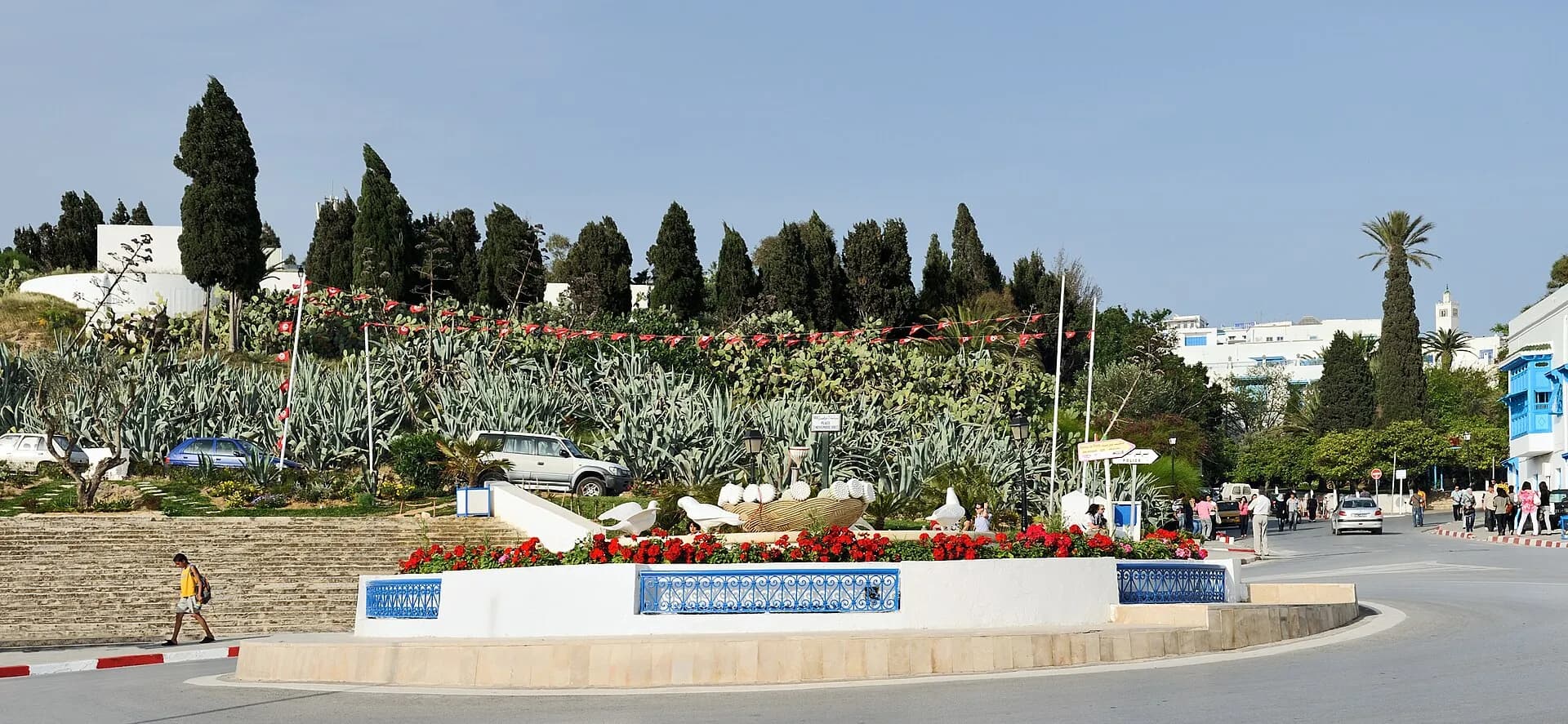
Tunisia is a small country in North Africa where one trip can cover several different worlds: the capital with its medina and the Bardo Museum, ancient Carthage and the white houses of Sidi Bou Said, the long sandy beaches of Hammamet, Sousse and Djerba, the Roman amphitheatre at El Jem and the medieval holy city of Kairouan. A few hours on the road bring palm oases, salt lakes, the dunes of the Sahara and the cave dwellings of Matmata.
TripTech helps you choose a flight and a hotel and put together a route that joins the coast and the desert, so the holiday does not disappear into unnecessary transfers.
Where to go in Tunisia
- 01
Tunis medina and the Bardo Museum — get to grips with the country's history
The Tunisian capital splits into an old and a new town: the medina keeps the feel of a medieval Orient in its narrow lanes, markets and mosques, while the French quarter with wide avenues begins next door. The Bardo Museum holds one of the world's finest collections of Roman mosaics along with Punic and Islamic pieces. The city deserves a full day.
- 02
Carthage — walk the ruins of a great power
An ancient city founded by the Phoenicians and later the centre of Roman Africa. What remains includes the Baths of Antoninus, cisterns, villas with mosaics and ruins on the Byrsa hill, while local museums display finds from the excavations. Carthage lies in a suburb of the capital, so it is easy to see together with Tunis and Sidi Bou Said.
- 03
Sidi Bou Said — see the white houses with blue doors
A small town on a hill above the Mediterranean, known for white houses with blue doors, shutters and window grilles. It is a pleasure to wander the cobbled lanes, drink coffee with a view of the bay and rest in the shade. Some streets look immaculate, but the town is still lived in, so keep noise and photo sessions in mind for the residents.
- 04
La Marsa and Gammarth — relax on the capital's coast
Two suburbs of Tunis with a long shoreline, sandy beaches and restaurants by the water. La Marsa feels more like a town, with a seafront promenade, while Gammarth appeals to those who want to stay close to the sea and away from the bustle of the capital. Both are handy for trips to Carthage, Sidi Bou Said and the Bardo Museum.
- 05
Tabarka — combine sea and mountains in the north-west
A resort on the north-western coast where green hills meet the sea and beaches alternate with rocky outcrops. Tabarka was once known for its coral fishing, and part of that story continues in local workshops. The Kroumirie mountains and Roman ruins are within reach, which makes the town a base for a quiet holiday away from the big resorts.
- 06
Kerkouane — see a Punic town by the sea
A small ancient town on Cape Bon, considered one of the best-preserved Punic settlements. The street plan, the foundations of houses and traces of crafts are clearly visible, with the sea and a lighthouse close by. Kerkouane is less famous than Carthage, so the site usually stays quiet and almost empty.
- 07
Hammamet — stay by long sandy beaches
One of the country's main resorts on the southern shore of Cape Bon, with broad beaches and hotels along the water. Nearby is the medina with its fort, narrow lanes and markets selling pottery, fabrics and olive oil. Hammamet is a convenient base for day trips to Kerkouane, Nabeul and Tunis, and it suits families as well.
- 08
Sousse — wander the medina and step into the ribat
The country's third-largest city and a major port, where a walled medina survives around a ribat, a fortified early religious house with a tower. Its walls give views over the sea and the town, and museums, craft shops and markets are close by. Sousse's beaches run well beyond the historic centre, so the resort combines sea and sightseeing easily.
- 09
Monastir — see a fortress right at the water's edge
A town on the Sahel coast, known for its sturdy ribat, which stands at the surf line and served both as a fortress and a place of prayer. Towers, courtyards and halls survive inside, and the wall is a fine place to stand and look out to sea. Monastir sits close to Sousse and works well as a short stop on the road.
- 10
Mahdia — spend a day in a quiet port town
An old port in the east of the country that was once a capital and now draws visitors with its calm mood and handsome bay. Here you can see the fortress gate, the medina, the great mosque and a viewpoint above the sea. In summer people swim in Mahdia, while in spring and autumn the town is especially pleasant to walk.
- 11
Kairouan — touch the roots of Islamic architecture
A city sacred to Muslims and one of the early medieval capitals of Tunisia, founded in the 7th century. The main sight is the Great Mosque with its wide courtyard and massive minaret, but the Mosque of the Three Doors and the Aghlabid basins are just as interesting. People come here for history, crafts and the calm of the old town rather than the sea.
- 12
El Jem — stand on the arena of a Roman amphitheatre
A small town in the centre of the country where a huge Roman amphitheatre survives, once built for tens of thousands of spectators. You can walk the tiers and the underground galleries and picture the scale of the building and the shows held here. A museum with mosaics is next door, and the arena itself is remarkably well preserved by African standards.
- 13
Tozeur and the oases — see palm groves beside salt lakes
A town in the south-west of the country and the starting point for the famous mountain oases with palm groves, springs and narrow channels. The road to Tozeur crosses salt lakes, the scenery changes quickly, and ruins of old settlements lie nearby. Guides are easy to find here, so a full day among the oases is easy to arrange.
- 14
Matmata — look inside the cave dwellings
A small town in the south where houses were traditionally dug into the soft rock, with courtyards sunk into pits. An open-air museum shows how families lived in such homes and what they cooked, while rocky plateaus and canyons surround the town. Matmata sits between the coast and the desert, so it often features on southern itineraries.
- 15
Douz and the Sahara — head out onto the dunes
A small town at the edge of the Sahara that serves as a starting point for trips to the dunes, camel caravans and Bedouin camps. People come to ride across the sands, watch the sun set over the desert and spend a night in a camp under the open sky. It is hotter here than on the coast, so excursions usually start early in the morning or run in the evening.
- 16
Djerba and Houmt Souk — relax on an island in the Mediterranean
An island in the south-east, linked to the mainland, with sandy beaches, palm groves and quiet towns. Houmt Souk is the lively resort centre, with markets, waterfront cafés and boats out to the nearby islets. Djerba suits both a beach holiday and short trips to its villages and to the ancient synagogue.
Resorts and cities
What else is worth trying
Try brik and couscous
a crisp brik with egg, couscous with vegetables and fish, and fresh dates — plain home-style food worth seeking out in town, not only at the hotel.
Visit a hammam
a traditional bath with steam, a scrub and a rest in the cool room: in Tunisia it is valued for its unhurried pace and hot stone.
Shop at the market
bargaining is the norm in the medina, and Nabeul is the place for pottery: on the markets you choose spices, olive oil and fabrics calmly and with a smile.
Leave time for the road
the drive between the coast and the desert takes several hours, so try not to put two long transfers into one day.
Plan the beach for the morning
the coast often gets strong wind and heat during the day, while the water is calmest for swimming in the morning.
Before your trip
Tunisia is Mediterranean on the coast and desert in the south: spring and autumn are the best seasons, summer is hot and busy on the coast, and the desert can be extremely hot. In the hot months the dry sirocco wind blows in from the Sahara and can ruin a day at the beach, so keep the programme flexible. In mosques and some museums, covered shoulders and knees are expected, and modest dress feels more comfortable in the medina and old towns too. Cash is often needed: cards work in large hotels and restaurants but not everywhere, and dinars cannot be taken out of the country, so change money in instalments. Buses and minibuses link the towns, while in the south and around the oases a car with a driver is often necessary; at markets, bargain and check your change.
Frequently asked questions
When is the best time to visit Tunisia?
May, June and September suit the beaches: the sea is warm and there is less heat and wind than in high summer. Sightseeing in the medinas, Kairouan and El Jem is more comfortable in spring and autumn, while the Sahara is best visited in the cooler months, because in summer the desert is too hot.
How many days do you need in Tunisia?
A week is usually enough for the coast, combining the beach with trips to Tunis, Carthage and Sousse. Add Kairouan, El Jem and the south with Matmata and Douz and you should plan at least ten days; a route with Djerba and the desert takes about two weeks.
Should you choose the sea or the Sahara?
They are different trips: the coast is about beaches, hotels and easy walks, while the south is about the desert, oases and cave houses. With time to spare, it makes sense to spend a few days by the sea and then head south to see the Sahara, Matmata and the oases of Tozeur.
How do you get around Tunisia?
Buses and trains link the larger cities, while for the south and the oases a car with a driver or a group tour is the practical choice. Minibuses and taxis work for short hops along the coast, and a car for a few days is the best way to see the desert and the oases without rushing.
Information about places and trip conditions may change or be out of date. Please verify the latest details before you travel.
Photograph: Cayambe · CC BY-SA 3.0 · Wikimedia Commons