

Destination guide
Portugal holidays — a country at the edge of the Atlantic
Portugal is a small country at the edge of Europe, where the ocean, white towns and vineyards sit beside palaces and monasteries. Lisbon and Porto bring city rhythm and rich food, Sintra and Cascais palaces and a rocky coast, the centre Óbidos and Coimbra, the north Braga and Guimarães, the south quiet Alentejo and sunny Algarve. Then come the islands: Madeira with its endless spring and the Azores with green craters. Give the route enough time so you never have to rush.
TripTech will help you choose a flight and a hotel and build a route across the mainland, Madeira or the Azores for your dates, so travelling around Portugal stays comfortable and free of unnecessary transfers.
Where to go in Portugal
- 01
Alfama — hear Lisbon in its alleys
The oldest quarter of Lisbon, where narrow streets drop towards the Tagus and façades are covered in azulejo tiles. It is best explored without a map: past small taverns, old shops and viewpoints over terracotta roofs. In the evening fado drifts from open windows, and dinner comes with sardines and a glass of wine. The walk pairs easily with the climb up to São Jorge Castle.
- 02
Belém — see the tower and the Jerónimos Monastery
A riverside district of Lisbon where two of the country's main monuments stand side by side: the slender Torre de Belém and the Jerónimos Monastery with its carved portal and cloister. Both are tied to the age of the Great Discoveries and listed as World Heritage. Afterwards walk to the waterfront, look at the 25 April Bridge and try a pastel de nata in a local bakery.
- 03
Sintra — explore Pena Palace and Quinta da Regaleira
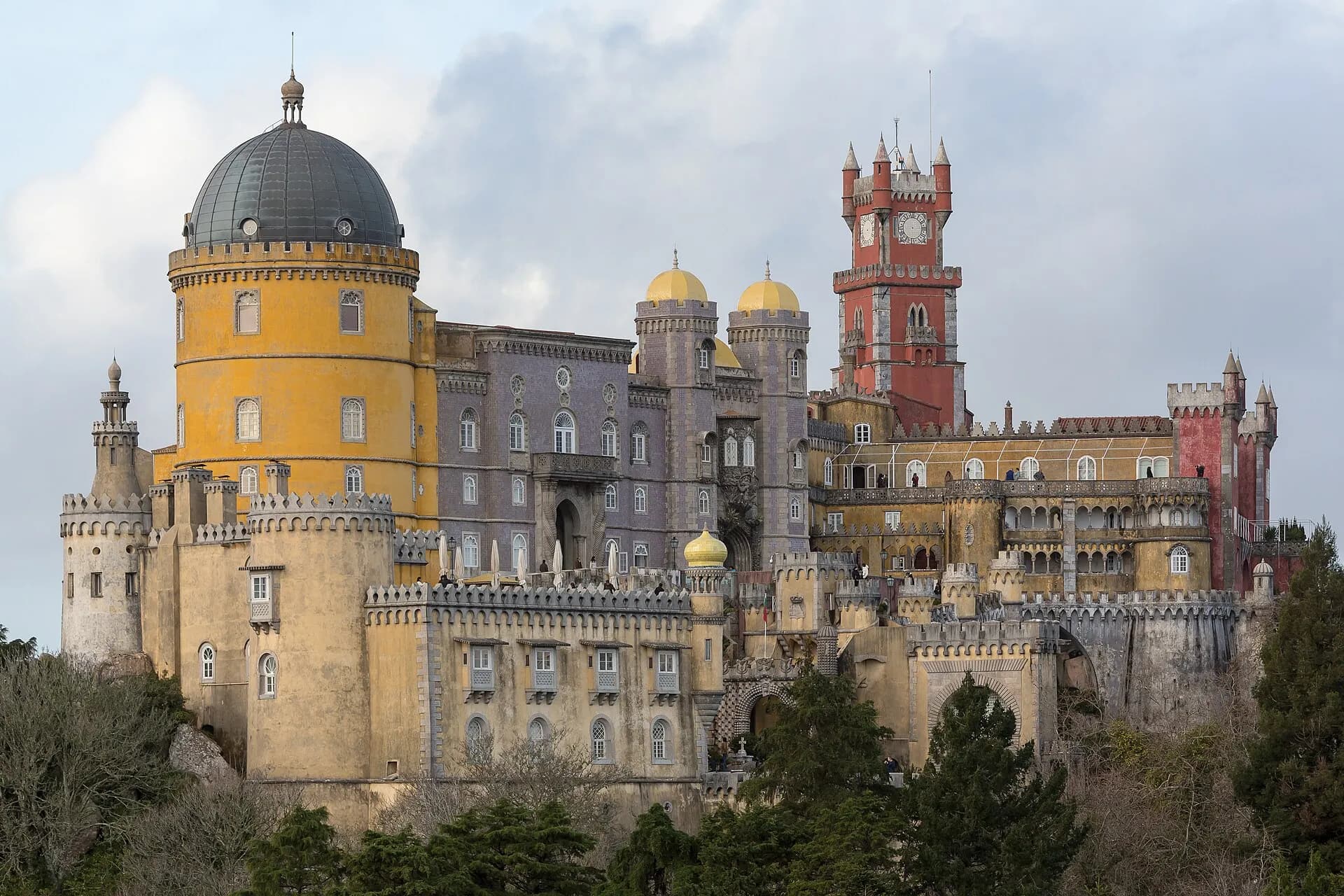
A town in the hills west of Lisbon, visited for two unusual estates. Pena Palace sits on the summit among mist and gardens, looking like a fairy tale, while Quinta da Regaleira is known for its initiation well, tunnels and hidden symbols. It is easy to walk or take a bus between them, and the views reach the ocean. Allow a full day for the visit.
- 04
Cascais and Cabo da Roca — reach the edge of Europe
Cascais is a relaxed town with a seafront promenade, fishermen's houses and beaches, and the road to Cabo da Roca starts here. The cape is the westernmost point of mainland Europe: cliffs drop into the Atlantic, the wind is strong and the ocean feels close. Most people arrive for sunset and return through Sintra. Stop at Guincho beach on the way and try the local seafood.
- 05
Óbidos and Ericeira — medieval walls and Atlantic surf
Óbidos is a small town inside medieval walls, and you can walk the ramparts above white houses and bougainvillea. Here people sip ginjinha from small chocolate cups and browse tiny bookshops. Nearby on the ocean lies Ericeira, known for its powerful surf and a world surfing reserve, with fish restaurants for dinner. The two places fit easily into one day.
- 06
Nazaré — watch the biggest waves
A fishing town on the west coast known for two things: a beach with giant winter waves and an old quarter perched on the cliff. People come to watch surfers at Praia do Norte, ride the funicular to the upper town and try dried fish. The ocean here is cold and loud and the wind is almost constant, but the views from the cliff are worth it. Summer is busier, winter quieter.
- 07
Alcobaça and Batalha — compare two great monasteries
Two monasteries in the centre of the country, both listed as World Heritage, yet very different. Alcobaça is a pale Cistercian abbey with a long nave and a quiet cloister, while Batalha is a Gothic monastery built after the battle of Aljubarrota, with lace-like chapels and stained glass. They are close to each other, so both fit into one day. On the way, stop in Nazaré.
- 08
Tomar — follow the trail of the Templars
A town in the Nabão valley that grew around a Templar castle. Later the Monastery of the Order of Christ was founded here, and its round rotunda with gilded carvings and carved windows is considered one of the wonders of Portugal. In Tomar you can climb the walls, wander the old quarter by the aqueduct and try the local cheeses. The trip combines easily with a shorter stop in Alcobaça or Batalha.
- 09
Coimbra — explore the medieval university city
A city on a hill above the Mondego, home to one of the oldest universities in Europe. Its Joanina Library with gilded halls, historic lecture rooms and the terrace draw visitors even if they care little about scholarship. Below, see the Old Cathedral, the Monastery of Santa Cruz and the narrow streets where students sing fado. In the evening the city grows quieter and warmer.
- 10
Aveiro — glide along the canals
A city on a lagoon often called the Venice of Portugal: moliceiro boats glide between art nouveau houses, and fishing quarters line the banks. Order a canal trip, try the local egg sweets and look at the old salt warehouses. Aveiro combines well with the beaches on the lagoon islands, reached by ferry. One day is enough for the city itself.
- 11
Porto — Ribeira, the Luís I Bridge and a Douro cruise
The country's second city, worth seeing as a whole: the Ribeira waterfront, the two-level Luís I Bridge, the azulejo-covered São Bento station and the Clérigos Tower. Cruises leave from here along the Douro to the vineyards that make port, and tastings take place in the cellars of Gaia. Allow two or three days for the city and its surroundings, without rushing and with time for local food.
- 12
Braga, Bom Jesus and Guimarães — the roots of Portugal
Two old cities in the north and a famous sanctuary between them. Braga is known for the oldest cathedral in the country and for the baroque Bom Jesus ensemble, reached by a zigzag stairway with chapels. Guimarães is called the cradle of Portugal: it has a castle, a ducal palace and medieval streets. Distances are short, so both cities fit into a day or two.
- 13
Évora — wander a city of the Alentejo
A walled city in the southern Alentejo, with a Roman temple, white streets and arcaded squares. Its most unusual sight is the Chapel of Bones, whose walls are decorated with human skeletons, with an old aqueduct nearby. In Évora, try the local olive oil, wine and cheeses, and in the evening listen to fado in a small hall. One day is enough for the city.
- 14
The Algarve — beaches of Faro, Lagos and Portimão
The southern coast of the country, where pine trees, limestone cliffs and long beaches follow one another. In Faro, walk the old town and look at the lagoon with its islands; Lagos is known for its coves and rock arches, and a long sandy shore lies near Portimão. From here you can take boats to the caves, go surfing or simply swim in water warmer than in the north.
- 15
Madeira — Funchal and Ponta de São Lourenço
A volcanic island where gardens bloom all year and green mountains rise above the ocean. In Funchal, see the seafront, the fruit market and the cathedral, then head to Ponta de São Lourenço, where a trail runs along the cliffs above the water. The island also has levadas — irrigation channels with paths through the forest, waterfalls and viewpoints. Give Madeira at least a few days.
- 16
The Azores — craters and lakes of São Miguel
Volcanic islands in the Atlantic, where craters hold lakes, hot springs steam and pastures stay green. On São Miguel, see the Sete Cidades caldera with its two lakes, the Furnas thermal park with geysers, and the pineapple and tea plantations. There are many trails, waterfalls and viewpoints, and whales and dolphins come close to the shore. The weather changes quickly, so pack a rain jacket and take your time.
Resorts and cities
What else is worth trying
Try a pastel de nata
small custard tarts with cinnamon go with coffee at any time of day — bakeries across the country make them fresh.
Listen to fado in the evening
small halls and taverns in Alfama and Coimbra's old quarter host live sets, but book a seat in advance.
Take the train between cities
the line between Lisbon and Porto runs through the centre of the country, and intercity trains are comfortable and free of traffic.
Browse a market
markets in Lisbon, Porto and small towns sell olives, cheese, fish and fruit, and the food counters make a quick lunch.
Rent a car for the interior
a car helps reach Alentejo villages and Monsanto, where public transport is awkward, but keep in mind that parking in historic centres is tight.
Before your trip
Weather in Portugal depends on the region and the season: summers in the south are dry and hot, the north is cooler and rainier, and Madeira and the Azores stay mild almost all year. The Atlantic is colder than the Mediterranean, and even in summer the west coast can be windy with a strong swell, so take a light jacket and choose beaches where lifeguards are on duty. Trains link Lisbon and Porto, metro and trams are handy in the big cities, and for the Alentejo and small towns a car helps, though parking in historic centres is paid and tight. Portuguese food means fish, seafood, pastries and wine, and popular lunch places can have queues. Keep some cash for small cafés and markets: cards are widely accepted, but not everywhere.
Frequently asked questions
When is the best time to visit Portugal?
For cities and sightseeing, April to June and September to October are the most comfortable: less heat and fewer people. In summer the south is dry and hot and the west coast is windy, while Madeira and the Azores work almost all year, though the weather changes often. Winter in the cities is cool and rainy but quiet.
How many days do you need in Portugal?
Four or five days cover Lisbon and its surroundings, and two or three more work for Porto and the Douro valley. Add the Algarve or Madeira and plan at least ten days; a route across the mainland, the islands and the Algarve takes two weeks or more.
Should you choose Lisbon or the Algarve?
They are different trips: Lisbon is about history, neighbourhoods and museums, while the Algarve is about beaches and the ocean. If you have the time, start in Lisbon, see Sintra and the coast, and finish the holiday in the south.
How do you get around Portugal?
Trains are convenient between Lisbon and Porto, cities have metro, trams and buses, and a rented car helps for villages and the Alentejo. Flights connect Madeira and the Azores, and on the islands people drive or use buses.
Information about places and trip conditions may change or be out of date. Please verify the latest details before you travel.
Photograph: CEphoto, Uwe Aranas · CC BY-SA 3.0 · Wikimedia Commons