

Destination guide
Kenya holidays — safari, the Rift Valley and the ocean
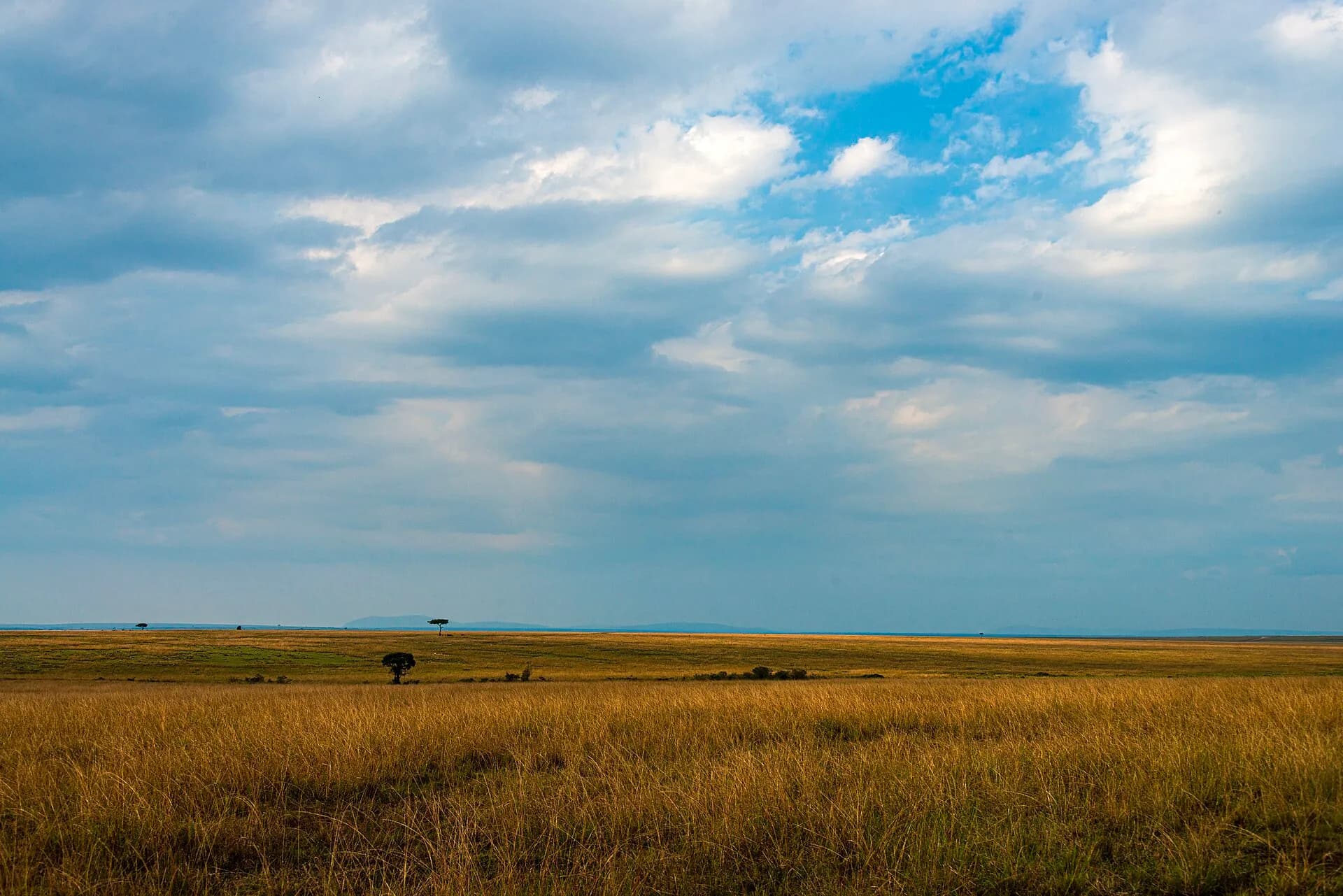
Kenya is home to some of the best-known safaris in the world: the open plains of the Maasai Mara, elephants against Kilimanjaro in Amboseli, flamingos on the Rift Valley lakes and northern reserves that still shelter rare species. Then comes the Indian Ocean coast, with coral reefs, the old town of Lamu and Fort Jesus in Mombasa, so a trip easily splits into two parts, safari and sea. In between lie forested highlands, Mount Kenya and wide plains where herds appear on the horizon.
TripTech will help you choose a flight and a hotel and build a route between Nairobi, the reserves and the coast for your dates, so travelling around Kenya stays comfortable and free of unnecessary transfers.
Where to go in Kenya
- 01
Nairobi National Park — see savannah inside the city
The only national park in the world that sits right beside a capital: the gate is a short drive from central Nairobi, and beyond it the plains open up with acacia trees. Lions, giraffes, rhinos and buffalo live here, with the towers of the business district on the skyline. It fits neatly into the first or last day of a trip, when there is no time left for a long transfer.
- 02
Sheldrick Centre — meet rescued elephant calves
A centre inside Nairobi National Park that raises orphaned elephant calves and prepares them for a return to the wild. The team also works with rhinos, and visitors learn how the animals are fed and how the rehabilitation programme runs. A short stop on the way into the park gives a clear picture of how wildlife protection works in Kenya.
- 03
Lake Nakuru — see a pink edge along the shore
An alkaline lake in the Rift Valley, known for the thousands of flamingos that feed in the shallows and colour the shoreline pink. Woodland around the water holds Rothschild's giraffes, buffalo, zebra and white rhino, and cliffs nearby rise above the whole depression. It is a natural day stop between Naivasha and the Maasai Mara.
- 04
Lake Naivasha — slow down on the water
A freshwater lake in the Rift Valley, ringed by papyrus, plantations and hills, and a good place to pause after long drives. A boat brings you close to hippos and birds, while walks along the shore often turn into giraffe and zebra spotting. The area suits quiet days and serves as a base for trips to the Hell's Gate gorge.
- 05
Hell's Gate — cycle between the cliffs
A gorge and national park near Naivasha, where people come not only for the views but for movement: you can cycle through the valley or walk it with a guide. Rock walls, hot springs and the narrow passages between them look like the set of a film about the ancient world. The route needs no special training, but an early start avoids the heat.
- 06
Maasai Mara — witness the great migration
The Kenyan continuation of the Serengeti, where acacias stand across open plains and the grass supports enormous herds. Lions, cheetahs and leopards are watched here, and in season wildebeest and zebra cross the river in the best-known wildlife spectacle in East Africa. The reserve is large, so book several nights in different parts of it.
- 07
Laikipia — stay on a private conservancy
A plateau north of Mount Kenya where land is shared between private and community conservancies. There is less traffic than in the national parks and a better chance of seeing specialist species: reticulated giraffe, Grevy's zebra and rhino. Long drives between camps give way to silence and nights under an open sky, and some programmes introduce local conservation projects.
- 08
Aberdare — go down into the forest with elephants
A mountain range in central Kenya covered in dense forest, where elephants stay in the cool air and often come out at waterholes. People come for forest trails, waterfalls and nights in cabins on the edge of the trees with views over the valley. The famous safaris of the last century began in these hills, and the mood is quieter than in the south.
- 09
Mount Kenya — climb to a glacier on the equator
Africa's second-highest peak and an extinct volcano with glaciers close to the equator itself. Routes of different difficulty lead up the slopes, and the base camps gather those heading for the summit and those who simply want to feel the altitude. The national park around the mountain has elephants, buffalo and antelope, and lower walks work without a summit attempt.
- 10
Samburu — find the animals of the north
A reserve in hot, semi-arid country north of Mount Kenya, where a river feeds palm groves and acacia woodland. Species that are rare elsewhere in the country live here: reticulated giraffe, Grevy's zebra, Somali ostrich and oryx. The landscape changes with every kilometre, and a night at a camp by the river becomes part of the safari.
- 11
Amboseli — see Kilimanjaro above the elephants
A national park on the border with Tanzania, offering the best view of Kilimanjaro from Kenya. Huge elephant herds move across open plains and swamps near the woodland, and the mountain at dawn is hard to forget. The peak is often wrapped in cloud, so allow several days and a few early starts to catch a clear morning.
- 12
Tsavo — feel the scale of a real savannah
One of the largest national parks in the world, split into western and eastern sections between Amboseli and the coast. There is more open space and fewer visitors, and the red soil, volcanic hills and lava flows look nothing like the other reserves. Tsavo suits travellers who have already seen a classic safari and want quiet.
- 13
Mombasa — see Fort Jesus and the old port
A port city on the Indian Ocean where Swahili, Arab and Portuguese history left forts and narrow streets behind. Fort Jesus, the markets and the old town are the main stops, and beaches nearby make an easy start to a seaside holiday. Mombasa is the gateway to Diani, Watamu and Lamu, and deserves a couple of days of its own.
- 14
Diani — spend a week on pale sand
A beach on the south coast of Kenya with white sand and a wide tidal strip, where resort hotels stand in the shade of palms. Nearby reserves protect coastal forest and turtle nesting sites, and the Indian Ocean is calm enough for swimming and sailing. It is one of the easiest places to finish a trip after an intense safari.
- 15
Watamu — snorkel over the coral reefs
A small town on the Indian Ocean coast with a marine national park right offshore. You can snorkel in the lagoon, watch sea turtles and take a boat out to the reefs, while monkeys and rare birds live in the forest nearby. People come here for calm water, small guesthouses and a holiday without large hotels, and the pace stays unhurried all year.
- 16
Lamu — soak up the old archipelago
The old town on Lamu island has barely changed over the centuries: stone houses, carved doors, donkeys instead of cars and a waterfront where dhows lie at anchor. Boats cross the archipelago to white-sand beaches and fishing villages, and safari gives way to the water and unhurried walks. Choose this place for its atmosphere and slow rhythm.
What else is worth trying
Start before sunrise
a safari vehicle should leave before dawn: animals are more active, the light is softer and dust and heat have not built up yet.
Bring binoculars
many animals stay far from the track, and optics let you see what the guide spots first.
Try nyama choma
meat grilled over coals with vegetables and chapati — a simple dish served in roadside restaurants and safari camps.
Visit a Maasai village
a community visit shows how people live next to the reserves, but agree on the programme and the timing in advance.
Finish at the ocean
after days in a safari vehicle it is a pleasure to trade dust for sand, reefs and fresh fish on the coast.
Before your trip
Kenya's climate depends on the region: dry months suit safari, while the coast stays warm all year, so build the route around the rainy seasons. Ask a doctor about vaccinations and malaria prevention in advance, and pack repellent and long sleeves for evening drives. Safari needs a vehicle with a pop-up roof and a licensed guide, while along the coast some transfers are easier by boat. Carry cash for small camps and markets, though cards work in hotels in the larger towns. Check current entry and visa conditions on official resources, follow local safety advice and never leave your belongings unattended.
Frequently asked questions
When is the best time to visit Kenya?
Dry months are easier for safari, when the grass is shorter and animals gather at waterholes; the great migration in the Maasai Mara falls around the middle of the year. The Indian Ocean coast is comfortable almost all year, but heavy rain can wash out roads, so allow some flexibility in the plan.
How many days do you need in Kenya?
A safari usually takes five to seven days, enough for two or three different regions. Add the coast and the trip grows to ten days or more; two weeks allow you to combine the Maasai Mara, Amboseli and a restful stay by the ocean.
Should you choose safari or the coast?
They are different holidays: safari means early starts, wildlife and dusty roads, while the coast is about water, reefs and slow walks. It makes sense to do the safari first, while you have the energy, and finish by the ocean to rest before the journey home.
How do you get around Kenya?
Domestic flights link Nairobi, the reserves and the coast and save a great deal of time. Safaris move by vehicle with a guide, and on the coast a car with a driver or a local taxi is the practical choice.
Information about places and trip conditions may change or be out of date. Please verify the latest details before you travel.
Photograph: Daniel Case · CC BY-SA 4.0 · Wikimedia Commons