

Destination guide
Italy holidays — a country of regions, art and sea
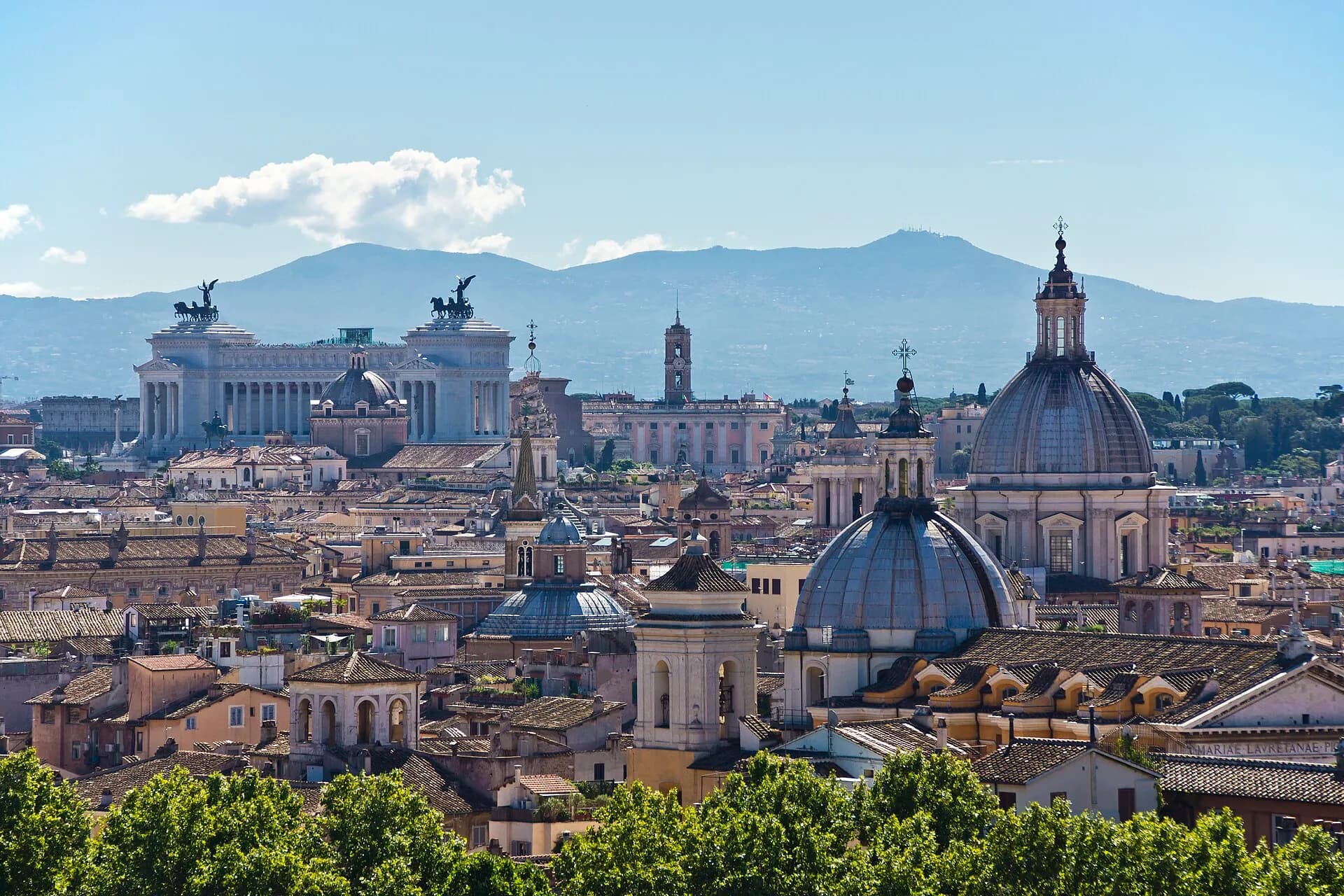
Italy is several different journeys in one country: Rome with its ancient ruins and the Vatican, Florence and Tuscany with Renaissance art, the canals of Venice, Milan and Bologna in the north, Naples with Pompeii and the Amalfi Coast, Sicily and Sardinia, and the Alps with the Dolomites. Distances between regions are short, so a route can focus on one area or combine cities, mountains and the sea in a single trip.
TripTech will help you choose a flight and a hotel and put together a route for your dates, so travelling around Italy stays comfortable, without unnecessary transfers or rush.
Where to go in Italy
- 01
Colosseum and Roman Forum — touch ancient Rome
Rome's main ancient ensemble: the Flavian Amphitheatre, the Arch of Constantine and the ruins of the Roman Forum with temple columns and the senate house. They stand next to each other, so it makes sense to see them in one day, starting at the Colosseum and walking down to the Forum through the Arch of Titus. Book Colosseum tickets in advance and wear comfortable shoes: the ancient paving is uneven.
- 02
Vatican and St Peter's Basilica — see art at the heart of Rome
The world's smallest state in the centre of Rome, home to St Peter's Basilica, Bernini's colonnaded square and the Vatican Museums with the Sistine Chapel. Climbing the dome rewards you with a view over the city, and the museums deserve several hours. Cover your shoulders and knees in the basilica, and book museum tickets in advance so you can arrive close to opening time.
- 03
Pantheon — step under the perfect dome
A temple to all the gods on Piazza della Rotonda, built under Hadrian in the 2nd century and preserved almost intact. Inside, the dome with its open oculus is the highlight, and the walls hold the tombs of Raphael and Italian kings. The Pantheon still works as a church, so keep your voice down and respect the dress code; afterwards, a coffee on the square is part of the visit.
- 04
Assisi — feel the stillness of Umbria
A town in Umbria that grew up on a hillside above the valley, known for the basilica of St Francis with Giotto's frescoes and the home of St Clare. Explore it on foot, climbing the lanes to the Rocca Maggiore fortress and the viewpoints. Umbria is a region of quiet towns, so Assisi pairs well with a trip to Spoleto and Perugia.
- 05
Florence — walk through the city of the Renaissance
The capital of Tuscany, where a small area holds the Duomo with Brunelleschi's dome, the Uffizi Gallery, the Ponte Vecchio and the basilica of Santa Croce. The city is easy to explore on foot, but book Uffizi and Accademia tickets in advance. Climbing the dome or the Palazzo Vecchio tower is worth it for the view over the terracotta roofs, though the queues can be long.
- 06
Bologna — wander beneath the red porticoes
A city with one of Europe's oldest university traditions, red porticoes and Piazza Maggiore with the basilica of San Petronio. Try the local pasta, climb the Asinelli tower and follow the arcades uphill to the sanctuary of San Luca. Bologna works well as a stop between Florence and Venice and as a base for day trips to Modena and Parma.
- 07
Venice — glide along the canals at an easy pace
A city built on water, where canals replace streets and bridges and vaporetti link the islands. See St Mark's Square, the Doge's Palace and the Rialto Bridge, then take a boat to Murano and Burano, known for glass and lace. Walking is the best way around, and large suitcases are a burden in narrow alleys and over the stepped bridges.
- 08
Verona — spend an evening in a Roman arena
A city in Veneto known for its Roman arena, a historic centre under UNESCO protection and Juliet's balcony. The arena becomes an opera stage in summer, so plan evenings in season well ahead. Lake Garda is an easy trip from here, and a walk is best finished with the climb to Castel San Pietro for a view of the city and the Adige river.
- 09
Dolomites — head into the mountains in summer
Mountains in north-east Italy with pale rock walls, alpine meadows and high passes. In summer people hike the trails, ride cable cars and cycle; in winter the ski slopes open. Mountain weather changes fast, so bring layers and check the forecast, with Cortina d'Ampezzo and Bolzano as convenient bases.
- 10
Milan — see the Duomo and The Last Supper
Italy's northern capital, with a huge marble Duomo, the Galleria Vittorio Emanuele II and La Scala opera house. In the church of Santa Maria delle Grazie you will find Leonardo's The Last Supper, which needs a separate booking. Milan makes a handy base for trips to Lake Como, and in the evening the Brera and Navigli districts are full of bars and markets.
- 11
Genoa and Cinque Terre — walk between colourful villages
The Ligurian coast, where Genoa keeps its rolli palaces and old harbour, and the five villages of Cinque Terre stand on cliffs above the sea. Trains and ferries connect the villages, while the walking trails call for shoes with a good grip. Cars are restricted in some villages, so park in La Spezia or Levanto and travel by rail.
- 12
Naples and Pompeii — see the city beneath the volcano
Naples is a noisy southern city whose historic centre is protected by UNESCO, while Pompeii is the excavation of an ancient town buried by the eruption of Vesuvius. In Naples see the Cappella Sansevero, climb to Castel Sant'Elmo and try the pizza, then take the suburban train to the ruins. Pompeii takes most of a day, so an early start is best.
- 13
Amalfi Coast — drive along the edge of the sea
The coast south of Naples, where cliffs drop into the sea and Positano, Amalfi and Ravello cling to the terraces. People come for the views, the lemon groves and walks up stairways and lanes, and ferries are the easiest way between the towns. The road is congested in season, so decide where to leave the car and avoid moving between towns in the middle of the day.
- 14
Sicily — see Etna, the temples and Palermo
The largest island in the Mediterranean, where one trip can take in Palermo and its markets, the Valley of the Temples at Agrigento, Mount Etna and the ancient theatre of Taormina. Trains and buses link the cities, but distances are long, so it is better to split the island into two parts with overnight stays. Sicilian food blends Arab and Greek traditions, and Etna calls for warm clothes even in summer.
- 15
Sardinia — relax among cliffs and bays
An island of turquoise bays, rocky coastline and nuraghi, the stone towers of the Bronze Age. Costa Smeralda lies in the north-east, long beaches stretch south of Cagliari, and the interior holds mountains and vineyards. The coastline is broken, so some beaches are hard to reach without a car; visit protected bays according to local rules.
- 16
Alberobello — see the houses with conical roofs
A town in Apulia known for its trulli, round houses with white walls and conical roofs of grey stone. The historic quarters are protected by UNESCO, and some trulli can be visited as small house museums. Apulia is also known for olive groves and the Adriatic coast, so Alberobello fits neatly into a route through southern Italy.
Resorts and cities
What else is worth trying
Try the food of each region
every city has its own pasta, risotto, cheeses and wines: order carbonara in Rome, tagliatelle in Bologna, and cannoli and fish in Sicily.
Drink coffee the Italian way
a cappuccino or a cornetto at the bar in the morning, an espresso after lunch; standing at the bar is quicker and cheaper than taking a table.
Book museums in advance
the Uffizi, the Vatican Museums and The Last Supper work best with a timed entry booked ahead, otherwise you can lose half a day in queues.
Take the train between cities
high-speed trains link Rome, Florence, Bologna, Milan and Venice, while regional services are handy for short hops such as Pompeii or Assisi.
Respect the rhythm of the day
many shops close after lunch and restaurants open late for dinner, so leave some slack in the day instead of filling every hour.
Before your trip
Weather in Italy depends on the region and the season: summers in the north are warm and thundery while winters are cold, the south is hot and dry in summer, and spring and autumn suit sightseeing. Trains are the easiest way between cities, tickets for popular museums and domes are worth booking in advance, and working churches ask for covered shoulders and knees. Carry some cash for small towns, though cards are widely accepted. A car helps in the countryside and on the islands, but historic centres have ZTL limited-traffic zones, so find parking in advance and remember that fines for entering them often arrive after the holiday.
Frequently asked questions
When is the best time to visit Italy?
Late April to June and September to October are the most comfortable for cities and sightseeing, with mild weather and fewer visitors. July and August are hot and busy, and many Italians take their holidays then. The north and the Dolomites have a longer season, while the sea in the south stays warm into early autumn.
How many days do you need in Italy?
Three or four days usually cover one city: Rome with its museums and the Vatican, a little less for Florence or Venice. For a first trip, ten to fourteen days with two or three bases works well and avoids spending the holiday in transit.
Should you choose cities or the coast?
It depends on the season and your interests. Spring and autumn favour cities and museums, while June and September are good for adding the sea — the Amalfi Coast, Sardinia or Sicily. With little time, do not combine too many places: distances between Italian regions are deceptive.
How do you get around Italy?
High-speed trains are the best option between major cities, and regional trains serve smaller towns. A car is often used for the countryside, Sardinia and Sicily, while ferries connect the coast and the islands. Avoid driving into historic centres, where ZTL rules apply.
Information about places and trip conditions may change or be out of date. Please verify the latest details before you travel.
Photograph: Bert Kaufmann · CC BY-SA 2.0 · Wikimedia Commons