

Destination guide
Montenegro holidays — a bay, mountains and the Adriatic
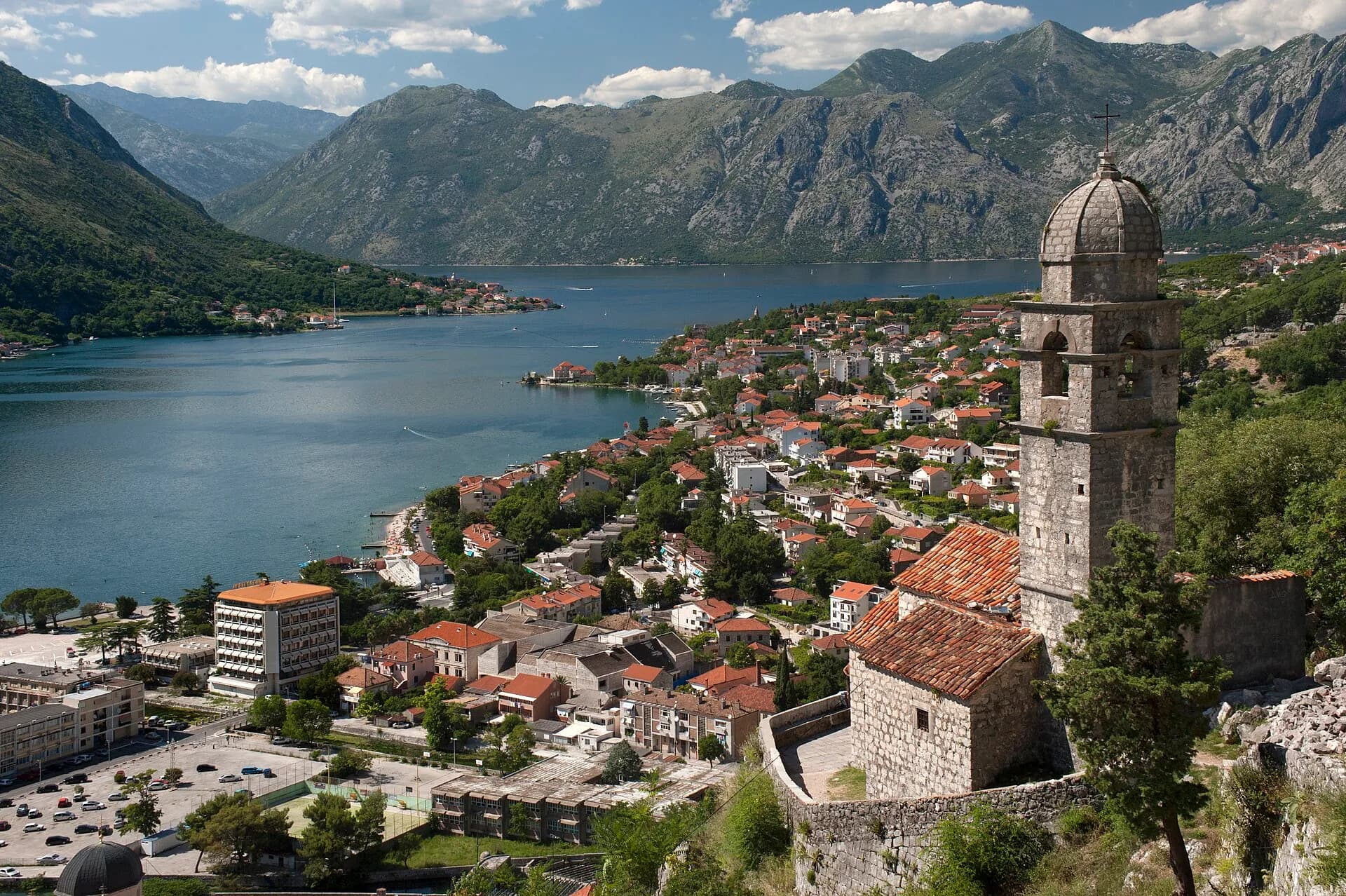
Montenegro is a small country where you can swap a beach for the mountains in a single day: the Bay of Kotor with its walled towns, the beaches of the Budva Riviera and the south, Kotor and Cetinje beneath their walls, the high country of Durmitor and the canyons of the Tara and Piva. The Adriatic coast here is short, but the mountains begin right behind it, so a route is easy to shape to your taste — from the sea and boats to the ridges of Prokletije.
TripTech will help you choose a flight and a hotel and put together a route between the Bay of Kotor, the coast and the national parks for your dates, so the trip stays comfortable and free of unnecessary transfers.
Where to go in Montenegro
- 01
Kotor — walk the walls of the old town
Kotor's old town is a World Heritage site: narrow squares, stone churches and the Cathedral of Saint Tryphon sit inside walls that climb towards the Castle of San Giovanni. The climb up the steps takes time and plenty of water, but from the top you see the whole bay and its red roofs. The town is compact, so a relaxed day is enough for it and the waterfront.
- 02
Perast — see the baroque town of seafarers
A small town on the shore of the bay that lived on trade and its fleet in Venetian times. It is easy to recognise by the tall bell tower of Saint Nicholas, the palaces of wealthy captains and the Maritime Museum in an old family house. Perast stretches along the water, so it is best walked slowly: the waterfront, narrow lanes, the mountains opposite and boats leaving for the islands.
- 03
Our Lady of the Rocks — sail to an island church
A man-made island with the church of Our Lady of the Rocks, which sailors built over centuries: stones loaded onto a sunken ship, then a church, a chapel and a museum beside it. Next to it lies the small island of Saint George with a Benedictine abbey that visitors cannot enter. Boats leave from Perast, and the church inside is painted with frescoes and keeps a rich collection of gifts.
- 04
Herceg Novi — combine the old town with the sea
A town at the entrance to the bay where the waterfront, beaches and a medieval fortress stand almost side by side. Climb to the Forte Mare fortress, walk its inner courtyard and look at the sea from the walls, then come down to the water through the old quarters. Igalo with its seaside health centres is nearby, so the town is often chosen for a long, quiet holiday.
- 05
Budva — wander the old town above the water
Budva's old town stands on a rock by the sea, with walls, churches and a citadel that people climb for the sunset. Inside it is easy to lose yourself in the lanes, step onto the viewpoint above the waves and have dinner in a stone courtyard. The beaches of Slavenska and Ploce are close by, and in the evening the promenade becomes the liveliest place in the country.
- 06
Sveti Stefan — see the island from a postcard
A peninsula of red roofs joined to the shore by a narrow isthmus and occupied entirely by a hotel. Only guests go inside, but the road above the bay gives the best view of it: the island, the sea and the rocks around. The olive groves of Milocer and a former royal residence are nearby, while swimming happens on the beaches next door.
- 07
Petrovac — rest in a quiet bay
A small town in a bay between Budva and Bar, where the waterfront cafés open straight onto the water and beaches with olive trees hide nearby. Walk up to the Kastio fortress for a view of the whole bay, then follow the path to Lucica with its clear water. Petrovac is chosen for its calm pace and short distances, and the neighbouring coves are good for snorkelling.
- 08
Bar — see the old town and the port
The country's main port has two faces: a working quay with a ferry and a seaside riviera at Sutomore. The highlight is Stari Bar, a fortress on the slope of Mount Rumija with the ruins of churches, cisterns and an old olive tree thought to be more than two thousand years old. It is also worth trying the local wine and climbing to the Rumija monastery for a view over the coast.
- 09
Ulcinj — combine a fortress and a long beach
The southernmost town in the country, where the old town mixes stone walls, mosques, churches and local cooking. Next to it runs Velika Plaza, one of the longest beaches on the Adriatic, and Ada Bojana on an island at the river mouth. Albanian influence is strong here, so the language, music and food feel different from the rest of the coast.
- 10
Lake Skadar — boat into the bird bays
The largest lake in the Balkans, part of it declared a national park: white lilies, channels, reeds and large colonies of birds, including pelicans. Boats leave from Virpazar, where the Grmozur fortress stands, and the shore is dotted with villages, fish restaurants and vineyards. Come in the morning to see the water calm and the birds close to the bank.
- 11
Cetinje — step into the old capital
A town in a valley below Lovcen that held the residences of Montenegro's rulers. Here you find the Cetinje Monastery with its relics, the palace of King Nikola and Biljarda, the house of Njegos with his museum. Cetinje is small, yet it explains how the country lived before independence, and the mountains around are visible from the main street.
- 12
Lovcen — climb to Njegos's mausoleum
A national park above the Bay of Kotor, visited for the mausoleum of Petar II Petrovic Njegos on the summit of Jezerski Vrh. Steps lead through a tunnel in the rock, and from the top you see the bay, Kotor and, on a clear day, Lake Skadar. The road up is a long series of hairpins, so start early and leave time for stops.
- 13
Zabljak and Durmitor — walk around the Black Lake
A national park protected by UNESCO, where glacial lakes, pine forests and rocky peaks surround the town of Zabljak. The Black Lake can be walked around in an hour or two, while harder routes lead to Bobotov Kuk and other summits. In winter the slopes of Savin Kuk operate, and in summer the area is a base for hikes across Durmitor.
- 14
Tara and its canyon — see Europe's deepest gorge
The Tara river cuts a canyon up to a thousand three hundred metres deep, and this is considered the best place in the country for rafting. The Durdevica Tara bridge spans the gorge, with the river far below, and viewpoints are set along the cliffs. The canyon lies inside Durmitor National Park, so plan any stops in nature ahead of time, and rafting usually takes a full day and an early start.
- 15
Piva — see the canyon and the moved monastery
The Piva river runs through a narrow canyon that ends in a large reservoir near Pluzine. The Piva Monastery, with its frescoes and gilded iconostasis, was taken apart and moved to a new site when the dam was built, and today it is one of the quietest places in the country. Roads and rafting routes cross the canyon, and there are places to stay by the water.
- 16
Plav and Prokletije — hike the alpine valleys
In the north-east of the country lie Lake Plav, one of the largest glacial lakes in the Balkans, and the Prokletije mountains with high peaks and gorges. Trails to waterfalls and passes start in Grebaje and Vusanje, and the local villages keep a mixed Balkan culture. It is cooler here than on the coast, so the area suits hiking in hot weather.
Resorts and cities
What else is worth trying
Try the mountain kitchen
Njegusi prosciutto, kajmak, cheese and fresh fish by the lakes and on the coast — meat and dairy are still made here the traditional way.
Drive the hairpins
the road above the bay, the climb to Lovcen and the route to the Tara give some of the best views, but allow time and take it slowly.
Take a boat to the islands
sail from Perast to Our Lady of the Rocks and see the bay from the water — it looks nothing like it does from the shore.
Mix the sea with the mountains
a beach in Budva in the morning, the Black Lake or Lovcen after lunch — in Montenegro transfers like that work within one day.
Plan rafting ahead
the Tara and the Piva are popular rivers, so book a place in a group and the gear before you arrive, especially in summer.
Before your trip
The swimming season on the coast runs from late spring to early autumn, while June and September suit the mountains, when the trails are quiet. Roads in Montenegro are narrow and the climbs to Lovcen, Durmitor and Prokletije are full of hairpins, so count distances in travelling time rather than kilometres on the map. The Kamenari–Lepetane ferry crosses the Verige Strait and saves the long detour around the bay. The country uses the euro, but beaches, small cafés and parking do not always take cards, so keep some cash. Sunbeds and parasols on the beaches are paid for, as is entry to the national parks, and it is worth being careful about agreements made on the spot.
Frequently asked questions
When is the best time to visit Montenegro?
For swimming, June to September, when the Adriatic is warm and most beaches are open. May, June and September suit hiking: the mountains are cooler and the trails are quiet. July and August are crowded on the coast, while the mountains can feel cool even during the day.
How many days do you need in Montenegro?
A week is usually enough for the coast and one resort. To see the Bay of Kotor, the Budva Riviera, the centre and the north, allow at least ten days, and two weeks for hikes in Durmitor and Prokletije.
Should you choose the coast or the mountains?
They are different trips, but they combine well. The coast is about the sea, old towns and beaches; the mountains are about lakes, canyons and trails. Splitting the time works best: a few days by the sea, then a move to Durmitor or Lovcen, otherwise a short trip turns into driving.
How do you get around Montenegro?
Buses are convenient between the coast and the mountains, but a rented car is better for the national parks and canyons. In the Bay of Kotor the ferry across the strait helps, towns are easy to walk, and on the coast buses and taxis work well in summer.
Information about places and trip conditions may change or be out of date. Please verify the latest details before you travel.
Photograph: Ggia · CC BY-SA 3.0 · Wikimedia Commons