

Destination guide
Seychelles holidays — an archipelago of granite and coral
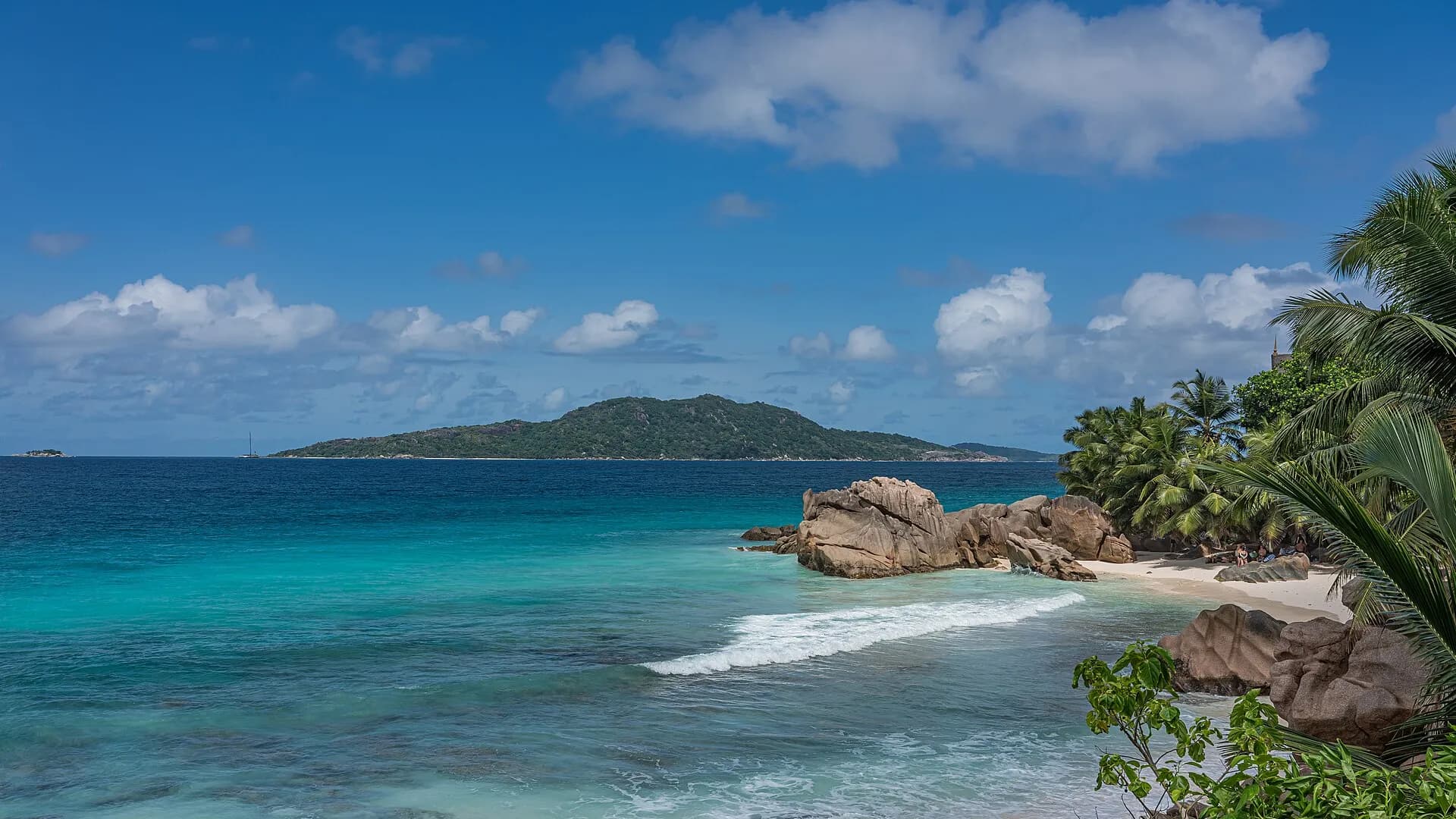
The Seychelles are an archipelago of 115 islands in the Indian Ocean: Mahé, Praslin and La Digue are the three main ones, rising in granite peaks above tropical forest and ringed by beaches framed with rounded stone boulders, while the coral atolls of the outer islands lie further to the south-west. Mahé is the administrative centre with Victoria and the airport, Praslin has valleys of ancient palms and Anse Lazio, and La Digue is an island of bicycles and granite coves.
TripTech will help you choose a flight and a hotel and put together an island route for your dates, so ferries, small planes and beaches fit into one comfortable trip without wasted transfers.
Where to go in the Seychelles
- 01
Victoria — walk the archipelago's small capital
The capital of the Seychelles is one of the smallest capital cities in the world, and it is easy to walk around in a single morning. Worth seeing are the clock tower, the market with fish, spices and vanilla, and the botanical garden with its giant tortoises. Victoria also works as a starting point: trips across Mahé and boats to the marine park islands begin here.
- 02
Beau Vallon — swim at Mahé's main beach
The longest beach on Mahé and the easiest place to swim towards the evening. The water is almost always clear of stones underfoot, and hotels, dive centres and cafés line the shore. Boats leave from here for Silhouette and Sainte Anne, and the promenade is pleasant after sunset. At weekends it gets busy: this is the main town beach.
- 03
Morne Seychellois — climb into Mahé's mountains and forest
The national park covers the mountains and forest in the centre of Mahé, with trails of different difficulty running through it. The island's highest peak rises to 905 metres, so the climb takes time, but the ridge opens views over Victoria and both coasts. Start early: by midday it turns humid and hot, and some paths become muddy after rain.
- 04
Anse Intendance — see granite beside the airport runway
A cove beside the airport, known for its granite boulders and a view of the runway. People come to swim, photograph the rocks and watch the planes pass low over the water. The beach is small, so the middle of the day gets busy, and towards evening the sea turns especially calm. Cafés and a bus stop are close by.
- 05
Sainte Anne — snorkel in the marine park off Mahé
Sainte Anne lies in the marine national park of the same name, with boats running from Victoria throughout the day. The water is clear, with shallow coral patches that suit snorkelling right off the beach. The park holds several islands: some have a café and shade, others only birds and quiet coves. The outing usually takes half a day and leaves time for swimming.
- 06
Anse Lazio — see Praslin's most famous beach
One of the best-known beaches of the archipelago: white sand, a curving bay, palms almost at the water and granite boulders at either end. Swimming is good, though waves and stones on the bottom appear near the shore, so take your time entering. The beach is far from the village, so travellers come for a full day with water, food and sun protection.
- 07
Vallée de Mai — stand beneath the coco de mer palms
A valley protected by UNESCO, where a grove of the coco de mer palm survives — the tree with the largest nuts in the world. A trail runs through ancient forest with huge fern fronds, and the black parrot can sometimes be heard in the canopy. The reserve is small, but the walk takes time, and it pairs easily with a trip to Anse Lazio.
- 08
Fond Ferdinand — look into a village on Praslin
A village in northern Praslin, home to families who work on the island and a starting point for boats to the Curieuse and Cousin reserves. There is a small beach, a shop, a café and a jetty nearby, and the road opens views of the neighbouring islands. It is a convenient base if you want to see Praslin without large resort hotels.
- 09
Curieuse — meet giant tortoises and wild coves
A reserve north of Praslin, visited for its giant tortoises and wild beaches. Trails cross mangrove stands and palm groves, and guides explain how tortoises are bred here and how nesting birds are protected. Boats leave from Praslin, so the trip is often combined with a walk through the Vallée de Mai on the same day.
- 10
Cousin — hear a seabird colony in the reserve
A tiny island reserve where brown noddies, frigatebirds and rare Seychelles warblers nest. Visits are possible only with a reserve guide, and guest numbers are limited so the birds are not disturbed. The island takes an hour to cross, but the noise of the bird colonies, the tortoises and the ocean view from the platform stay with you.
- 11
Grande Anse — arrive at La Digue's main village
The main village of La Digue and its harbour, where ferries arrive from Praslin and Mahé. Small shops, cafés and bicycle rental points line the waterfront, and a long beach begins behind the houses. Every beach on the island is within walking or cycling distance, which is why Grande Anse is the usual base for the night.
- 12
Anse Source d'Argent — see granite boulders in the water
A beach in southern La Digue with a scatter of rounded granite boulders on the sand and in the water. It is almost empty in the morning, and the light on the stones shifts with the tide, so photographers arrive at sunrise. The entry is rocky in places, so light shoes and a mask help, and the walk back can be done through the forest.
- 13
Anse Patate — rest in a quiet La Digue cove
A cove in south-west La Digue, hidden behind palms and granite boulders. There are fewer people than at neighbouring Anse Source d'Argent, and the water is almost always clear, which makes the spot good for unhurried swimming. It can be reached by bicycle or on foot from Grande Anse, with stops at the viewpoints along the way.
- 14
La Digue by bicycle — circle the island without a car
The bicycle is the main transport on La Digue: cars are few and the roads are short, running from the harbour to the beaches. Rental points sit by the jetty in Grande Anse, and one ride to Anse Source d'Argent and back fills a whole day. Bring water and sun protection: shade on the road is rarer than you would like and the climbs take effort.
- 15
Silhouette — escape to a wild island beyond the reefs
The third-largest island of the archipelago and one of the wildest: a handful of small hotels and a large forest. Its beaches are known for granite cliffs and an almost complete absence of people, while dive centres head out to reefs full of coral and fish. The island is reached by boat or helicopter from Mahé, so trips are planned in advance.
- 16
Aldabra — learn what an untouched atoll looks like
One of the largest atolls in the world, home to the biggest population of giant tortoises in the Indian Ocean. Aldabra is a strict reserve, so it can be visited only on limited research and expedition trips. There are no hotels and no roads, but there is a lagoon, reefs and seabird colonies that have survived almost untouched.
What else is worth trying
Try Creole cooking
grilled fish, coconut curry, octopus and sweets made from cassava — a blend of African, Indian and French traditions.
Rent a bicycle on La Digue
it is the easiest way to reach the far beaches, and the roads here are short and free of steep climbs.
Go snorkelling
a mask and snorkel earn their place on almost any beach: it is shallow and calm around the granite boulders, and fish stay close to shore.
Watch the tides
the width of the beaches and the gaps between the rocks depend on the water, so check the tide times in advance.
Rent a car on Mahé
the island roads wind between hills and buses run to a timetable, so your own car saves time.
Before your trip
The weather in the Seychelles follows the monsoons: from November to March short showers fall and the north-west wind blows, from May to September it is drier, windier and cooler, and the in-between months suit the beaches best. Ferries and small planes link the islands, but ferries are cancelled when the sea is rough, so build some slack into the route. Groceries and imported goods are expensive, and cash helps at markets and small cafés: cards are not accepted everywhere. A car is practical on Mahé, a bicycle is enough on La Digue, and protected areas charge entrance fees and set their own rules. Check entry conditions and visa formalities on official resources.
Frequently asked questions
When is the best time to visit the Seychelles?
The islands welcome visitors all year, but the monsoons set the weather: November to March is warm and humid with short showers, while May to September is drier, windier and cooler. April, May, October and November are the easiest months for beaches and swimming, when the wind drops and the rain is short.
How many days do you need in the Seychelles?
Three or four days are usually enough for Mahé, two or three for Praslin and two for La Digue. To see the three main islands and one reserve without rushing, plan ten days or more: transfers between islands take half a day each.
Should you choose Mahé or Praslin?
Mahé means the capital, the airport, long beaches and mountain trails; Praslin means quiet, the Vallée de Mai and Anse Lazio. Mahé is easier for a first visit and for day trips, Praslin is calmer and closer to the reserves, and La Digue suits the final days.
How do you get between the islands?
Ferries link Mahé, Praslin and La Digue, and flights connect Mahé with Praslin and the outer islands. On Mahé and Praslin a bus or a rented car is convenient, while on La Digue everyone travels by bicycle.
Information about places and trip conditions may change or be out of date. Please verify the latest details before you travel.
Photograph: A.Savin · FAL · Wikimedia Commons