

Destination guide
India holidays — temples, palaces and the Himalayas
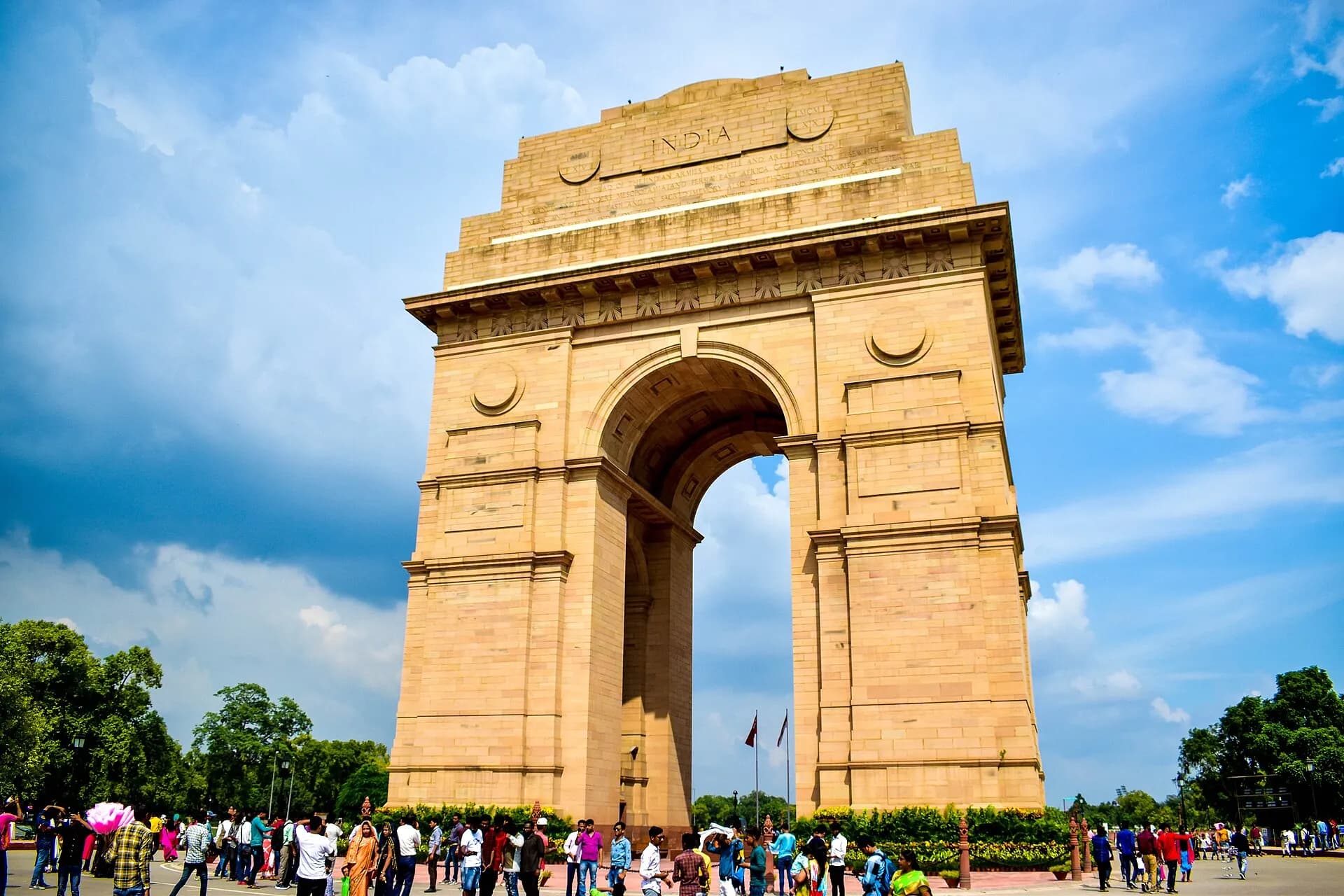
India is several journeys in one country: the Mughal palaces of Agra and Delhi, the pink and blue cities of Rajasthan, the ghats of Varanasi on the Ganges, the tea hills of Darjeeling, the beaches of Goa and the backwaters of Kerala. The north holds the Himalayas and Sikh holy sites, the south the temples of Tamil Nadu and the ruins of the Vijayanagara empire, and between them lie thousands of kilometres of railway and very different cuisines. The trip is worth planning with time to spare.
TripTech will help you choose a flight and a hotel and put together a route through north and south India for your dates, so the journey stays comfortable and free of unnecessary transfers.
Where to go in India
- 01
India Gate and Qutb Minar — see two faces of Delhi
Two symbols of the capital that show how different it can be. India Gate stands in the heart of New Delhi on the wide Kartavya Path: it is a memorial to the soldiers of the First World War, and families stroll around it in the evening. Qutb Minar in the south of the city is a 13th-century tower of red sandstone, part of the complex of the first Delhi sultans, with an iron pillar and carved gateways. Between them, Humayun's Tomb, a Mughal garden mausoleum, foreshadows the Taj Mahal.
- 02
Taj Mahal and Agra Fort — see the country's main symbol
The Taj Mahal stands on the bank of the Yamuna: white marble, inlay work and symmetrical gardens that Shah Jahan built for Mumtaz Mahal. Early morning is the best time, before the heat and the crowds. Two kilometres away is Agra Fort of red sandstone, the Mughal residence with courtyards, halls and a view of the Taj Mahal. Both monuments are World Heritage sites and deserve a full day.
- 03
Hawa Mahal and Amber — see Jaipur from two sides
Jaipur is called the pink city, and Hawa Mahal is its most recognisable facade: a thin wall with hundreds of carved windows through which the women of the court watched the street. Amber Fort stands on a hill above Maota Lake, and inside you can see the mirror hall, courtyards and fortress walls. Pair both with a walk through the old city, with its markets, the Jantar Mantar observatory and craft workshops.
- 04
Jodhpur and Mehrangarh — rise above the blue city
Jodhpur is known as the blue city: the houses in the old quarters are painted indigo, and the best view is from Mehrangarh Fort. The fort stands on a cliff above the town, with palaces of carved windows, collections of palanquins and weapons, and a panorama of rooftops from the towers. Below is the busy market by the clock tower, selling spices and sweets. Nearby lies the marble memorial of Jaswant Thada.
- 05
Udaipur and Lake Pichola — see a city on the water
Udaipur sits among lakes and hills, and water is part of everyday life here. The City Palace runs along Lake Pichola, palaces stand on the islands, and the embankments offer the best views at sunset. Take a boat between the islands, look into the Saheliyon ki Bari gardens and climb to the Monsoon Palace above the city. Udaipur is a calm alternative to the busier cities of Rajasthan.
- 06
Jaisalmer and the Thar Desert — sleep among the dunes
Jaisalmer is called the golden city: the fort and havelis are built of sandstone that glows honey-coloured at sunset. The old town lives inside the walls of Sonar Quila, and nearby stand houses with carved facades and narrow courtyards. From here trips head into the Thar Desert: dunes, camel trails and nights in camps under the open sky. The sunset over the sand is worth staying a couple of days for.
- 07
Varanasi and the ghats — see India's great ritual
Varanasi is considered one of the oldest cities in the world, and life here centres on the ghats, stone steps that lead down to the Ganges. At dawn boats head out on the river, prayers are read by the water, and in the evening a fire ceremony takes place at the main ghat. The alleys of the old city are tight, noisy and full of food, with Hindu temples rising above them. It is worth seeing at least once, even if you do not follow Hindu traditions.
- 08
Rishikesh and Haridwar — feel the Ganges below the Himalayas
Rishikesh lies at the foot of the Himalayas, where the Ganges leaves the mountains: people practise yoga, raft the rapids and spend weeks in ashrams here. Suspension bridges link the banks, and small cafés and temples sit by the water. An hour away is Haridwar, a pilgrim city where the fire ceremony at Har Ki Pauri takes place every evening. Together the two places show how spirituality, nature and sport sit side by side in India.
- 09
Amritsar and the Golden Temple — touch the Sikh tradition
The Golden Temple, or Harmandir Sahib, stands in the centre of Amritsar amid a pool of water and is the holiest shrine of the Sikhs. It is open to everyone, but modest clothing and a head covering are required, and shoes are left at the entrance. Next to it runs the community kitchen where food is cooked for pilgrims, one of the strongest traditions of the place. In the city, also see the Jallianwala Bagh garden and, in the evening, the closing ceremony at the Pakistan border.
- 10
Mumbai and Elephanta — combine the city and cave temples
Mumbai is the densest, most energetic metropolis in the country: skyscrapers stand beside Victoria Terminus station and Marine Drive. On the waterfront stands the Gateway of India, from where boats leave for Elephanta Island, with its cave temples to Shiva and the famous three-faced sculpture. In the city, ride a local train, try the street food and look at the old quarters. Mumbai deserves at least two days, and Elephanta is best planned for a separate morning.
- 11
Goa — combine beaches and Portuguese heritage
Goa is not only beaches: Old Goa keeps its Portuguese churches, and Fontainhas is a quarter of bright houses and small cafés. The north of the state lives through clubs and markets, the south through quiet beaches and family hotels. Try the coconut and seafood cuisine, visit a spice plantation and reach the waterfalls in the jungle. A rented scooter is handy between the beaches, but the roads need attention.
- 12
Alleppey and Munnar — sail the backwaters and tea hills
Kerala is the greenest state in the country, and its two images are easy to combine in one trip. From Alleppey the backwater trips begin: narrow canals, rice fields and villages that ordinary roads never reach, with houseboats passing palms and dykes. In Munnar there are cool tea plantations on the hills, waterfalls and a national park where mountain goats live. The road between the towns crosses mountain passes and deserves a full day.
- 13
Hampi and Mysore — see the Vijayanagara empire and a palace
Hampi is the ruined capital of the Vijayanagara empire among granite hills: temples, colonnades, markets and elephant stables spread over a vast area. Watch the sunrise from Matanga Hill, rent a bicycle and walk the main monuments at an easy pace. Mysore is the other pole: the maharaja's palace with towers and gardens, the sandalwood market and the climb up Chamundi Hill. Together they show the south of the country from two sides.
- 14
Madurai and Mahabalipuram — see the temples of Tamil Nadu
Madurai is the city of the Meenakshi temple, where colourful gopuram towers rise above the streets and you can wander galleries, courtyards and markets for hours. Come in the morning, when the temple comes to life, or in the evening, when the lights are switched on. In Mahabalipuram, on the shore, stand granite temples and chariots of the 7th century carved from single rock, with the Indian Ocean roaring nearby. Both are UNESCO sites and fit well into one route.
- 15
Kolkata and the Victoria Memorial — see the capital of British India
Kolkata was the capital of British India, and the architecture still shows it: the white columns of the Victoria Memorial, old mansions and wide avenues. The city lives through literature, coffee, trams and markets, while Kalighat and Kumartuli keep craft traditions linked to the goddess Kali. See the Howrah Bridge over the Hooghly, walk the embankment and try Bengali sweets. Kolkata is less touristed than Delhi or Mumbai, and that is exactly its appeal.
- 16
Darjeeling — see tea gardens and Kanchenjunga
Darjeeling lies on the slopes of the Himalayas among tea gardens, and the town produces one of the best-known teas in the world. At dawn, Tiger Hill offers a view of Kanchenjunga if the weather allows, and a toy train runs through the town on a narrow-gauge line. Visit the plantations, try tea with a view of the valley and climb to a monastery or the Peace Pagoda. The town is cooler than the rest of India, so warm clothes help.
Resorts and cities
What else is worth trying
Try Indian food
not only curry: every region has its own dishes — dosa in the south, thali in Rajasthan, fish on the coast, and it is always worth looking for places where locals eat.
Travel by train
the railways link almost the whole country, and overnight trains save time and give a sense of the road; book tickets in advance.
Start before dawn
the main monuments — the Taj Mahal, the ghats, the temples — are best seen early, before the heat and the tour groups arrive.
Leave room for the road
distances and traffic in India often break plans, so keep free days in the itinerary and do not try to see everything in one trip.
Look at the crafts
textiles, spices, tea, pottery and jewellery are a good reason to step into workshops and markets where local craftspeople work.
Before your trip
India is a country of long distances and different climates, so the route should follow the season. From October to March most of the country is comfortable, while June to September brings monsoon rain and heat to the central and southern regions; the Himalayas have a short season, with spring and autumn the best months. Between cities, flights and trains are the practical choice, and tickets are best booked in advance; apps for taxis and local drivers help in town. Drink only bottled water and choose street food where many locals eat. Temples and mosques ask for covered shoulders and knees, shoes come off at many sites, so comfortable slip-on footwear helps. Cards work in hotels and large shops, but markets and small cafés need cash, and cash machines are best found in busy places. Visas are arranged in advance, and entry rules should be checked on official resources.
Frequently asked questions
When is the best time to visit India?
October to March suits most of the country, when the monsoon has passed and the heat is milder. The south and Goa have a longer season, while the Himalayas are best in spring and autumn. In summer the central regions are extremely hot, and the monsoon brings rain and high humidity.
How many days do you need in India?
Two weeks is a good first trip, enough to join the north — Delhi, Agra and Rajasthan — with one southern or eastern direction. To see both the Himalayas and Kerala, allow three weeks: internal flights and transfers take a lot of time.
North or south — which should you choose?
The north means Mughal monuments, Delhi, Agra, the palaces of Rajasthan, Varanasi and the Himalayas; it has more history and contrast. The south means Kerala, Karnataka and Tamil Nadu: temples, backwaters, beaches and a calmer rhythm. For a first visit it makes sense to start in the north and keep the south for a second trip.
How do you get around India?
Flying is fastest between regions, while trains work well for medium distances: they run to a timetable, but tickets for popular routes need booking in advance. In cities people use the metro, taxis and auto-rickshaws, and for trips around a state many hire a car with a driver. Buses run often, but the journeys take longer and are less comfortable.
Information about places and trip conditions may change or be out of date. Please verify the latest details before you travel.
Photograph: Navonildutta4 · CC BY-SA 4.0 · Wikimedia Commons