

Destination guide
Vietnam holidays — a country worth exploring
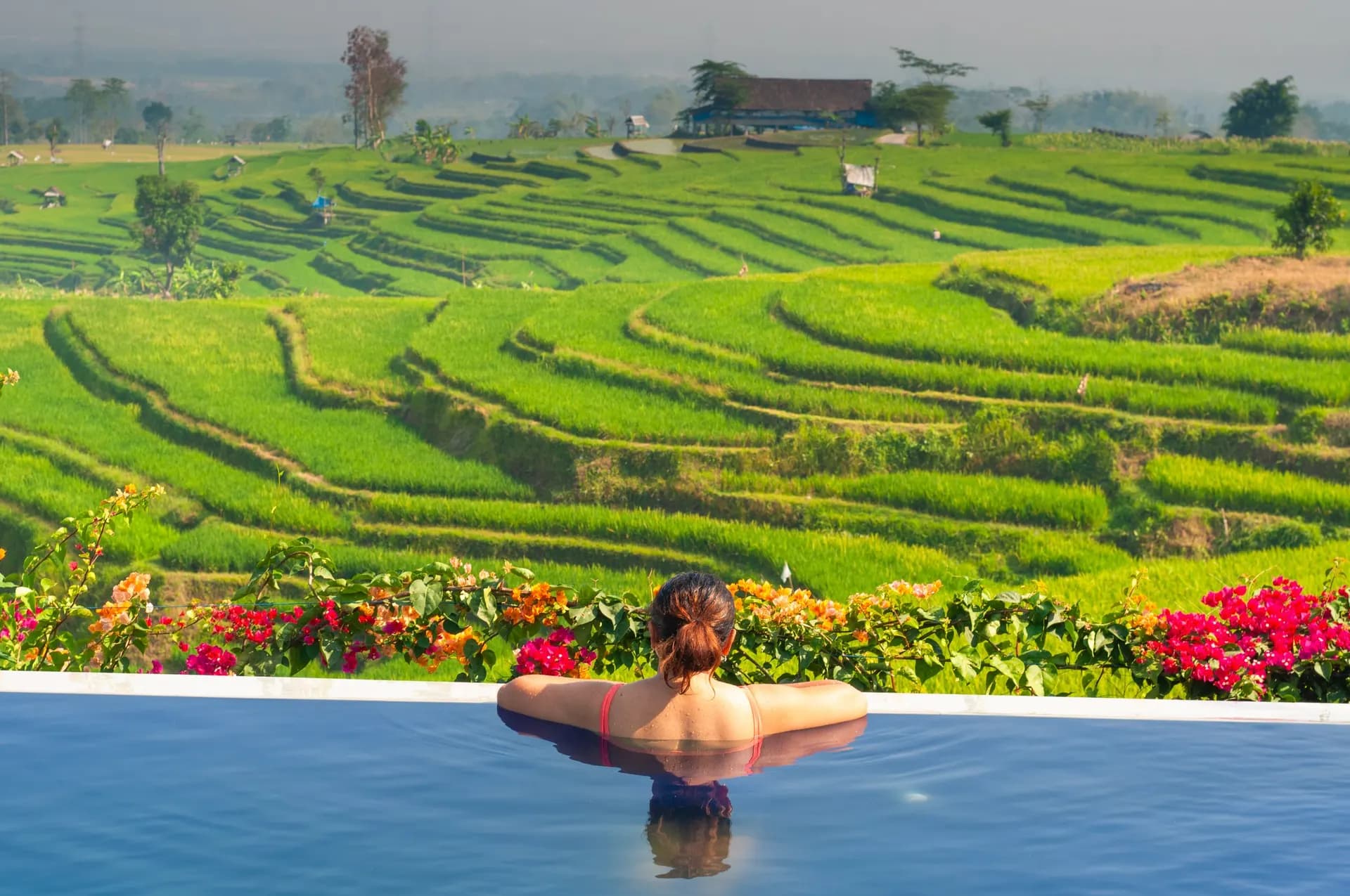
Vietnam rarely fits into a single trip: the north has Hanoi, Halong Bay and the mountains around Sapa, the centre has Hue, Da Nang and Hoi An, and the south has Ho Chi Minh City, the Mekong Delta and the islands. Between them lie thousands of kilometres of coast, rice terraces, pagodas and port towns, while the food changes from region to region — from pho and banh mi to seafood and coffee with condensed milk. It is easy to move from a slow walk through an old quarter to a swim on the beach, and then head into mountains where the air is noticeably cooler.
TripTech will help you choose a flight and a hotel to suit your route, so you do not have to spend time comparing options. Tell us when you want to travel and how many days you plan to spend in the country, and we will suggest convenient options.
Where to go in Vietnam
- 01
Hanoi Old Quarter — feel the rhythm of the city
A maze of narrow streets where people trade, cook and live right on the pavement. It is easy to get lost among food stalls, workshops and old houses, and the area becomes especially lively towards evening. Start your introduction to the city here, but be ready for noise and crowds.
- 02
Hoan Kiem Lake — see everyday Hanoi
A small lake in central Hanoi where locals do morning exercise, stroll and drink coffee. Turtle Tower stands on a small island, and the red Huc Bridge leads to Ngoc Son Temple. It is a convenient place for a calm walk and a break between sights.
- 03
Temple of Literature — touch the history of education
An 11th-century complex founded in honour of Confucius that long served as a centre of learning. Stone steles bearing the names of graduates, quiet courtyards and old pavilions have survived here. Walking through them, it is easy to picture how students studied and sat exams centuries ago.
- 04
Halong Bay — see the karst islands
A bay of thousands of limestone islands, grottoes and cliffs, listed as a UNESCO World Heritage Site. People come on cruise boats to spend a night among the rocks and watch the sun set over the water. The drive from Hanoi takes several hours, so allow spare time for the trip.
- 05
Sapa — climb into the northern mountains
A town in Lao Cai province among terraced rice fields and mountain ridges. Here people hike to Hmong and other villages, visit waterfalls and climb towards the summit of Fansipan. Mountain weather changes quickly, so build some slack into the itinerary.
- 06
Ninh Binh and Trang An — glide through the caves
A province south of Hanoi with limestone peaks, rivers and caves, often called the 'dry Halong Bay'. Rowed boats pass through low grottoes and green valleys, and Bai Dinh Pagoda and old temples are nearby. It is convenient to set aside a full day to explore the area.
- 07
Hue Imperial City — walk in the footsteps of the Nguyen dynasty
A 19th-century citadel with palaces, gates and gardens, built under the Nguyen dynasty. Some buildings were damaged during the wars, but restored halls and walls convey the scale of the complex. Add a walk to the imperial tombs along the Perfume River nearby.
- 08
Hoi An Ancient Town — wander a former trading port
A former port where merchants' houses, temples and the famous Japanese Covered Bridge have survived. Lantern-lit streets, workshops and cafes make the town especially pleasant for unhurried walks. The old town is a UNESCO World Heritage Site, and An Bang beach is close by.
- 09
My Khe Beach in Da Nang — combine city and sea
A wide stretch of sand on the central coast, popular for swimming and sunrise. Da Nang is interesting in its own right: the Dragon Bridge, the Han River waterfront and the Marble Mountains are within the city. It is a convenient base for routes to Hoi An and Hue.
- 10
Ba Na Hills and Golden Bridge — see the mountains from above
A mountain resort near Da Nang reached by cable car. The main reason to come is the Golden Bridge, held up by giant stone hands, and the cooler air at altitude. On a clear day there are views over the coast, but clouds can hide the panorama at any moment.
- 11
Nha Trang — spend a day by the sea
A resort on the south-central coast with a long beach and islands in the bay. People combine beach time with walks to the Po Nagar towers and boat trips to the islands, then stroll the waterfront in the evening. The city suits travellers who want both sea and sightseeing.
- 12
Da Lat — trade the heat for cool air
A mountain town in Lam Dong province at around 1,500 metres, where it is noticeably cooler than on the coast. People visit waterfalls, lakes and coffee plantations, and walk among flower gardens and old French-era villas. Da Lat is often chosen for a short break between beach days.
- 13
Ben Thanh Market and central Ho Chi Minh City — feel the big city
Ben Thanh Market in the centre is a convenient starting point for getting to know the city. From there it is easy to walk to the Central Post Office, Notre-Dame Cathedral and the streets of District 1, then head up to a viewpoint in the evening. Ho Chi Minh City is the country's largest city, so the pace is fast and noisy.
- 14
Cu Chi Tunnels — see how people lived underground
A network of underground passages near Ho Chi Minh City used during the war. Part of the tunnels is open to visitors: you can walk through narrow sections and see traps, kitchens and other everyday rooms. The visit calls for reasonable fitness and patience with confined spaces.
- 15
Mekong Delta — spend a day on the water
A branching river network south of Ho Chi Minh City where life is closely tied to the water. People take boat trips along the canals, visit floating markets and coconut plantations, and try local dishes. For a trip to Can Tho or Ben Tre, a day or a night in the province works well.
- 16
Phu Quoc — finish the journey on an island
Vietnam's largest island, with sandy beaches, a national park and an evening night market. People fly here for calm sea, snorkelling and sunsets, but the island is also known for fish sauce production. Plan the trip separately and leave spare time for the flight.
Resorts and cities
What else is worth trying
Try the street food
pho, banh mi, bun cha and banh xeo — best from places where the food is cooked in front of you.
Drink Vietnamese coffee
strong coffee with condensed milk, egg coffee in Hanoi and coconut coffee in the south.
Use flights and trains
flying is the quickest way between north, centre and south, while trains and buses cover longer overland legs.
Get around by taxi or scooter
Grab and metered taxis are common in cities; renting a scooter takes experience and a check of the paperwork.
Plan for rain and seasons
weather varies a lot between regions, so a rain jacket and some spare time are always useful.
Before you travel
Check the current entry rules and e-visa conditions on official Vietnamese sources, and make sure your passport is valid for the required period. Weather varies a lot between regions: winters are cool in the north, the centre can get heavy rain, and the southern rainy season falls in summer. In cities, allow for dense traffic, carry cash for markets and small places, and check in advance whether cards are accepted. In temples and pagodas, cover your shoulders and knees, take off your shoes where that is expected, and respect local customs.
Frequently asked questions
When is the best time to visit Vietnam?
There is no single answer: the country stretches from north to south and the weather differs by region. The north is usually more comfortable from autumn to spring, the centre has a rainy season to plan around, and the south's dry season tends to fall in late autumn and winter. Tet, the Vietnamese New Year, can affect plans — check the dates and book transport early.
How many days do you need in Vietnam?
For a first trip covering the north, centre and south, people usually plan ten days to two weeks. Adding islands and mountains calls for more time. A week works for one region, such as the north or the centre.
Should you choose the north or the south?
The north means Hanoi, Halong Bay, Sapa and the mountains, with cooler winters and a different atmosphere. The south means Ho Chi Minh City, the Mekong Delta and islands with warm sea. The centre — Hoi An, Da Nang and Hue — often links the two.
How do you get around Vietnam?
Domestic flights connect Hanoi, Da Nang, Ho Chi Minh City and Phu Quoc, while trains and buses run along the coast. In cities, Grab and metered taxis are convenient; renting a scooter takes experience and proper paperwork. Check schedules and conditions when planning.
Information about places and trip conditions may change or be out of date. Please verify the latest details before you travel.