

Destination guide
Cuba holidays — Havana, colonial towns and the Caribbean
Cuba offers a capital with colonial Old Havana, the Malecon seafront and music on every corner, along with the museum towns of Trinidad and Cienfuegos, the tobacco valleys of Vinales, the mountains of the Sierra Maestra and long Caribbean beaches from Varadero to Cayo Coco and Cayo Santa Maria. Getting between them is easy, and a trip comes together from vivid cities, nature and the sea.
TripTech will help you choose a flight and a hotel and build a route for your dates, so travelling around Cuba stays comfortable and free of unnecessary transfers.
Where to go in Cuba
- 01
Old Havana — get lost in the colonial quarters
The historic centre of Havana and a UNESCO World Heritage Site, with the Old Square, the Cathedral Square, colonial palaces and narrow streets full of balconies. Walk slowly, step into courtyards and museums, and come back in the evening when music spills out of the bars around the squares. A full day is a comfortable allowance for the centre, with part of the route on foot.
- 02
Malecon — walk the seafront by the ocean
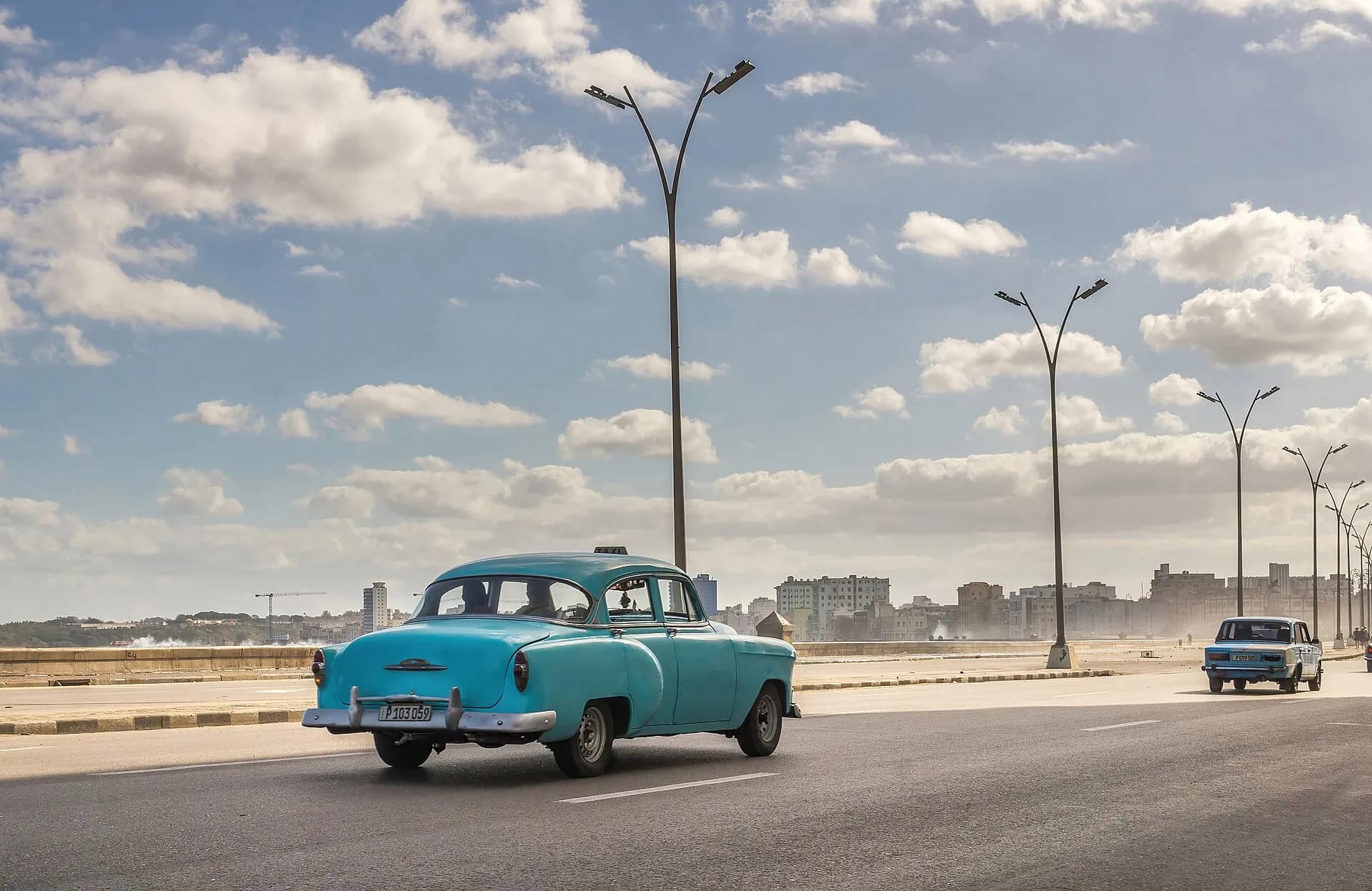
Havana's eight-kilometre promenade, where waves break over the wall while colonial houses, hotels and fishermen line the road. In the evening families walk here, musicians play and couples meet, which makes the Malecon the best place to feel the rhythm of the city. Old Havana and Vedado are both within walking distance.
- 03
Capitolio — see the landmark of Havana
A monumental neoclassical building counted among the symbols of Havana, standing on the border of Old Havana and Central Havana. Its dome and columns can be seen from several streets, and the Great Theatre and Central Park are right next door. The Capitolio fits naturally into a walk between the museums and the old quarters.
- 04
Fusterlandia — study the mosaics and ceramics
A neighbourhood in Jaimanitas on the edge of Havana that the local artist Jose Fuster turned into one continuous mosaic. Here you can walk streets of painted houses, look into workshops and see the work of Cuban artists. Murals cover entire facades, so the walk makes a good short break from the museums of the centre. It is a short but very photogenic trip that rounds off a day in the city.
- 05
Vinales valley — see the tobacco plantations
A valley in Pinar del Rio province with limestone hills called mogotes, tobacco fields and drying barns where the famous Cuban cigars are made. You can climb to a viewpoint, go down into caves and ride between the plantations on horseback. Give Vinales two days so you can see the valley in the morning and again at sunset.
- 06
Cienfuegos — appreciate the city by the southern bay
A city on the southern coast, founded in the 19th century and known for its strict grid, neoclassical architecture and boulevard by the bay. The National Theatre, the Palacio de Valle and the Puntilla waterfront make it one of the most elegant towns in the country. Cienfuegos combines easily with Trinidad and the El Nicho waterfall in the Escambray mountains.
- 07
Trinidad and Plaza Mayor — step into a colonial storybook
A museum town in the middle of the island, with cobbled streets, tiled roofs, wrought-iron grilles and bright facades. Plaza Mayor with the church of the Holy Trinity is the main square, and lanes lead from it to museums and the market. Just outside lies the Valle de los Ingenios, a valley of old sugar mills and manor houses.
- 08
Santa Clara — see the mausoleum of Che Guevara
A city in the centre of the country tied to the last battles of the Cuban revolution. The mausoleum of Ernesto Che Guevara and the memorial complex on the hill tell the story of 1958, and the armoured train that was derailed here is now a museum. Santa Clara is a convenient stop between Havana, Varadero and Trinidad, and one day is enough for the city.
- 09
Camaguey — wander the old quarters
A historic centre of winding lanes, squares, churches and the big clay jars called tinajones that stand in courtyards. See the cathedral, the theatre and the galleries, try the local sweets and climb the water tower for a panorama. Camaguey sits between the centre of the island and the east, so it fits well into a longer route.
- 10
Holguin — feel the east of Cuba
A large city in the east where colonial squares sit next to industrial districts and green hills. Broad views open from the hill above the city, and the beaches of Guardalavaca and the road to Baracoa are close by. The old centre is easy to walk, and the city often works as a stop between the centre of the island and the eastern coast.
- 11
Baracoa — taste the chocolate and see the mountains
The oldest city in Cuba, founded in the 16th century and surrounded by mountains and coconut palms. Cocoa grows here, chocolate and coconut sweets are made locally, and Alexander von Humboldt National Park protects the rainforest. The road in crosses the mountains, so Baracoa deserves a day or two of its own.
- 12
Santiago de Cuba — hear the music and see El Morro
The cradle of Cuban music, where son, rumba and bolero were born and the carnival is one of the liveliest on the island. The Morro fortress guards the entrance to the bay, with Cespedes Square and the old quarters close by. Santiago is the gateway to the Sierra Maestra mountains and the eastern coast.
- 13
Guardalavaca — rest on the eastern beach
A resort on the north-eastern coast with white sand, warm water and hotels set among greenery. The beach is counted among the best in Cuba, and a pretty bay and a dolphin centre nearby make it easy to travel with children. Several beaches line the coast, with paths between them and views over the water. Guardalavaca suits a calm rest after the city part of the route.
- 14
Varadero — spend a holiday by the sea
A resort on the Hicacos peninsula with a long beach, clear water and hotels that run on an all-inclusive basis. It is an easy place to rest, swim and take a boat out, and from here you can visit the Cienaga de Zapata, where crocodiles are bred and the wetlands are protected. Varadero is often kept for the last days of a trip.
- 15
Cayo Coco — escape to an island resort
An island in the Jardines del Rey archipelago, joined to the mainland by a long causeway. Playa Pilar, with fine sand and calm water, suits swimming with children, while mangroves and flamingos make walks around the island worthwhile. Hotels sit close to the water, so the beach is only a short walk from the rooms. Stay a few days on Cayo Coco to combine the sea with nature.
- 16
Cayo Santa Maria — combine beaches and quiet
An island off the northern coast, reached by a causeway across the sea, with long beaches and low-rise hotels. The water stays calm, the wind rarely bothers the beach, and in the evening you can walk the shore and watch the sunset. The hotels stay low, so the sky and the sea dominate the view. Cayo Santa Maria suits family holidays and trips to the coral reefs.
Resorts and cities
What else is worth trying
Try Cuban coffee
a small cup of strong coffee with brown sugar, ordered the way locals do at any street window.
Learn a little salsa
Havana and Santiago run beginner classes in clubs and cultural centres, and at night you can hear live bands.
Walk Old Havana in the evening
when the heat eases, musicians play on the squares, bars open and the city feels completely different.
Ride in a vintage car
old American cars are as much a symbol of Cuba as cigars and the seafront; short rides can be arranged with a driver in the street.
Eat on the street
pizza, croquettes, boiled corn and fresh fruit from the market are a simple way to meet the local kitchen.
Before your trip
Cuba has a tropical climate with two seasons: from November to April the weather is dry and a little cooler, while May to October brings rain and the risk of hurricanes, so plan around the dry season or watch the forecasts. The country uses two currencies, and cash is needed almost everywhere: international cards are not accepted by every business, and it is best to change money at official offices and hotels. Drink bottled water and choose places that cook in front of you. Buses and shared taxis, known as colectivos, link the cities, Havana has local minibuses and taxis, and for long distances it is easier to agree with a driver. Internet in Cuba is slow and expensive, with access at hotels and post offices, so download maps in advance and do not rely on a constant connection. Entry requires a tourist card; check the terms and validity with your operator before buying tickets.
Frequently asked questions
When is the best time to visit Cuba?
November to April is the dry season: less rain, lower humidity and easier sightseeing. May to October is hot and humid with short downpours, and hurricanes are possible in late summer. The beaches work in almost any month, but in the rainy season leave spare days in the route.
How many days do you need in Cuba?
Two or three days usually cover Havana, and another few days are needed for Trinidad, Cienfuegos and Vinales. A short beach trip takes about a week, and combining the capital, the colonial towns and the beaches calls for at least ten days.
Should you choose Havana or Varadero?
They are different holidays. Havana is about architecture, music and city rhythm; Varadero is about the sea, sand and hotels by the beach. If you have time, start in Havana and finish at a resort to rest after a busy programme.
How do you get around Cuba?
Tourist buses and shared taxis known as colectivos are the usual way between cities. A car with a driver is a practical choice for longer routes: the route is easy to agree and you do not have to think about road conditions. In Havana and Santiago the centre is easy to explore on foot.
Information about places and trip conditions may change or be out of date. Please verify the latest details before you travel.
Photograph: Ezarate · CC BY-SA 4.0 · Wikimedia Commons