

Destination guide
Mauritius holidays — lagoons, mountains and a tropical island
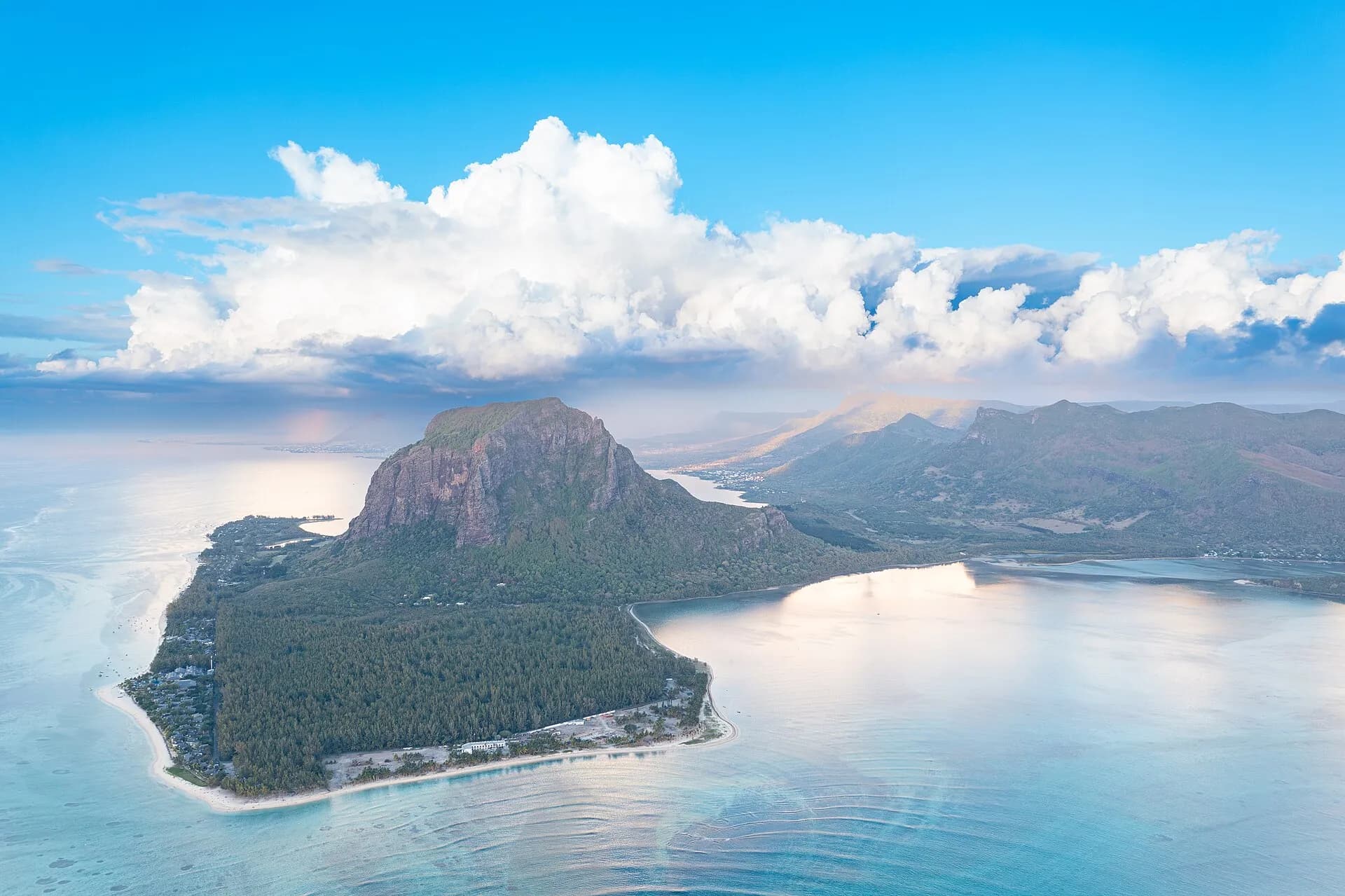
Mauritius is a small island in the Indian Ocean with lagoons, coral reefs and long beaches that line almost the whole coast. A central plateau rises in the middle, with mountains, tropical forest and waterfalls, while the south and west keep gorges, crater lakes and sugar-cane plantations. Colonial towns, markets and temples add to the mix, along with a blend of Indian, African, Chinese and European cultures.
TripTech will help you choose a flight and a hotel and build a route around the island for your dates, so beaches, mountains and a side trip to Rodrigues fit together without unnecessary transfers.
Where to go in Mauritius
- 01
Port Louis — see the capital and its heritage
The island's capital, where history sits next to everyday life: Aapravasi Ghat, a monument to indentured labour, the Central Market with spices, fruit and sweets, and the Citadel on its hill above the city and the harbour. Walking between them takes you past colonial buildings, and the market is a good place to try local snacks. One day is enough to get to know Port Louis.
- 02
Domaine les Pailles — walk an old estate in the valley
A former sugar estate in a valley at the foot of the Moka mountains, close to Port Louis. Plantation buildings, shaded avenues and gardens survive here, and green slopes rise around them with views over the interior. It is a pleasant place to walk and study old machinery and trees, and the visit pairs well with the capital, giving a sense of the island's rural past.
- 03
Grand Baie — feel the rhythm of the north coast
A resort town in the north with a wide bay, a waterfront promenade and plenty of cafés, restaurants and shops. Boat trips to the small islands start here, and Mont Choisy beach is a few minutes away by road. The waterfront comes alive in the evening, which makes Grand Baie a convenient base for exploring the north and north-west of the island.
- 04
Trou aux Biches — swim in a calm lagoon
A beach on the north-west coast with a long stretch of sand and a lagoon protected by a coral reef. The calm water suits snorkelling, and casuarina trees along the shore give shade during the hot hours. Hotels and small cafés are close by, yet the beach stays spacious and works well for families with children.
- 05
Flic en Flac — watch the sunset on the west coast
A long beach on the west of the island, known for its sunsets and a lagoon with coral reefs. It is easy to swim, take a catamaran trip or head out to see dolphins, and a promenade with cafés and shady trees runs along the shore. Local families use the beach too, so weekends are lively and the light in the evening is especially good.
- 06
Tamarin — hike to the cascades in the forest
A village in the west where trails set off towards the Tamarin Falls, also called the Seven Cascades. The route runs through forest and over rock, and swimming in the natural pools calls for care, decent shoes and an honest sense of your fitness. A guide makes it easier to pick a safe line down and to find the pools where the water lands gently.
- 07
Riviere Noire — look in on a fishing town and harbour
A town in the west at the mouth of the Black River, with a fishing harbour, a market and views of the mountains. It is a handy base for the Black River Gorges National Park and for Le Morne, and local people gather on the waterfront in the evening. Boat trips to see dolphins and to snorkelling spots also leave from here.
- 08
Black River Gorges — walk the trails of a national park
The island's largest national park in the south-west, where tropical forest, gorges and waterfalls survive. Trails lead to viewpoints over the canyon and the west coast, and early morning is the best time to spot rare birds and monkeys. Take comfortable shoes, water and enough time: some routes run for several hours.
- 09
Le Morne and Brabant — climb the mountain above the lagoon
A peninsula in the south-west with the basalt mountain of Le Morne, a UNESCO World Heritage site. The summit of Brabant opens views over the lagoon, the reefs and the turquoise sea, and the climb takes several hours, water and a fair amount of effort. At the foot of the mountain lie a beach and a village tied to the history of escaped slaves.
- 10
Chamarel — see the waterfall and the coloured earth
An area in the south-west known for Chamarel Waterfall and the Seven Coloured Earths, sandy hills banded in different shades. A trail leads through forest to the waterfall, while viewing platforms face the coloured dunes, where the pattern shifts with the light. Come in the morning, before the mist rises and the heat builds.
- 11
Bassin Blanc — find a quiet lake in a crater
A small volcanic lake in the south of the island, ringed by forest and plantations. Few tourists come here, and a viewpoint by the road looks over the water and the slopes; in cloudy weather the place feels especially atmospheric. Bassin Blanc is easy to combine with Chamarel and with the road down to the southern beaches.
- 12
Mahebourg — stroll a colonial town by the sea
A town in the south-east with a waterfront, a market and old colonial houses. Its naval museum holds a collection devoted to seafaring and the island's history, and from the waterfront you can watch fishermen come back with the catch. Mahebourg is a convenient stop on the way to Blue Bay and the south-eastern beaches.
- 13
Blue Bay — see the underwater world of a marine park
A bay in the south-east declared a marine park, where coral reefs and clear water are visible close to the shore. People come to snorkel, to ride a glass-bottom boat and to watch fish in their natural surroundings. Swimming deserves care around currents, and park rules limit moorings and the pressure on the reef.
- 14
Ile aux Cerfs — spend a day on an island in the lagoon
A small island off the east coast, reached by boat from Trou d'Eau Douce. It has a long beach, a shallow lagoon and casuarina shade, and the reefs and green slopes of the east coast are visible around it. The crossing takes little time and the island is small enough to walk around in an afternoon. Swim where the current is weak and plan the return trip in advance, as boats run to a timetable.
- 15
La Vanille — meet the giant tortoises
A nature park in the south where giant Seychelles tortoises, crocodiles and many birds live. Paths wind through a palm grove, and a farm and a small insect collection sit alongside them, which makes the visit a good fit for families with children. The park shows how the island cares for rare animals and pairs well with a trip to the south.
- 16
Port Mathurin — see another, slower Mauritius
The capital of Rodrigues, an island east of Mauritius reached by plane or ferry. It has a market, an old church, a waterfront and a quiet pace of life, while bays, lagoons and kitesurfing spots lie close by. It is also a good base for walks along the coast and for the quiet beaches of the island. Rodrigues feels quite different from the main island and it suits the calmer part of a holiday.
What else is worth trying
Try the local food
dholl puri, rougaille, fresh fish and market fruit — the island's cooking blends Indian, Creole and Chinese traditions.
Rent a car
buses link the towns, but a car makes it easier to combine beaches, mountains and waterfalls; remember that traffic keeps to the left.
Snorkel the lagoon
reefs begin near the shore, so a mask and snorkel help on any beach, while a boat takes you to the outer spots.
Add Rodrigues
the small island to the east adds quiet, lagoons and a very different pace if you have days to spare.
Watch the sunset in the west
Flic en Flac, Tamarin and Riviere Noire are known for evening light and an open horizon, so plan evening walks there.
Before your trip
Mauritius has a tropical climate: May to November is the dry season, with cooler nights and clear days, while December to March is hot and humid, when cyclones are possible, so check the forecast before you travel. If you rent a car, remember that traffic keeps to the left and that mountain roads are narrow; buses are the simplest way between towns, though evening services stop early. Mauritian rupees are useful at markets, in small cafés and for tips, while cards are accepted in hotels and larger shops. On beaches, watch for flags and warnings about currents: swim in marked areas and do not go beyond the reef without a guide. In national parks and reserves, stay on the trails, leave corals and animals alone, and check entry rules in advance.
Frequently asked questions
When is the best time to visit Mauritius?
The dry season from May to November suits beach holidays and hiking: days are clear, nights are cooler and rain is rare. December to March is hot and humid, with more rain and a higher risk of cyclones, so keep plans flexible if you travel then.
How many days do you need in Mauritius?
A week is enough to get to know the island, with two or three days each for the north, west and south. Ten days gives a more relaxed pace, and if you add Rodrigues, allow around two weeks.
Should you choose the north or the west?
The north has Grand Baie and Trou aux Biches with their lagoons, boat trips and plenty of hotels. The west has Flic en Flac, Tamarin, Le Morne and the national park, with sunsets and hiking. For a first visit, a route that covers both makes sense.
How do you get around Mauritius?
Buses connect towns and beaches, but timetables are thin and evening services stop early. A rented car is the most flexible option, though traffic keeps to the left and you need time to adjust. Rodrigues is reached by plane or ferry.
Information about places and trip conditions may change or be out of date. Please verify the latest details before you travel.
Photograph: dronepicr · CC BY 2.0 · Wikimedia Commons